Mosquito-Free Living Insights
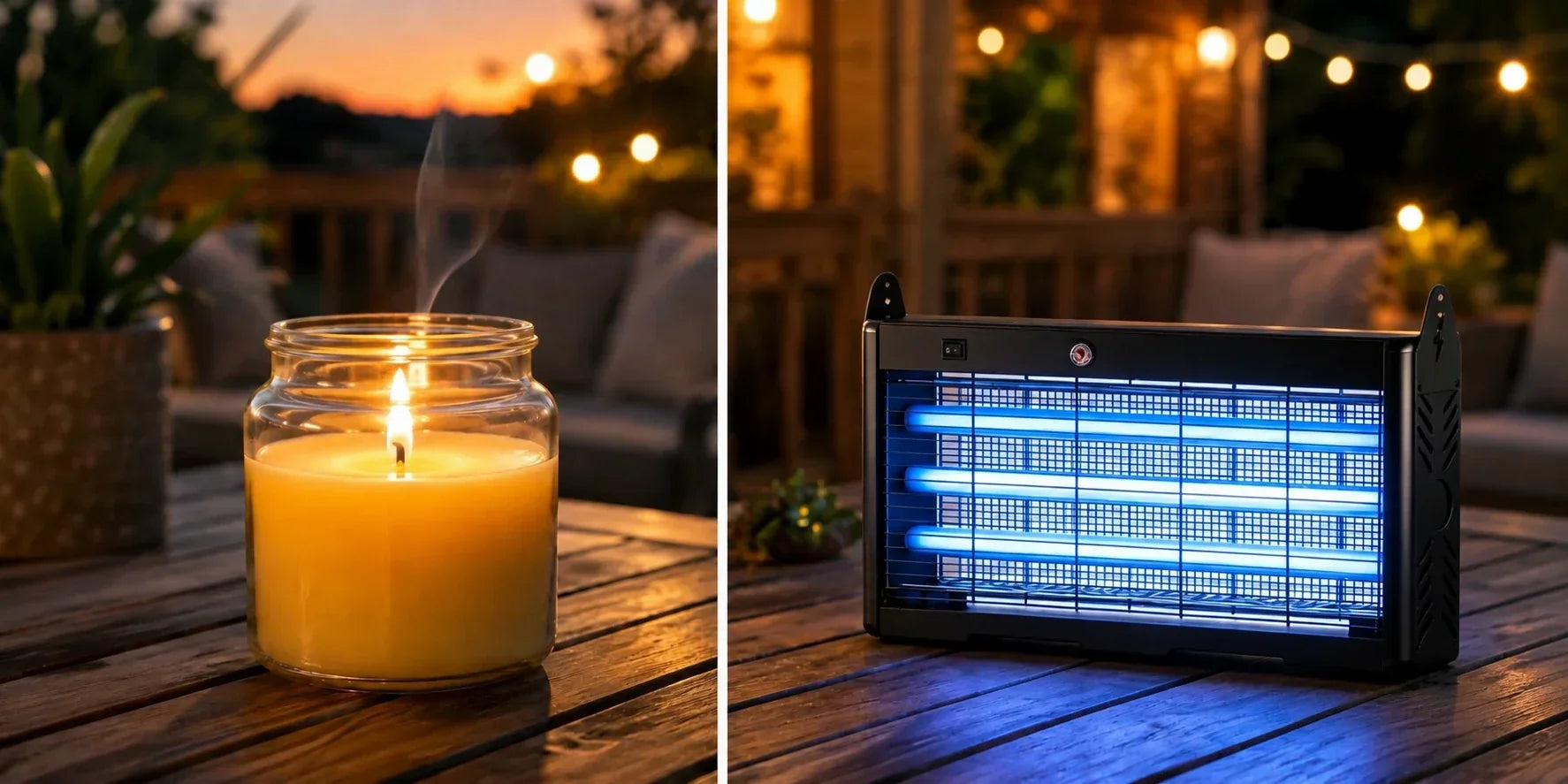
Citronella Candles vs Bug Zappers: A Side-by-Side Comparison
If you've ever hosted a backyard dinner, you've probably reached for a citronella candle out of habit. It's the classic choice — cheap, familiar, and available at every hardware store. But if you've also dealt with the candle burning out halfway through the evening, the wax dripping everywhere, or the smoky smell clinging to your clothes, you may have wondered if there's a better way to keep mosquitoes off your patio.
That's where bug zappers — especially newer solar-powered models — come into the conversation. Let's compare the two head-to-head on the factors that actually matter when you're trying to enjoy time outside.
How Each One Works
Citronella candles rely on the scent of citronella oil, released as the candle burns, to mask the carbon dioxide and body odors that attract mosquitoes to you in the first place. It's a repellent strategy — the mosquito is (in theory) less likely to find you appealing.
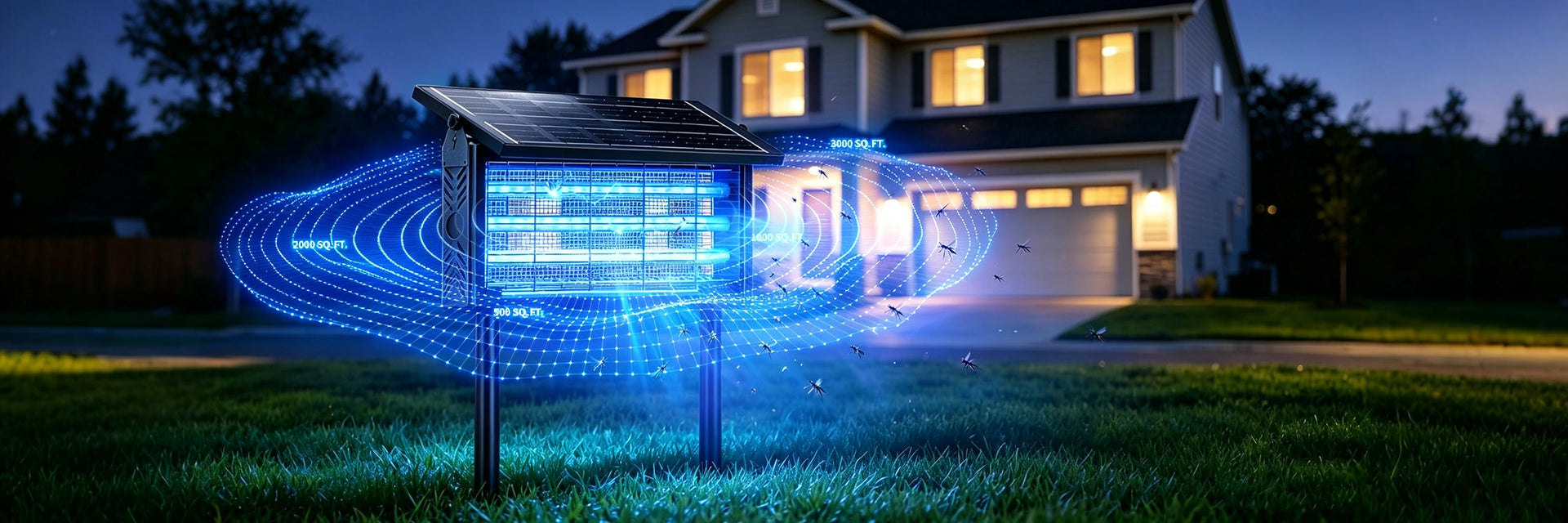
Bug zappers work differently. Solar lantern-style zappers like the Murutoi typically use a light source to draw insects toward the device, where an internal electric grid eliminates them on contact. It's an attract-and-eliminate strategy rather than a mask-and-repel one — instead of trying to make you less noticeable to mosquitoes, it intercepts them before they get to you.
Smoke and Smell
This is one of the most noticeable differences in daily use. A citronella candle is, at its core, a fire — it produces smoke, a strong scent that some people find pleasant and others find overpowering, and residue from melted wax. For guests who are sensitive to smoke or fragrance, or for anyone hosting near an open window, that can be a real drawback.
A solar bug zapper doesn't burn anything, so there's no smoke and no scent to manage. That makes it a more flexible option for dinner parties, homes with kids or pets, or anyone who'd rather their patio not smell like a candle aisle.
Coverage Area
Citronella candles are generally most effective in the immediate area right around the flame — think of it as a personal bubble rather than a whole-yard solution. Multiple candles are often needed to cover a larger patio or deck, and their effectiveness can drop off in breezy conditions since the scent disperses.
Bug zappers are typically designed to cover a broader area than a single candle, since they're working by drawing insects toward a light source rather than relying on scent, which can be more prone to dispersing in windy conditions. Placement still matters — a zapper near the center of your outdoor space, away from where people are sitting, tends to perform best. (Note: exact coverage area in square feet depends on the specific model and outdoor conditions; check your product's spec sheet for verified figures.)
Maintenance and Convenience
Candles are a consumable — once they burn down, you need to replace them, which adds up over a season of regular use. They also need to be lit and monitored, which isn't ideal if you're using them around children or pets.
A solar bug zapper is designed for lower ongoing maintenance. It charges during the day and can be switched on in the evening, without the need to relight or replace anything each use. Depending on the model, most units simply need periodic cleaning of the collection tray and battery care over time.
Which One Should You Choose?
Neither option is a complete solution on its own — mosquito control usually works best as a layered approach. But if you're looking for something with no smoke, no lingering scent, and less dependence on calm weather for it to work well, a solar bug zapper is worth considering as either a replacement or a complement to your citronella candles. If ambiance and a low-tech setup matter more to you than coverage, candles still have their place on the table.