Mosquito-Free Living Insights
How Solar Panels Charge This Zapper: A Look at the Tech
A solar bug zapper looks simple from the outside — stake it in the yard, and it just works. But underneath that simplicity is a small, efficient system doing three jobs at once: capturing sunlight, storing it, and knowing exactly when to turn on. Here's how it actually works.
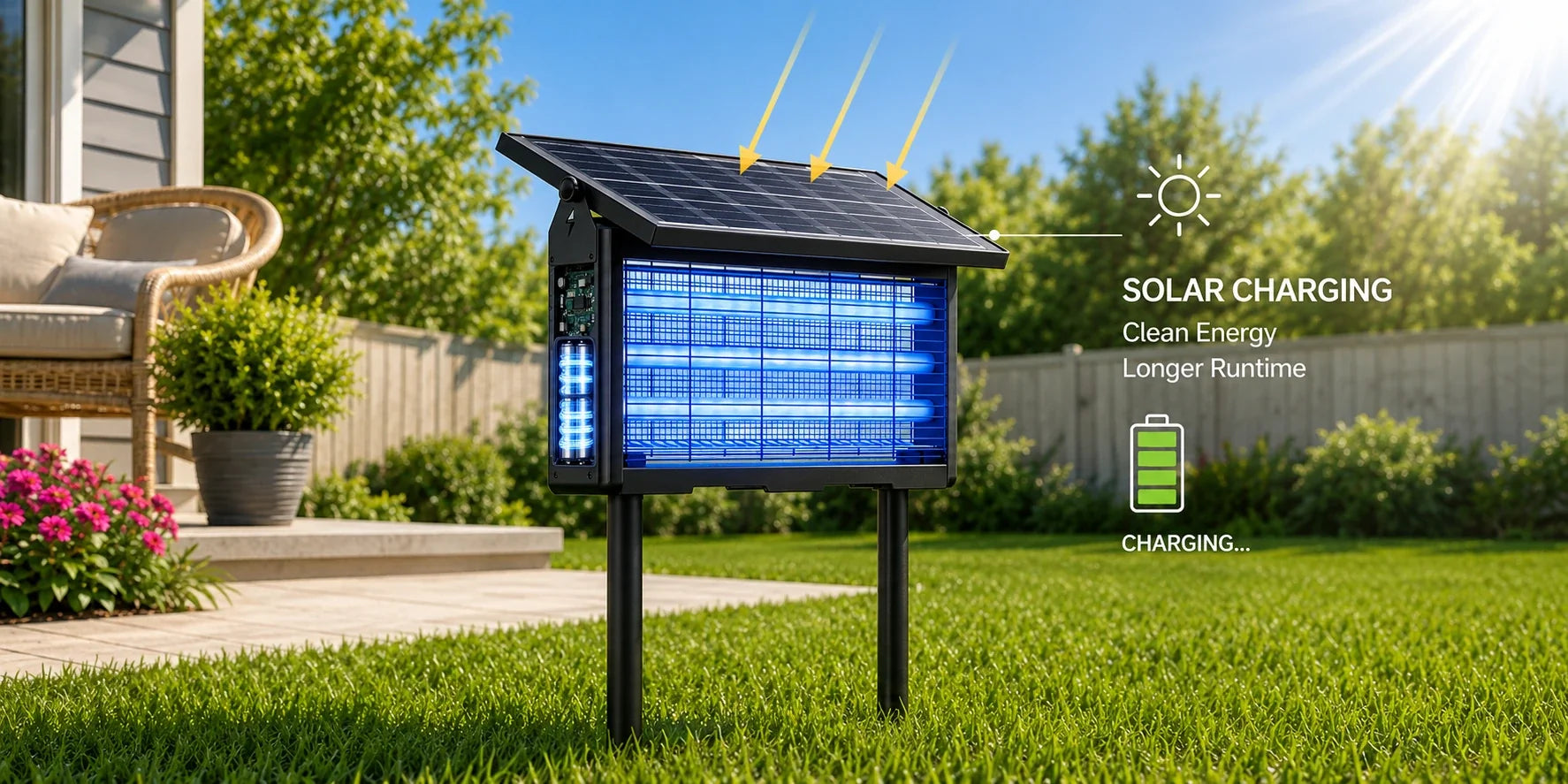
Step 1: Capturing Sunlight
The solar panel on top of the unit is doing more than sitting there catching rays for show. Photovoltaic cells convert sunlight into a small electrical current throughout the day. The panel doesn't need to be in constant direct sun to work — it draws in energy any time it's exposed to daylight, though direct, unobstructed sun produces the fastest charge.
This is why placement matters just as much for charging as it does for mosquito coverage. A unit tucked under a dense tree canopy will still get some charge, but one with clear sky access will charge faster and more fully.
Step 2: Storing the Charge
That energy doesn't power the zapper directly in real time — it's routed into a rechargeable battery pack, where it's held in reserve until needed. This is the part that makes solar zappers useful after dark, when there's obviously no sunlight to draw from.
Battery capacity is a meaningful spec here, not just a number on a box. A smaller battery setup, like a 2×7500mAh configuration, is built for typical nightly operation. A larger setup, like 3×9600mAh, holds more reserve — useful for larger properties, longer nights, or stretches of lower sun where the panel isn't charging at full strength.
Step 3: The Dusk-to-Dawn Sensor
This is the piece that makes the whole system feel automatic. A built-in light sensor monitors ambient brightness and switches the unit on as light fades at dusk, then off again as the sun comes up. It's the same basic principle used in outdoor solar path lights, applied here to pest control instead of illumination.
The advantage isn't just convenience — it's efficiency. Running only during the hours mosquitoes are actually active means the stored battery charge isn't wasted running a light or attractant during daylight hours when it's not needed.
Putting It Together: A Full 24-Hour Cycle
- Daytime: Solar panel absorbs sunlight, battery charges, sensor keeps the unit dormant.
- Dusk: Light sensor detects falling brightness, unit powers on automatically.
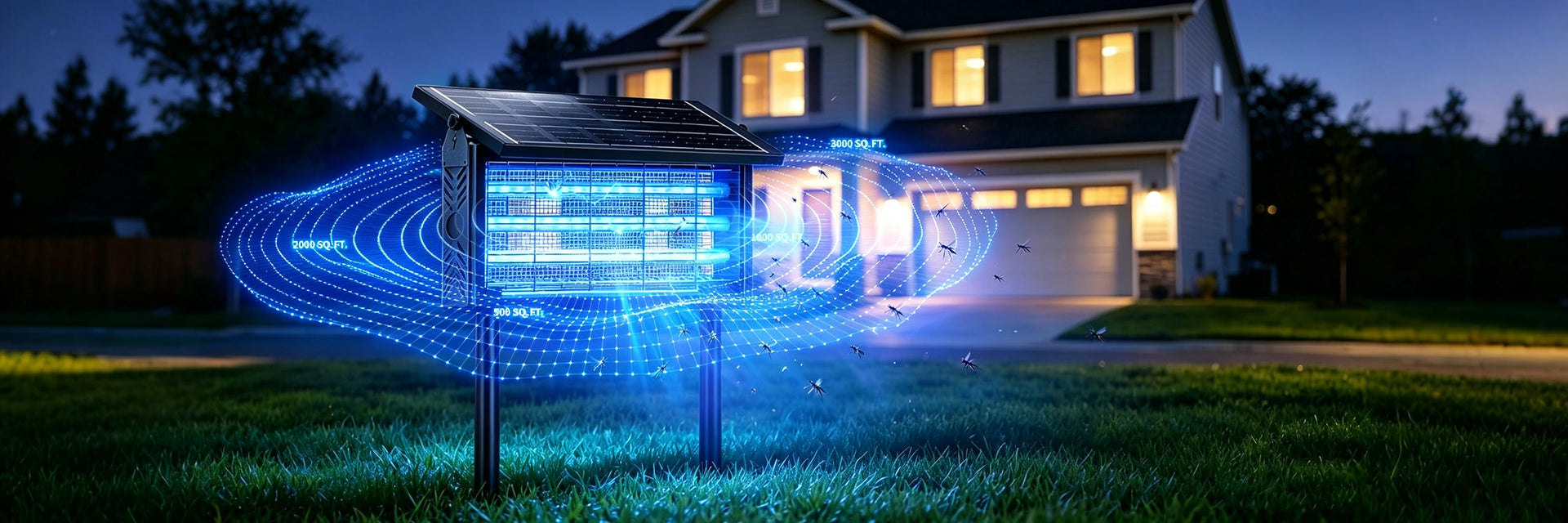
- Night: UV light and attractant draw mosquitoes in, battery powers the full cycle.
- Dawn: Sensor detects rising light, unit powers back down, charging cycle begins again.
Why This Matters for Where You Place It
Understanding the charge cycle explains a lot about setup best practices. A unit that isn't getting enough daytime sun exposure won't have a full charge to run on come nightfall — which is why placement in open, sun-exposed areas isn't just a suggestion, it's part of how the technology is designed to work.
The Takeaway
A solar bug zapper isn't magic — it's a straightforward loop of capture, storage, and automatic activation, engineered so you never have to think about turning it on or plugging it in. Once it's placed somewhere with good sun exposure, the tech takes care of the rest.