Mosquito-Free Living Insights
Renters' Guide: Mosquito Control for Shared Outdoor Spaces
Renting comes with a specific set of constraints homeowners don't think twice about: no drilling into siding, no hardwiring anything to an outlet that isn't yours, and always that quiet worry about what happens to your damage deposit if a "temporary" fix leaves a mark. Mosquito control is no exception — a lot of the most effective options on the market assume you own the property. Here's how to actually deal with mosquitoes on a balcony, patio, or shared courtyard without any of that risk.
Why Standard Mosquito Solutions Don't Fit Rentals
Most traditional outdoor pest control methods run into the same problems for renters:
- Wired zappers and misting systems typically require a dedicated outdoor outlet or hardwired installation — not something a landlord is likely to approve, and not something worth doing to a property you don't own.
- Mounted or built-in units often need drilling or permanent brackets, which risks both damage deposit deductions and violating lease terms about alterations.
- Shared outdoor spaces — courtyards, shared patios, communal balconies — add another layer: whatever you use needs to not interfere with neighbors' space or require permission from a property manager.
The result is that a lot of renters either tolerate the mosquito problem or end up buying something that isn't really built for their situation.
What Actually Works: Solar, Portable, No Wiring
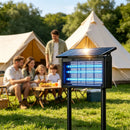
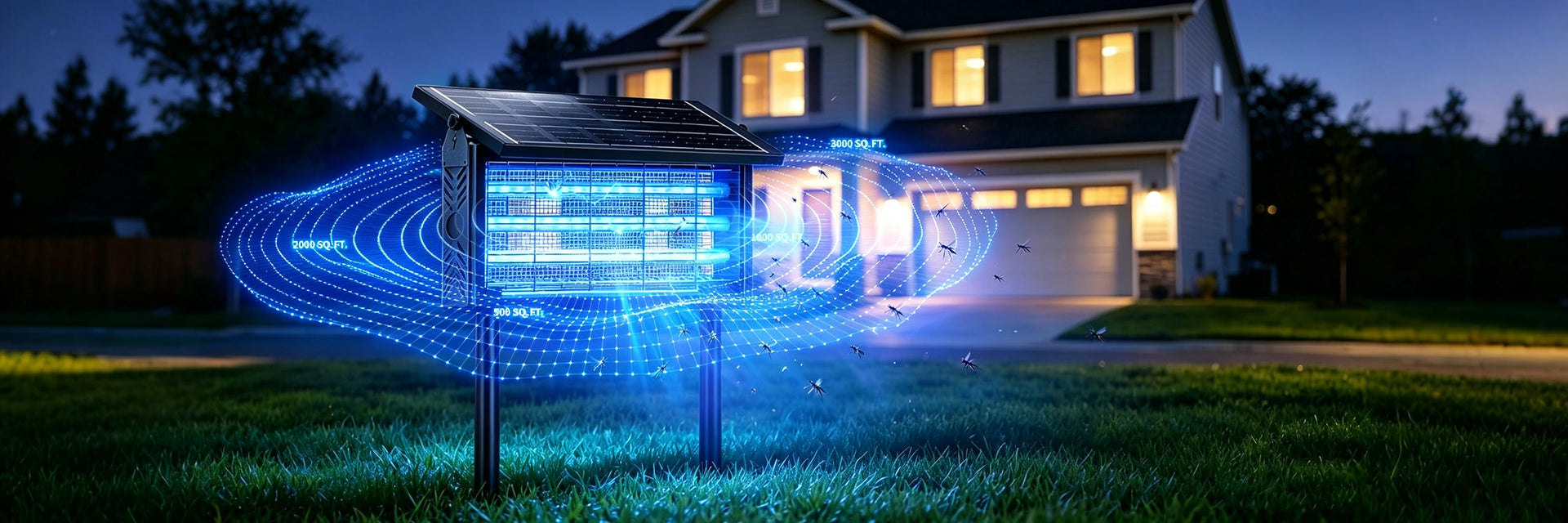
A solar-powered, freestanding mosquito zapper solves most of these constraints at once, simply by not needing any of the things a rental restricts:
- No outlet required. A solar unit charges from sunlight during the day and runs on battery through the evening, which means there's no extension cord running through a window or a request to the landlord for an outdoor outlet.
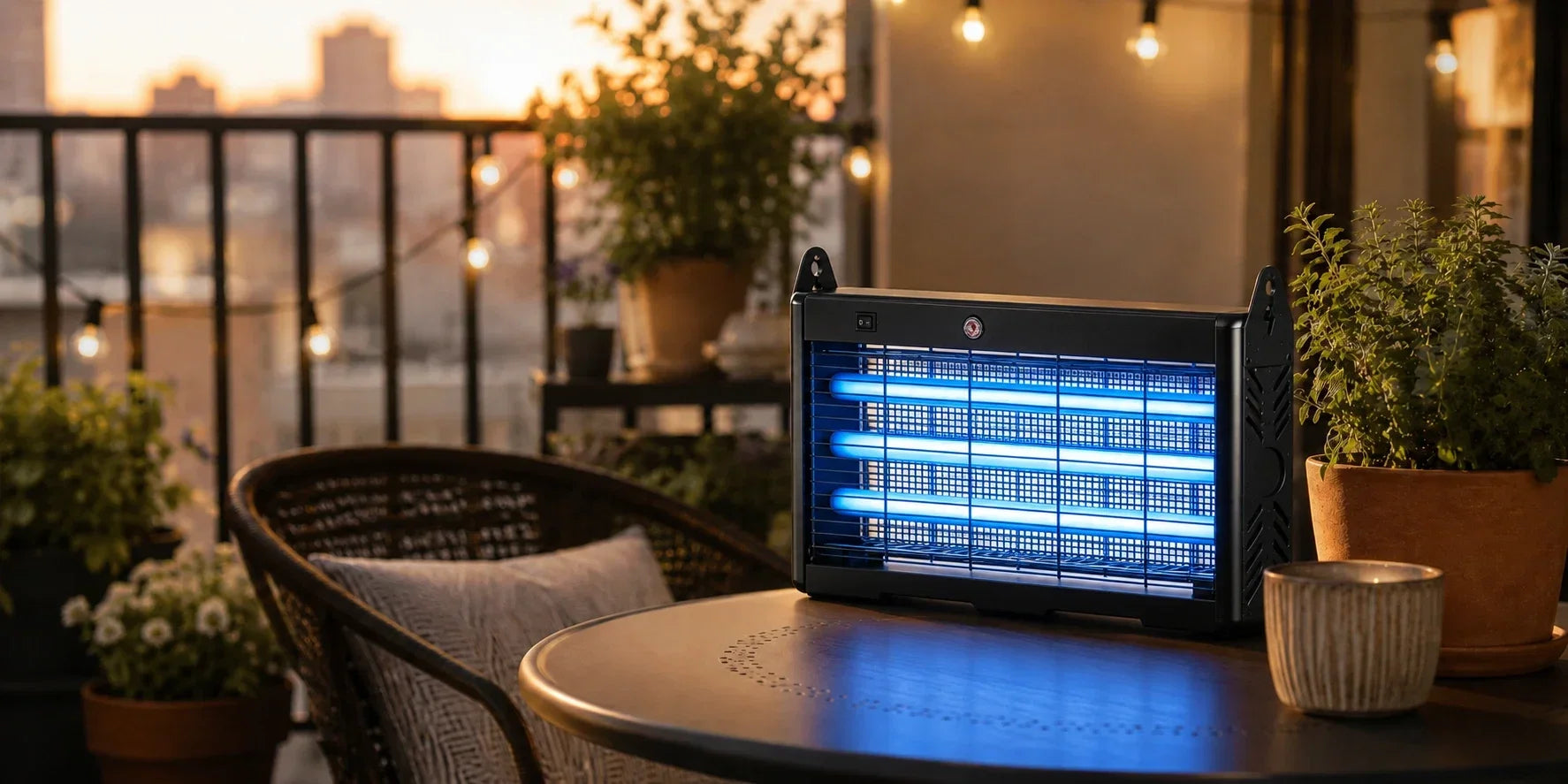
- No drilling or permanent mounting. A freestanding design lets you place the unit on a table, railing ledge, or the ground — nothing goes into the wall, siding, or railing itself. (If your specific model also includes a hanging option, that adds even more flexibility for tighter spaces.)
- Fully portable. If you move, or want to bring the unit inside during storage season, it packs up and goes with you the same way a lamp or a plant stand would. Nothing stays behind, and nothing needs to be "uninstalled."
- No shared-space conflict. Because it doesn't need a dedicated power source or fixed mounting point, it's easy to reposition depending on where people are actually sitting in a shared courtyard or balcony, rather than being locked into one spot.
Setting It Up in a Shared or Small Outdoor Space
A few practical tips specific to rental and shared-space setups:
- Prioritize sun exposure over central placement. Since the unit runs on solar charging, where it gets the most direct sun during the day matters more than being dead-center in the space.
- Keep it away from where people are sitting and eating, generally a few feet off to the side, since that's standard placement advice for any UV-attraction style device — you want it drawing insects away from the seating area, not into it.
- If space is shared with neighbors, a quick conversation about placement can avoid any confusion about whose device is sitting where, especially in smaller courtyards.
- Bring it in during off-season or bad weather if you're not using an all-weather rated model, both to extend its lifespan and because there's no built-in obligation to leave rental fixtures outdoors year-round the way there might be with something installed.
The Bottom Line for Renters
You shouldn't have to choose between dealing with mosquitoes all summer and risking your damage deposit over a pest control fix. The right setup is built around exactly the constraints renters live with — nothing to explain to a landlord, and nothing left behind when the lease is up.