Mosquito-Free Living Insights
Solar Bug Zapper vs. Plug-In Electric Zappers: What Wins
Plug-in electric bug zappers have been the default option for decades — but "default" doesn't always mean "best fit" for how most backyards actually work. Here's how a solar model like the Murutoi G8 or G8L stacks up against the corded kind.
The Cord Problem
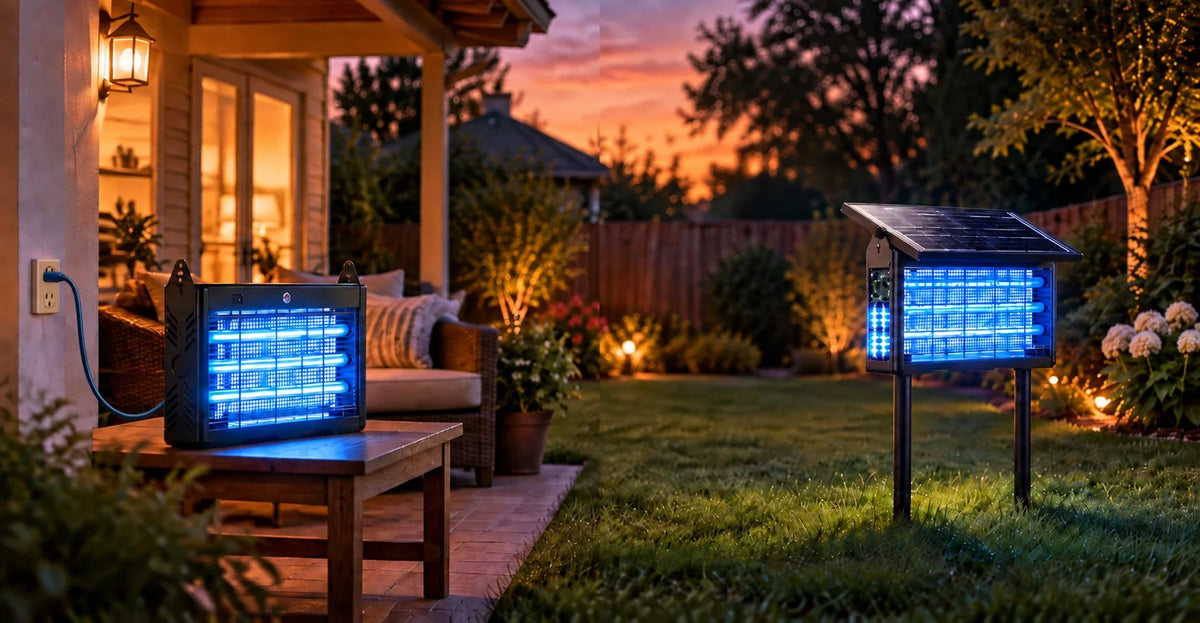
A plug-in zapper is only as useful as the nearest outlet. That usually means running an extension cord across the lawn, taping it down so no one trips, and hoping it survives a surprise sprinkler cycle. Move the party to the other side of the yard, and the whole setup has to move with it — or stay put and lose effectiveness.
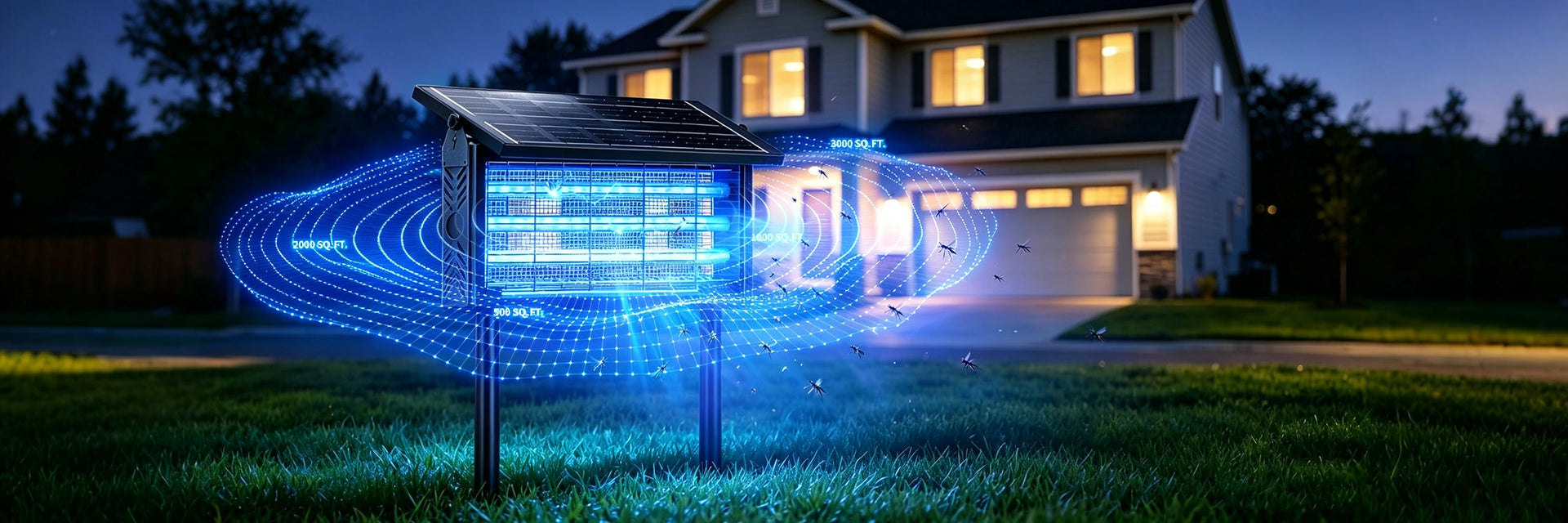
A solar unit skips this entirely. There's no outlet to find, no cord to hide, and no fixed spot it's stuck in. Hang it from a tree, stake it in the lawn, or move it to wherever the group ends up that evening.
Weatherproofing and Safety
Corded units bring electrical safety questions that don't disappear just because a zapper is "outdoor rated" — an exposed plug near a hose, a kid's sprinkler, or an unexpected downpour is never a great combination. Murutoi's IPX5 waterproof rating and cordless design remove that risk from the equation. There's no plug sitting at ground level and no cord to worry about in wet grass.
Running Costs Over a Season
A plug-in zapper draws power from your outlet every night it's running, all season long. It's not a huge number on any single night, but it adds up over months of nightly use. A solar zapper charges itself during the day and costs nothing to run — the sun is doing the work your electric bill would otherwise be covering.
Where Plug-In Still Makes Sense
To be fair, a plug-in zapper isn't obsolete everywhere. If you have one fixed spot — say, a covered porch right next to an outdoor outlet — and you never move it, the cord stops being a daily hassle. For anyone in that exact setup, either option gets the job done.
The Bigger Picture
For most backyards, patios, and gardens, the appeal of a solar bug zapper isn't just "no batteries" — it's the freedom to put it exactly where the mosquitoes actually are, move it when your setup changes, and never think about outlets, cords, or another line item on the power bill. That flexibility is hard to match with anything that has to stay tethered to a wall.