Mosquito-Free Living Insights
Solar Power vs Electric Bill: The Real Cost of Running a Bug Zapper
If you've run a plug-in bug zapper all summer, you've probably noticed a small but steady bump on your electric bill — especially if it's been running dusk to dawn for months. It's not a huge number on its own, but it adds up over a full mosquito season, and it's one of those "invisible" costs that's easy to overlook until you actually add it up.
How Plug-In Bug Zappers Add to Your Electric Bill
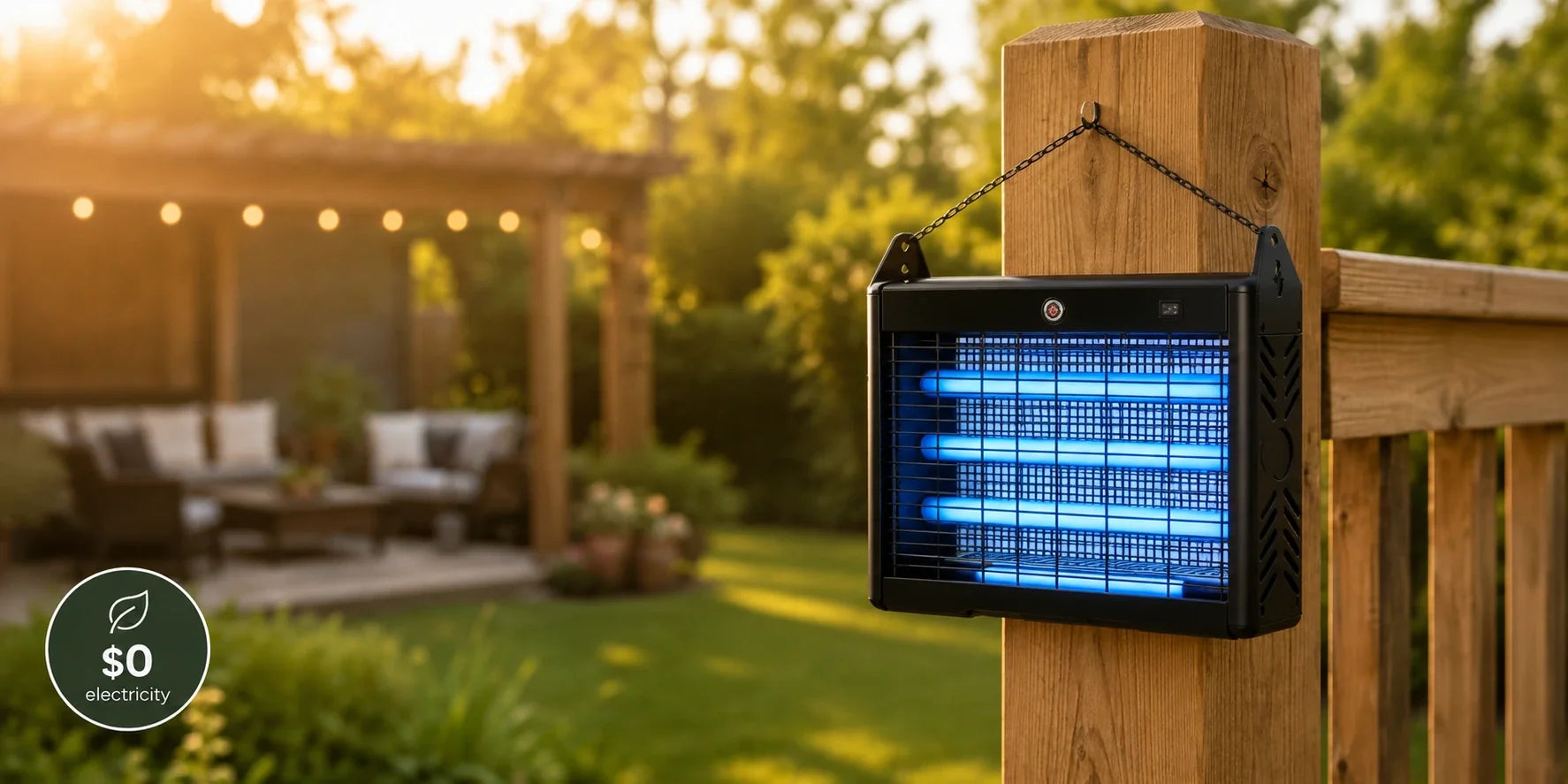
Most plug-in electric bug zappers draw a small, continuous amount of power to keep the UV light and grid running, typically in the range of low double-digit watts. Run continuously over several months of mosquito season, that steady draw turns into real (if modest) dollars — the exact amount depends on your local electricity rate and how many hours a day the unit runs.
A Simple Worked Example
To put a real number on it: say a plug-in zapper draws around 6 watts and runs 10 hours a night for a 4-month mosquito season (roughly 120 nights). That works out to about 7.2 kWh total. At a typical U.S. residential rate of around $0.16 per kWh, that's roughly $1.15 for the season.
This is a hypothetical example only, not a measured result — your actual cost depends on your unit's real wattage, your local electricity rate, and how many hours it runs. Check your specific model's power draw and your utility bill for a precise number. The point isn't the exact dollar amount; it's that the cost is small per season but compounds every year you run a plug-in unit.
How Solar Bug Zappers Change the Equation
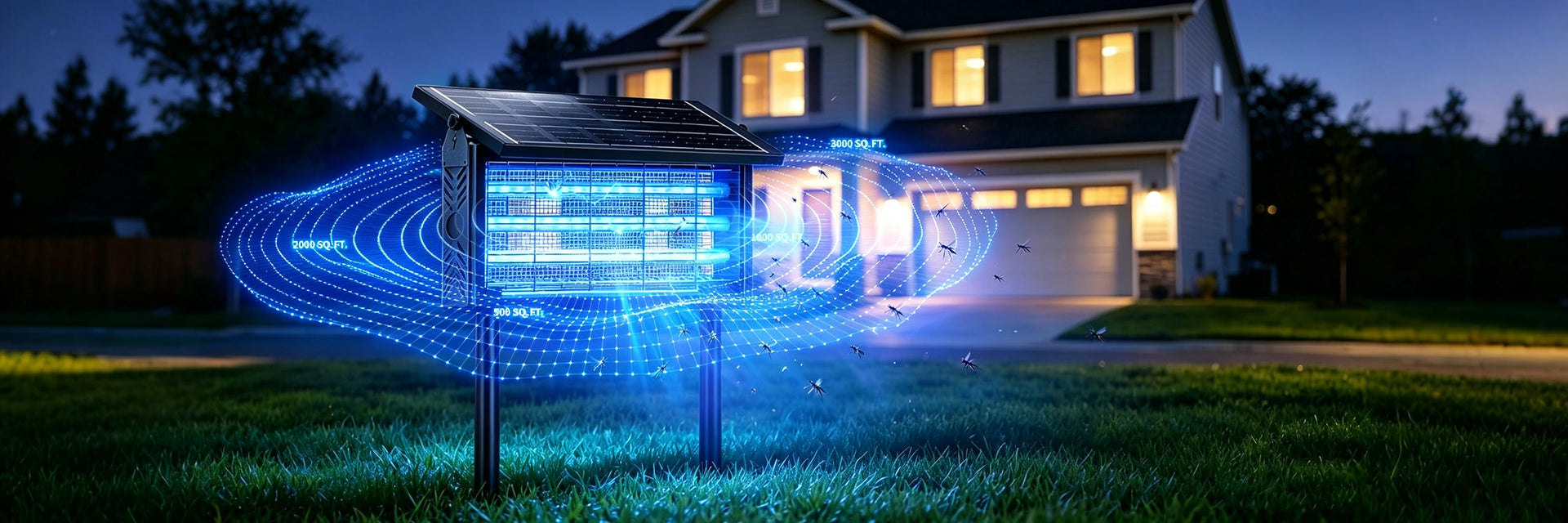
A solar-powered bug zapper like Murutoi draws its energy from a built-in solar panel rather than your outlet. That removes the ongoing electricity cost from your bill — you're trading a small, recurring line item for a one-time upfront cost on the unit itself. It also means no extension cords or hunting for a nearby outlet, so placement isn't limited by where your wiring reaches.
Annual Cost Comparison at a Glance
| Plug-In Electric Zapper | Solar Zapper (e.g. Murutoi) | |
|---|---|---|
| Power source | Home electrical outlet | Built-in solar panel |
| Ongoing electricity cost | Small but continuous (see example above) | None |
| Placement flexibility | Limited to outlet range / needs extension cord | Anywhere with sun exposure |
| Upfront cost | Often lower | Often higher |
| Season-long cost trend | Adds up gradually | Flat after purchase |
The general takeaway: plug-in models tend to have a lower upfront cost but a small ongoing electricity cost, while solar models front-load the cost into the purchase price and then run without adding to your bill.
When Solar Makes Sense — and When It Might Not
Solar zappers need consistent, direct sunlight to charge properly, so placement matters. If your outdoor space is heavily shaded most of the day, a solar unit may not charge as reliably, and a plug-in option (or relocating the unit to a sunnier spot) may be worth considering. For most open patios, decks, and yards with decent sun exposure, solar is a straightforward way to get mosquito control without adding to your electric bill.