Mosquito-Free Living Insights
Taking Your Murutoi Solar Bug Zapper Camping: A Weekend Setup Guide
Campsites and mosquitoes go together whether you like it or not — still air near a lake, tree cover holding in humidity, dusk hours when everyone's finally sitting still around the fire. A Murutoi solar bug zapper is one of the easiest things to add to your gear list, precisely because it doesn't ask much of you. Here's how to get the most out of it for a weekend away.
Before You Leave: Let the Sun Do the Prep Work
Set the zapper somewhere sunny — a windowsill, porch, or car dashboard — for a day or two before the trip so it heads out fully charged. If your trip is more spontaneous, don't worry: it'll keep charging in daylight once you're at the campsite, so a partial charge on departure day still gets you through the first night.
Packing: What to Bring Alongside It
The zapper itself is nearly grab-and-go, but a few small extras make setup at the site smoother:
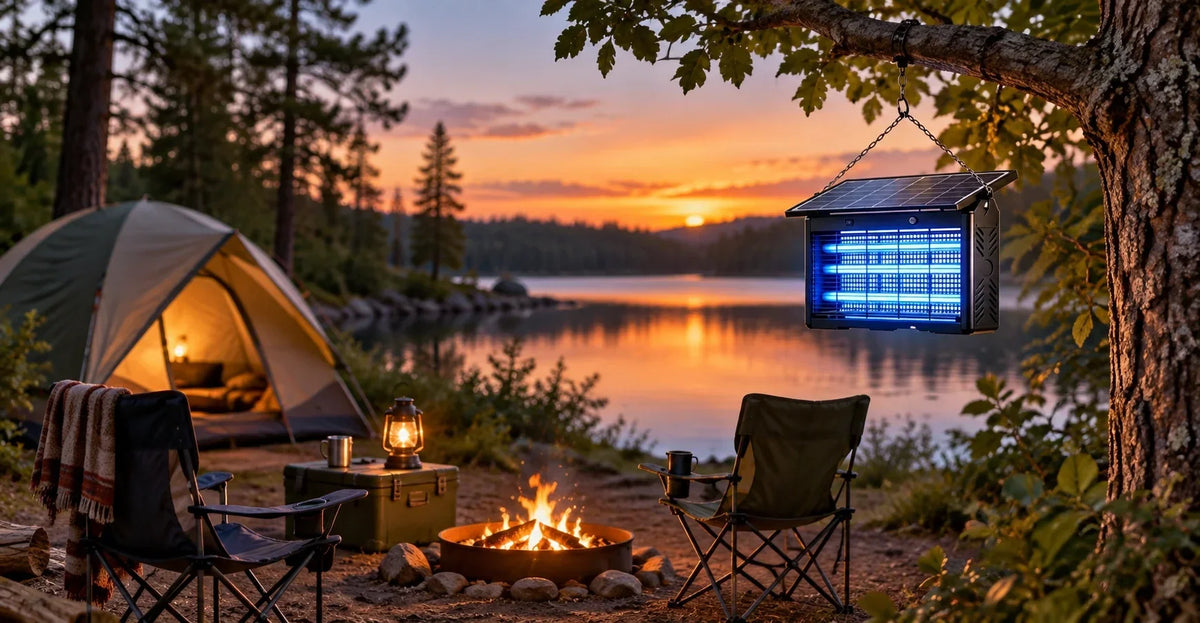
- A carabiner or short cord for hanging it from a tree branch, tent pole, or awning bar.
- A microfiber cloth for a quick wipe-down if it picked up dust or pollen in the car.
- A mental note of your site layout — you'll want it near where people sit, not right over the food table.
Setting Up at the Site
Hang the zapper at head height or slightly above, a few feet off to the side of your main seating area — close enough to pull mosquitoes away from the group, far enough that no one's brushing against it while grabbing a chair in the dark. Tree branches, awning frames, and canopy poles all work well. Avoid placing it directly beside the cooking area or picnic table; you want it drawing bugs toward itself, not toward your food.
Nighttime Routine
Turn it on around dusk, when mosquito activity typically ramps up, and let it run through the evening. Because it's solar-powered, there's no need to watch a battery percentage or plan around an outlet that isn't there anyway. If you're moving between a shared fire pit and your own tent site, it's worth having the zapper cover whichever spot the group spends the most time in after dark.
Wrapping Up the Trip
Before you pack it away, give it a quick wipe to clear off any collected debris or condensation from a humid night. Let it dry fully before it goes back in a bag with the rest of your gear — packing it away damp is the only real way to shorten its life between trips.
A solar bug zapper isn't going to replace bug spray for the moments you're hiking or exploring during the day. But for the hours you're actually sitting still at camp — cooking, talking, winding down — it quietly does the one job that matters most: keeping the mosquitoes away from where you are.