Mosquito-Free Living Insights
Texas & Louisiana Mosquito Season: A Gulf Coast Setup Guide
Anyone who has spent a spring evening on a porch in Houston, Baton Rouge, or New Orleans knows the feeling: one minute you're enjoying the sunset, the next you're swatting at a cloud of mosquitoes that seemed to appear out of nowhere. Gulf Coast mosquito season isn't just longer than most of the country's — it's more intense, and it starts earlier than many homeowners expect.
Why Texas & Louisiana Get Hit So Hard
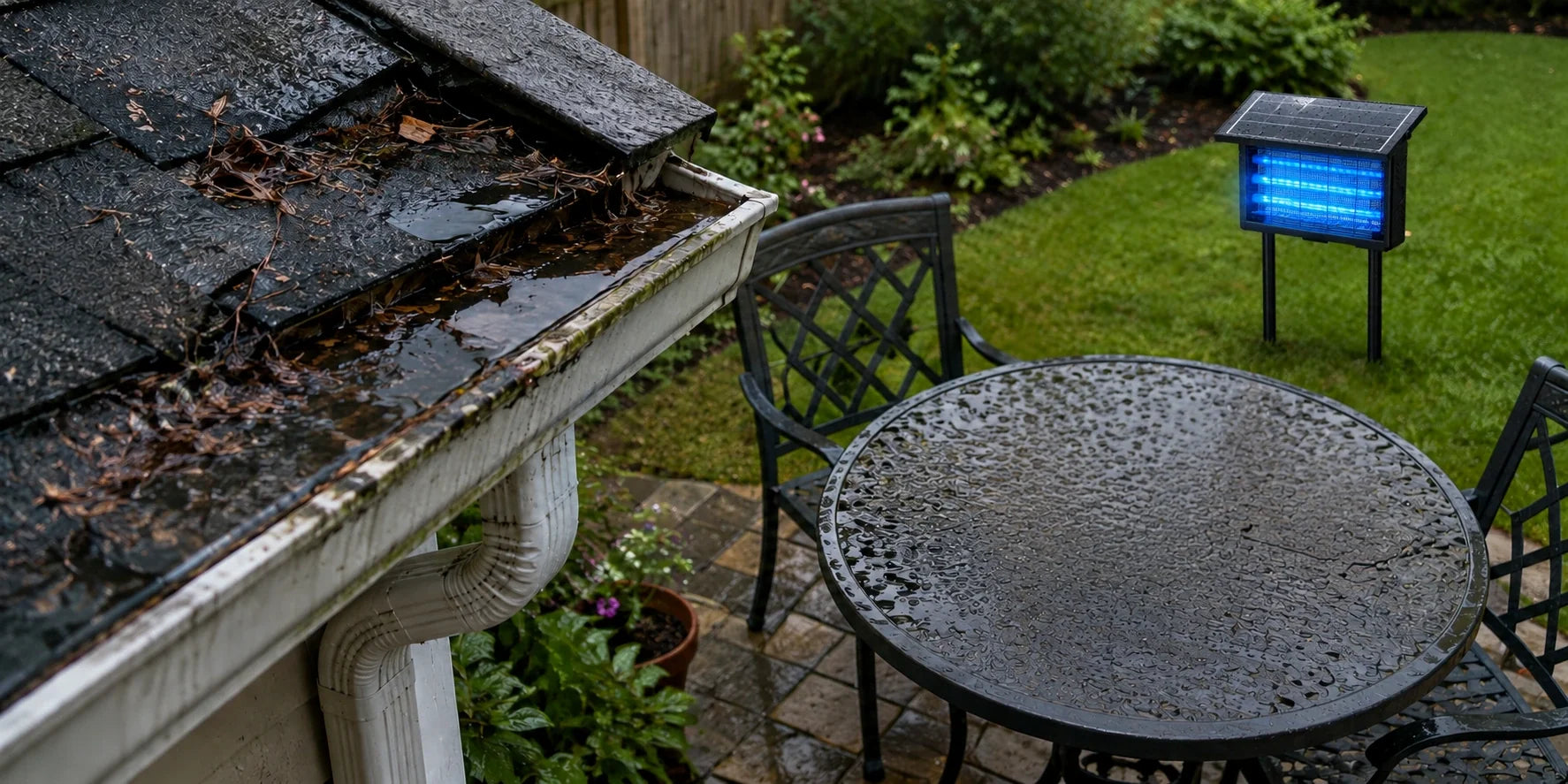
Mosquitoes need two things to thrive: standing water and warmth. The Gulf Coast delivers both in abundance. Spring rains are heavier and more frequent here than in most regions, and the humid subtropical climate means that puddles, clogged gutters, plant saucers, and low-lying yard depressions rarely dry out completely between storms. Each one becomes a potential nursery.
A single female mosquito can lay 100–300 eggs at a time, and in Gulf Coast warmth, those eggs can go from larvae to biting adults in as little as 7–10 days. That's why mosquito season here doesn't creep in — it seems to switch on almost overnight after the first big spring rain.
The Standing Water Problem After Spring Rain
If you want to get ahead of the season, the first move isn't a zapper or a repellent — it's a walk around your property after the next storm. Look for:
- Clogged gutters holding pooled water
- Saucers under potted plants
- Tarps or pool covers with low spots
- Old tires, buckets, or toys collecting rain
- Low areas of the yard that stay damp for more than a few days
Eliminating these breeding sites won't solve mosquito season on its own — mosquitoes travel from neighboring yards, ditches, and wetlands too — but it removes the sources you control, which matters most in a region where rain returns every few days.
Why Humidity Wrecks Cheap Mosquito Gear
Gulf Coast humidity is hard on outdoor electronics. Zappers and repellent devices that aren't built for constant moisture exposure can corrode, short out, or lose effectiveness faster in this kind of climate — sometimes within a season or two, right when mosquito activity is at its peak. If you're setting up mosquito defense for a Texas or Louisiana yard, durability in humid, rain-heavy conditions should be a non-negotiable spec, not an afterthought.
This is why weatherproofing matters as much as UV strength when comparing zappers for Gulf Coast use. Look for models with sealed electronics, corrosion-resistant materials, and a build genuinely rated for constant moisture exposure — not just light rain splash.
Setting Up for the Season Ahead
A practical Gulf Coast mosquito setup usually combines three layers:
- Source reduction — clearing standing water weekly during rainy stretches
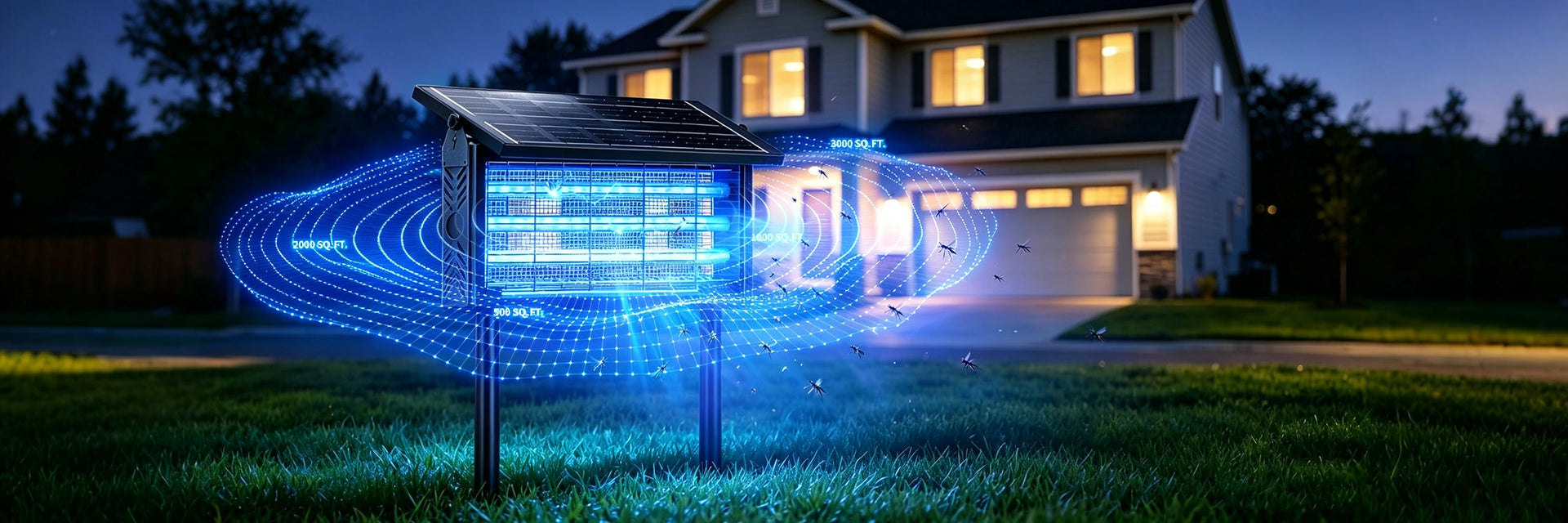
- Perimeter defense — a solar bug zapper placed near patios, porches, or wherever people gather at dusk
- Personal protection — repellents for anyone spending extended time outdoors during peak activity hours
Placement matters as much as the device itself. Mosquitoes are most active at dawn and dusk, so positioning a zapper near — but not directly on — seating areas gives it a chance to intercept mosquitoes before they reach people, without pulling them toward the porch first.
Texas and Louisiana mosquito season is a function of geography: heavy spring rain plus sustained humidity equals near-constant breeding conditions. Homeowners who get ahead of it combine standing-water control with gear built to actually survive the climate — not just gear built to work on the shelf.