Mosquito-Free Living Insights
Why Is My Zapper's Tray Empty? Placement Mistakes to Avoid
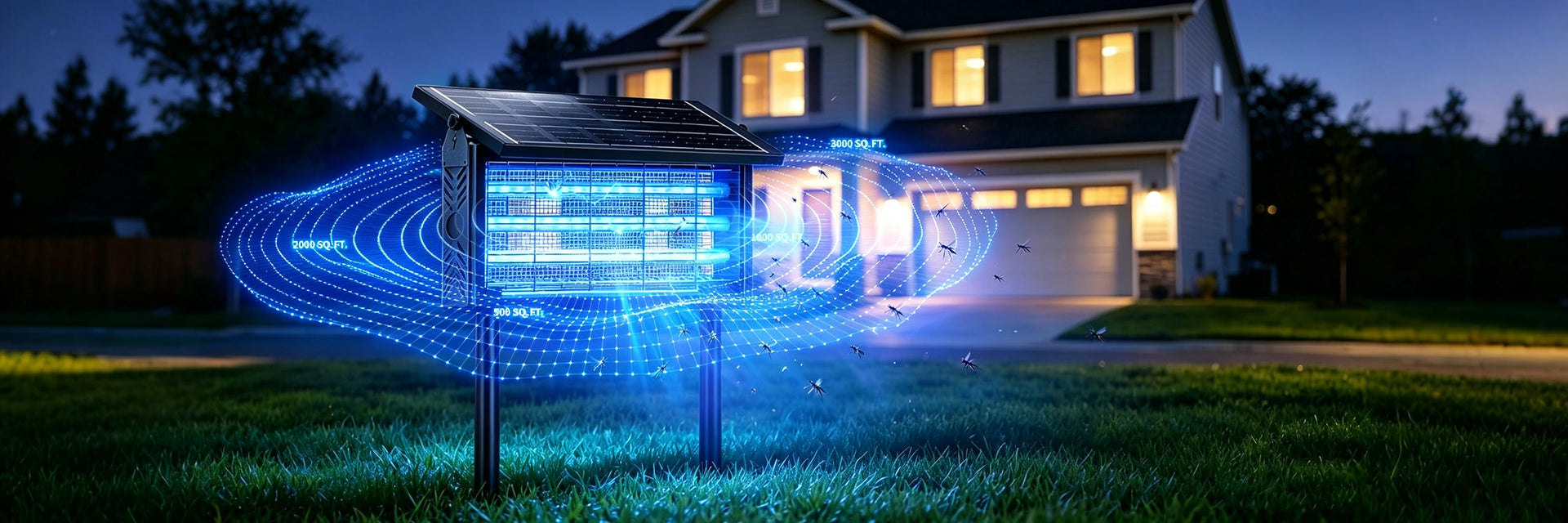
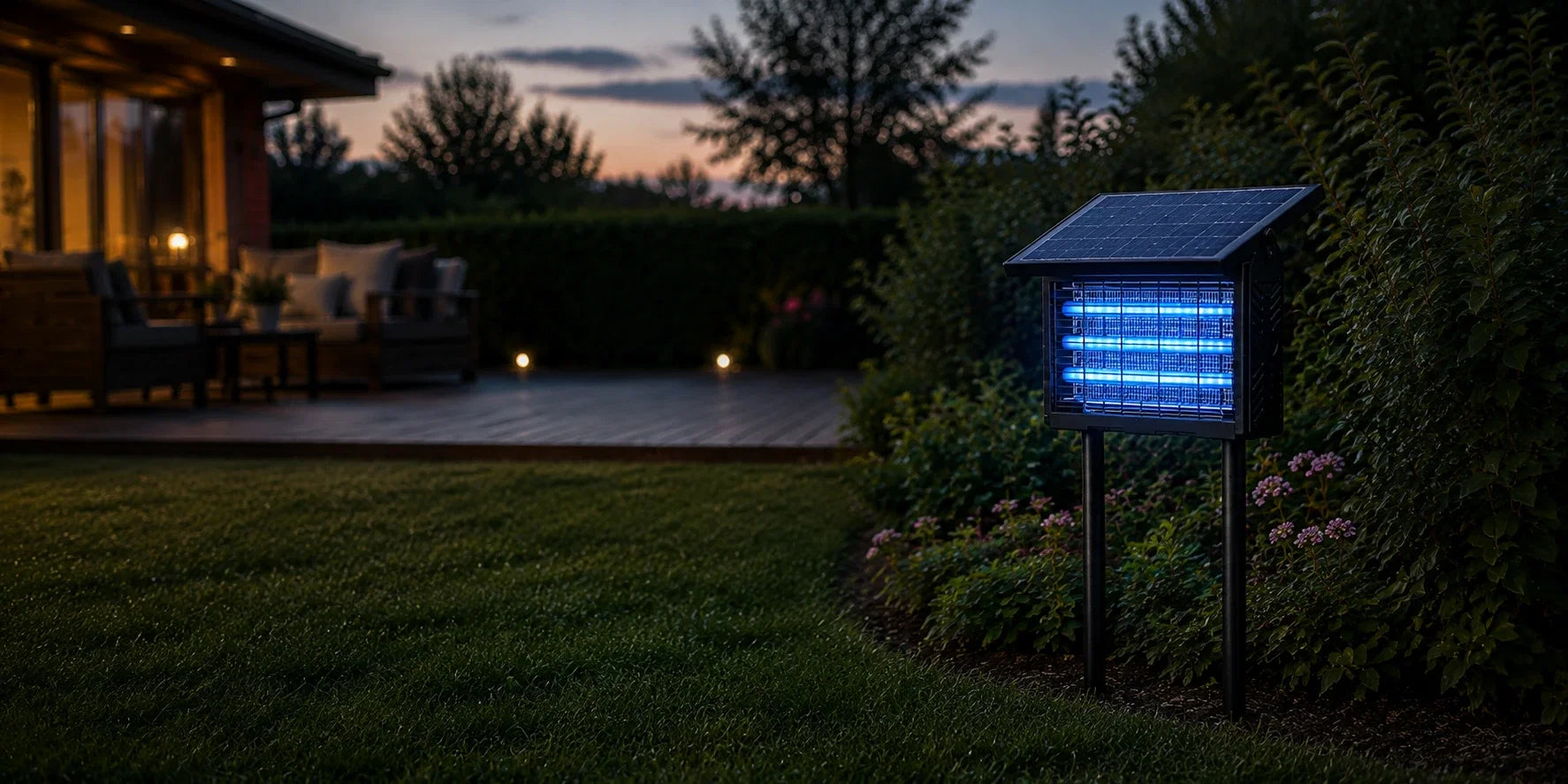
If you've had your Murutoi solar mosquito trap running for a few nights and the collection tray still looks empty, the unit itself is probably fine — the placement usually isn't. Where you set up the trap has more influence on results than almost any other factor, and a few common mistakes can quietly keep mosquitoes away from the device instead of drawing them in.
Here are the placement issues we see most often, and how to fix them.
1. Competing Light Sources
Mosquito traps that use UV light work by mimicking the wavelengths insects are naturally drawn to. If your trap is set up near a porch light, string lights, a bright window, or even a neighbor's floodlight, that competing light source can pull attention away from the trap. Insects will often gravitate toward whichever light source is brightest or closest, and a porch light rarely loses that contest.
Fix: Position the trap at least 15–20 feet away from any other light source, including motion-sensor lights and other ambient lighting around the yard.
2. Too Close to Seating Areas
It feels intuitive to place a mosquito trap right where you sit — but this is one of the most common mistakes. Mosquitoes are drawn to carbon dioxide and body heat from people, so a trap placed too close to a patio or seating area is competing directly with you as the more attractive target.
Fix: Set the trap 15–30 feet away from the seating or activity area, ideally between the seating zone and the direction mosquitoes are likely coming from (near standing water, dense vegetation, or shaded/damp areas).
3. Wrong Height
Different mosquito species fly at different heights. Placing the trap too high or too low can miss the flight path entirely.
Fix: A height of roughly knee-to-waist level (around 1.5–3 feet off the ground) works well for most species in residential yards. If you're targeting a specific problem area, observe where mosquitoes are most active in the early evening and adjust accordingly.
4. Ignoring Wind Exposure
Strong, consistent wind can disperse the light and airflow cues the trap relies on to draw insects in, making it harder for mosquitoes to locate the unit. A trap placed in a consistently windy, open area may underperform even with correct light and distance settings.
Fix: Choose a location with some natural wind buffering — near shrubs, a fence line, or the side of the house — while still keeping the trap away from competing lights.
5. Skipping the Breeding-Source Check
Placement isn't only about distance and light — it's about working with the mosquito activity that's already there. A trap set up far from any standing water, shaded vegetation, or known problem zones is working against a lower local mosquito density from the start.
Fix: Walk your yard at dusk and note where mosquito activity is heaviest. Position the trap along the path between that zone and your seating area, not directly inside either one.
Give It Time
Even with ideal placement, a solar mosquito trap is one part of managing an outdoor space — not an instant fix. Results build over consecutive nights as the trap works alongside reduced standing water and general yard maintenance. If the tray is still empty after adjusting placement and running the unit for several clear nights, the solar charge level is worth checking next (see FAQ below).