
Mosquito-Free Living Insights
Bug Zapper vs Mosquito Net: Which Is Right for Your Patio?
When it comes to protecting your patio from mosquitoes, the two most common tools people reach for are bug zappers and mosquito nets. They work in completely different ways — one actively targets mosquitoes across an open area, the other creates a physical barrier around a fixed space. Knowing the difference can help you pick the right fit for how you actually use your patio.
How Bug Zappers Work
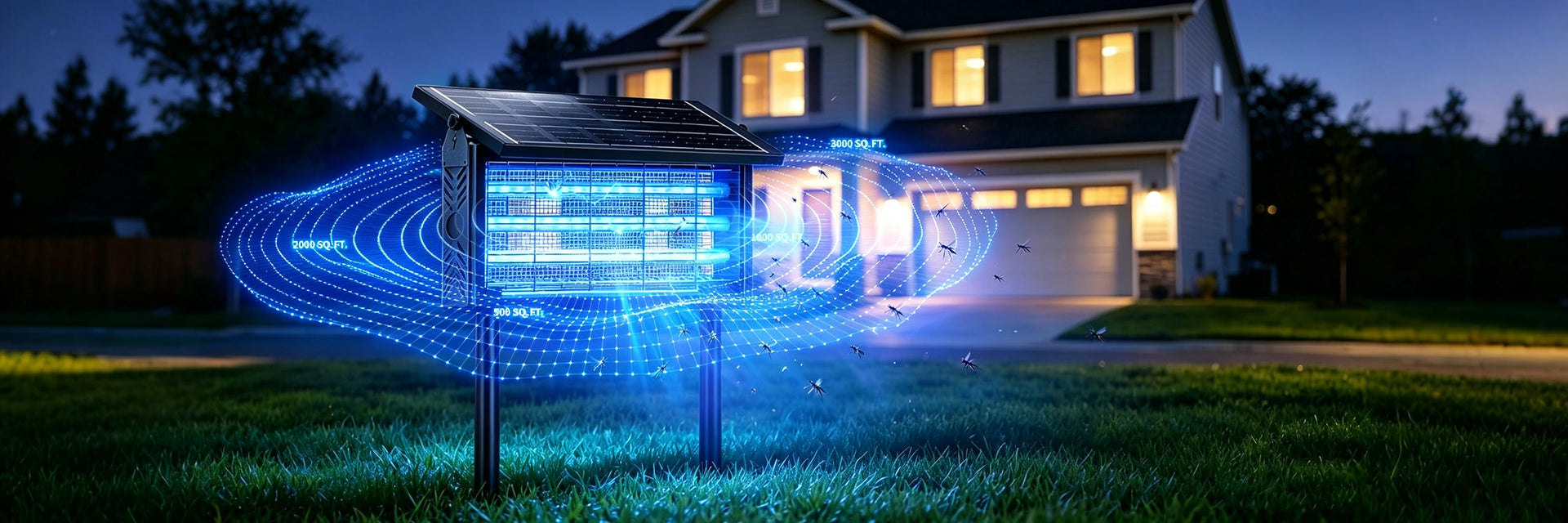
A bug zapper, like a solar-powered model such as Murutoi, uses a UV LED light to attract mosquitoes toward the unit, where an internal electric grid is designed to eliminate them. Because it works actively across open air rather than requiring a sealed structure, it can cover a patio, deck, or backyard seating area without walls or netting getting in the way of movement, grilling, or entertaining. Solar charging also means there's no cord running across the patio, and models like the G8 and G8L differ mainly in battery capacity — 2×7500mAh vs 3×9600mAh — giving you a choice depending on how large the area is or how long you want it running each evening.
How Mosquito Nets Work
A mosquito net is a physical mesh barrier — draped over a pergola, canopy, or dining set — that keeps mosquitoes from entering an enclosed or semi-enclosed space. It doesn't attract or eliminate mosquitoes; it simply blocks them from getting to the people or space inside. This makes it especially effective for a fixed area like a dining table, crib, or lounge space where the barrier can be fully closed on all sides.
Coverage: Active Area vs. Enclosed Barrier
This is the core tradeoff between the two:
• Bug zappers cover an active, open area — good for patios where people are moving around, grilling, or hosting guests, since there's no netting to duck under or gaps for bugs to sneak through when the flap opens.
• Mosquito nets create an enclosed barrier — good for a specific fixed zone, but only as effective as the seal around it. Gaps, un-tucked edges, or a net that's frequently opened and closed lose some effectiveness over time.
Best Use Cases for Each
A bug zapper tends to fit best for:
• Open patios, decks, and backyard seating areas
• Spaces where people are walking in and out frequently
• Evening gatherings where a fixed enclosure isn't practical
A mosquito net tends to fit best for:
• A single dining table or lounge area that stays in one place
• Cribs, playpens, or areas with infants and young children
• Spaces near a home's edge where nothing is actively drawing mosquitoes away
Combining Both for Maximum Coverage
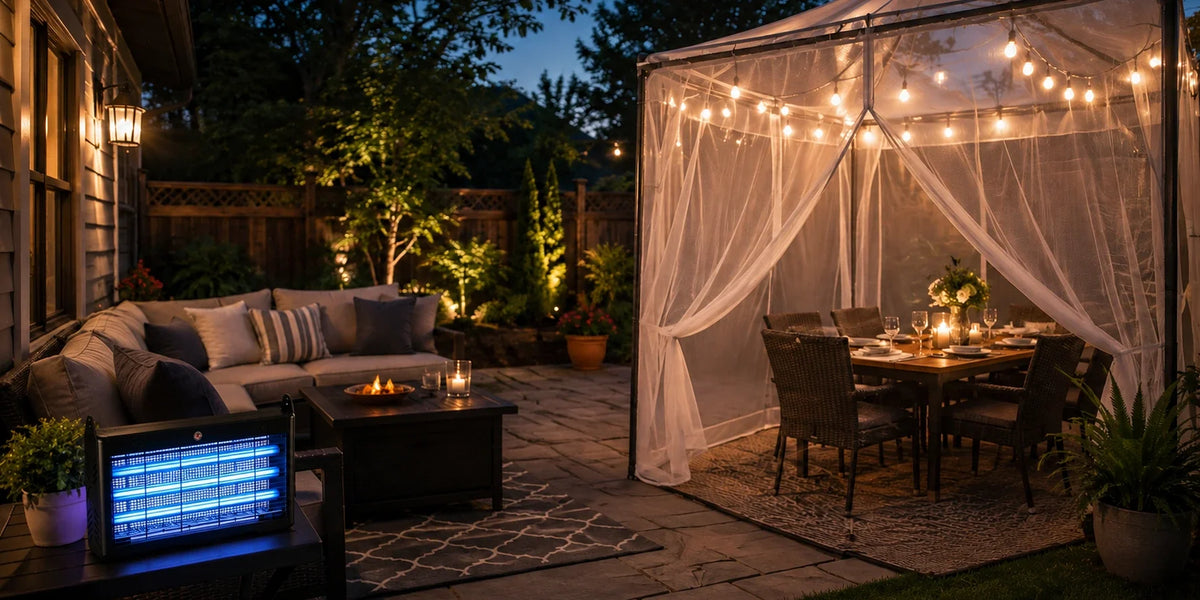
These two approaches aren't mutually exclusive. A common setup is a solar zapper positioned at the edge of the patio to help reduce the overall mosquito population in the surrounding area, paired with a mosquito net over a specific spot — like a dining table or baby's play area — for an added layer of direct protection where it matters most.
Which One Fits Your Patio?
If your patio is an open, high-traffic space where people are moving freely, a bug zapper is generally the more practical fit. If you have one specific area you want fully sealed off — like a crib on the porch or a dinner table you want bug-free during a meal — a mosquito net does that job well. Many patio owners find that using both, in the right spots, offers the most complete coverage.