Mosquito-Free Living Insights
Bug Zapper vs Mosquito Zapper Racket: Which Kills More Mosquitoes?
Two Very Different Tools, One Shared Goal
Search "how to get rid of mosquitoes" and two tools come up constantly: the bug zapper and the mosquito zapper racket. They sound similar — both use an electrified grid to kill on contact — but they work in almost opposite ways. One is a "set it and forget it" device. The other puts the kill switch, literally, in your hand. Choosing between them isn't really about which one is more powerful; it's about which style of mosquito control actually fits how you use your outdoor space.
How a Bug Zapper Works
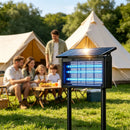
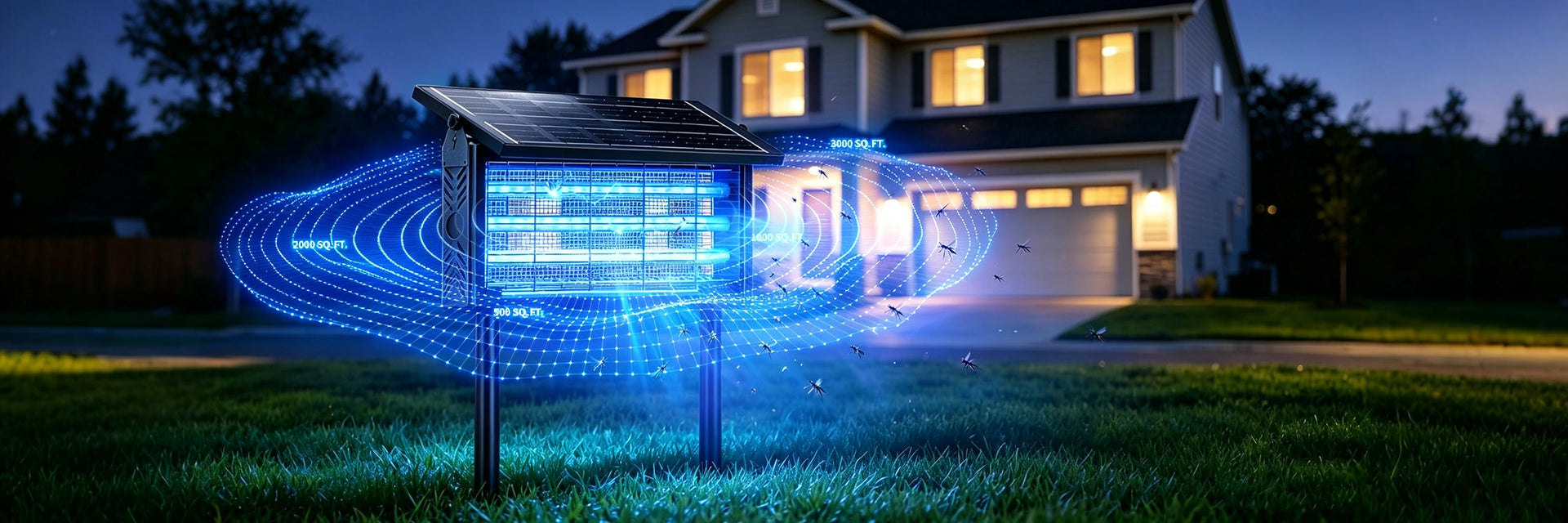
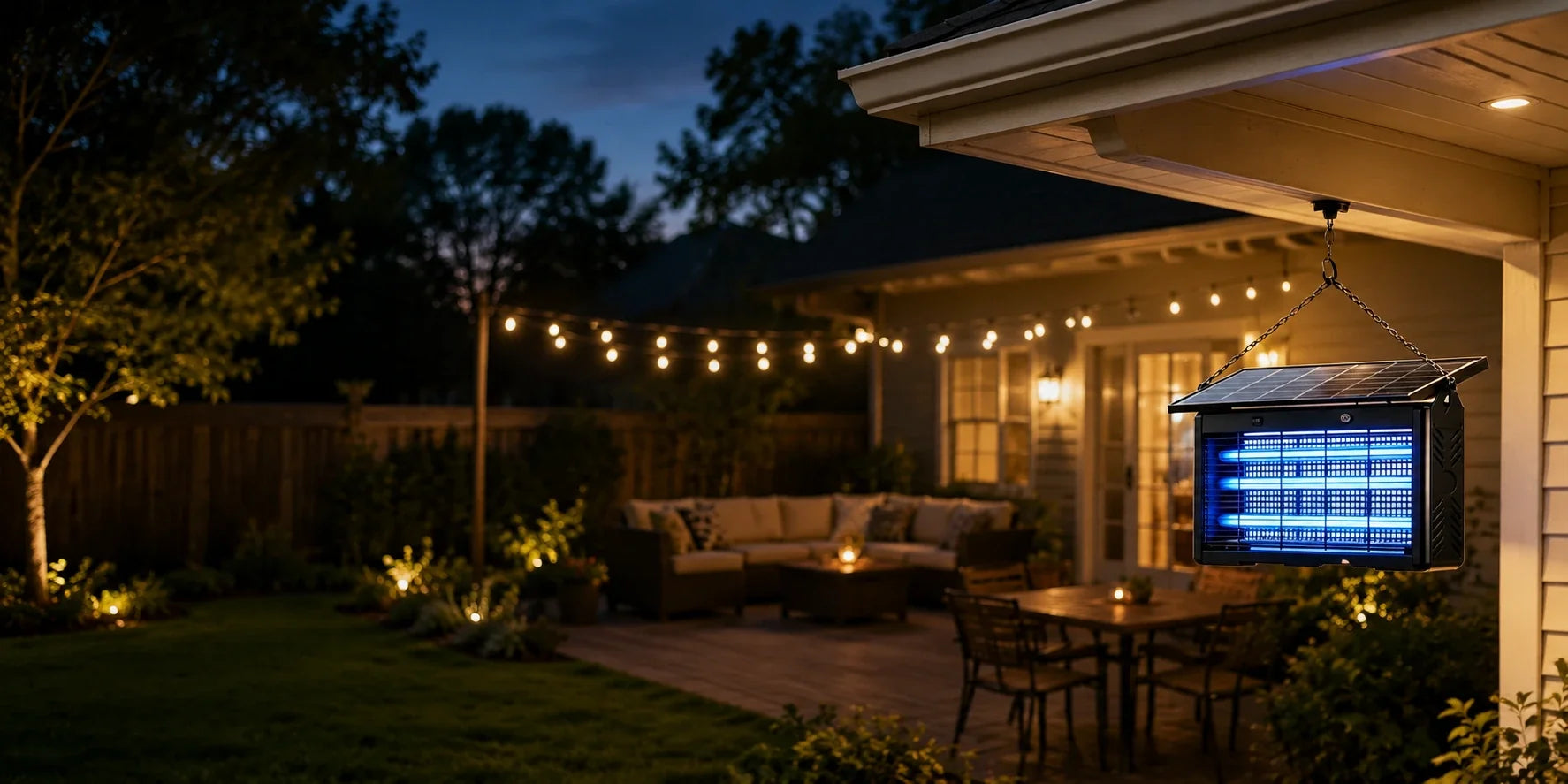
A traditional bug zapper is a stationary, automatic device, usually hung or mounted near a patio, porch, or backyard gathering spot. Most rely on UV light to draw insects toward an electrified grid — but it's worth knowing that light on its own attracts general flying insects (moths, beetles, gnats) more reliably than it attracts mosquitoes, which key in on body heat, breath, and skin scent more than light. Zapper models built specifically with mosquitoes in mind typically pair the light with a secondary attractant, such as heat or a simulated CO2 source, to close that gap. Some newer versions are also solar-powered, which removes the need for an outlet or cord and makes placement far more flexible — you can set one up on a pool deck, near a garden, or anywhere else that gets sun during the day.
The appeal is obvious: once it's installed, a bug zapper works continuously without you having to do anything. You're not the one deciding when to act — the device is running in the background whether you're outside enjoying the yard or not.
Trade-offs to know:
- Placement matters — positioning near the seating area you're trying to protect (rather than directly over it) generally works better, since you don't want to draw mosquitoes closer to where people are sitting.
- A basic light-only unit and a model with an added heat or CO2-style attractant will not perform the same against mosquitoes specifically, so it's worth checking what technology a given model uses before assuming it will handle mosquitoes well.
How a Mosquito Zapper Racket Works
A mosquito zapper racket looks like a tennis racket with a fine electrified mesh instead of strings. You swing it at mosquitoes in real time, and contact with the mesh delivers a jolt strong enough to kill on impact. It's manual, immediate, and satisfying in a way passive tools aren't — there's instant, visible feedback the moment you connect.
Rackets are especially useful for:
- Dealing with a mosquito that's already made it indoors or into an enclosed patio space.
- Handling a sudden swarm during an outdoor gathering without waiting for a device to do its job.
- Situations where you want zero risk of attracting more insects — a racket doesn't use light or scent to lure anything in; it only kills what you actively target.
Trade-offs to know:
- It only works while you're using it. The moment you put it down, protection stops.
- It requires active effort — you have to notice the mosquito, aim, and swing, which isn't practical for continuous coverage over hours outdoors.
- Coverage is limited to whoever is holding it; it doesn't protect an entire yard or gathering at once.
Passive vs Active: The Real Difference That Matters
The honest answer to "which kills more mosquitoes" depends less on raw kill power and more on time and coverage. A bug zapper runs for hours, unattended, covering a fixed area continuously. A racket only works in the moments you're actively swinging it. Over a full evening outdoors, a passive device is doing far more total work simply because it doesn't stop when you get distracted, start cooking, or sit down to eat — but that math only holds if the zapper is actually drawing mosquitoes in the first place. A light-only unit competing for general insect attention won't necessarily out-kill a well-timed racket on mosquitoes specifically.
That said, a racket has one advantage a zapper doesn't: precision and immediacy. If a single mosquito is bothering you right now, a racket handles it in seconds — no waiting for it to find its way to the zapper.
Which One Should You Choose?
| Use Case | Better Fit |
|---|---|
| All-evening backyard or patio coverage | Bug zapper (especially solar, cordless models) |
| Pool deck or gathering area with no outlet nearby | Solar bug zapper |
| Quick, targeted kills indoors or on demand | Mosquito racket |
| Minimal effort, "install and forget" | Bug zapper |
| Want zero risk of attracting extra insects | Racket |
| Budget-conscious, occasional use | Racket (typically lower upfront cost) |
For mosquito-specific results, look for a zapper that pairs light with a heat or CO2-style attractant — light alone is a weaker draw for mosquitoes than for other flying insects.
For most people, the two tools aren't actually competing — they're complementary. A solar-powered bug zapper handles the steady background work of reducing mosquito activity in a space over time, while a racket is the fast, on-demand backup for the mosquito that gets through anyway. Using a passive device as your primary layer and keeping a racket on hand for spot-treatment tends to cover more real-world situations than relying on either tool alone.