Mosquito-Free Living Insights
Dog-Safe Mosquito Control: What Pet Owners Need to Know
If you've got a dog who treats the backyard like their second home, mosquito control isn't as simple as picking whatever works fastest. Sprays, foggers, and chemical repellents raise real questions when there's a curious nose — or a paw — that might come into contact with them. Here's what actually matters when you're choosing mosquito control for a yard your pet spends time in.
Why Chemical-Based Options Give Pet Owners Pause
Most conventional mosquito control — yard sprays, foggers, chemical-treated barriers — relies on residue that lingers on grass, patio furniture, and soil. Dogs explore the world through their nose and mouth, which means they're far more likely than people to come into direct contact with whatever's been applied. Even products labeled pet-safe often come with instructions to keep pets off treated areas for a set period, which isn't always practical for a dog with full run of the yard.
How a Solar Bug Zapper Approaches This Differently
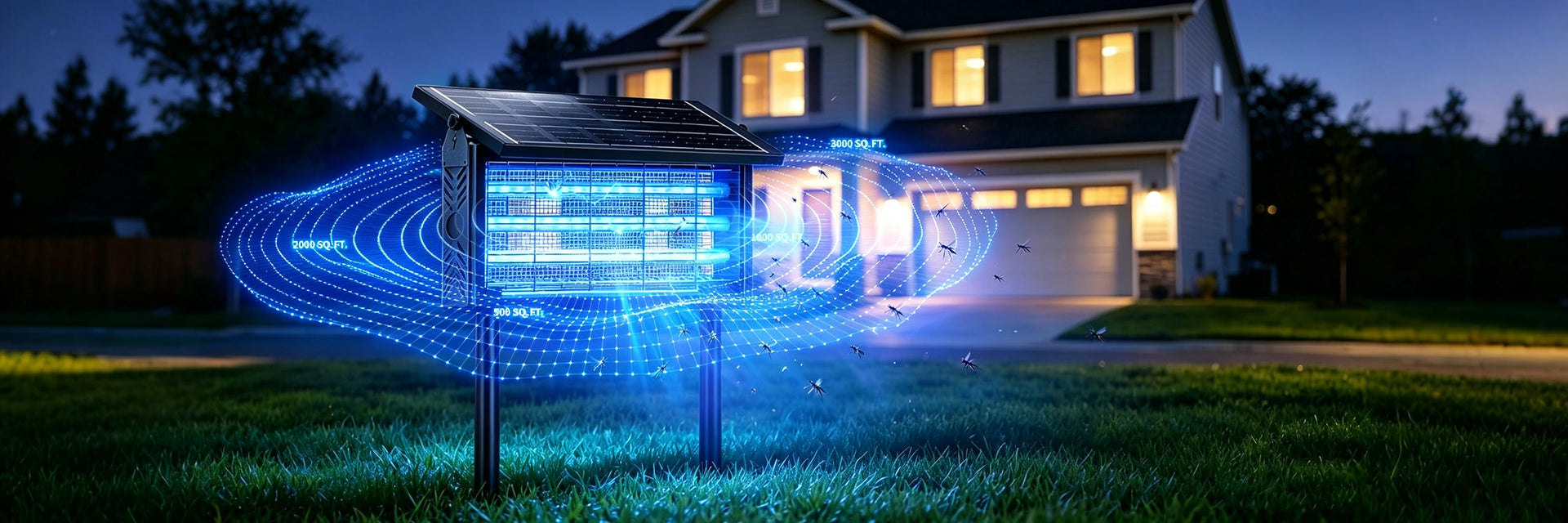
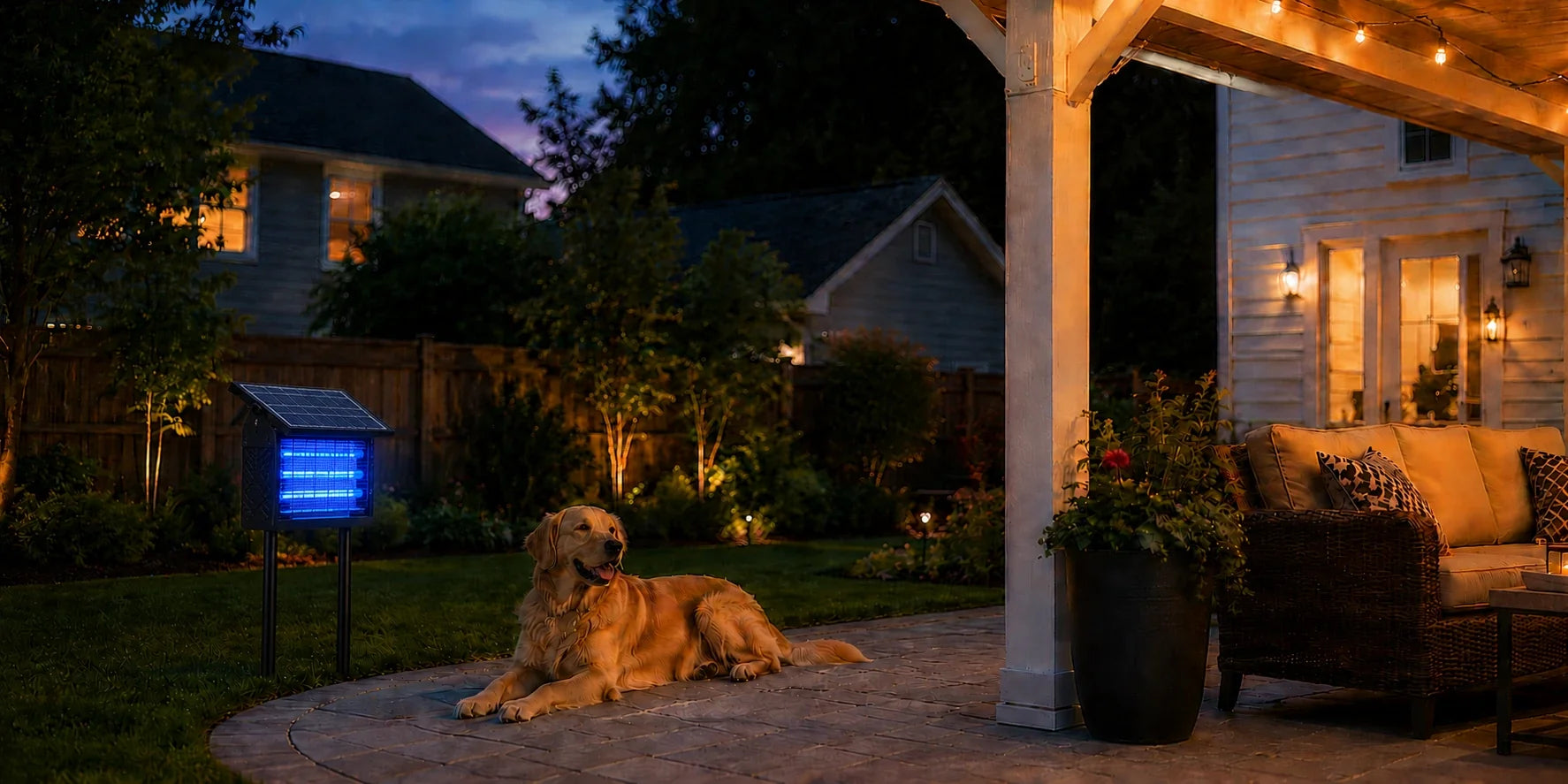
The Murutoi solar bug zapper works through UV light attraction and an electric grid — no sprays, no residue, nothing applied to your lawn or patio surfaces. That means there's no chemical layer for a dog to walk through, sniff, or lick. It's a mechanical approach to mosquito control rather than a chemical one, which removes an entire category of concern for pet owners.
The Enclosed Grid Matters
The electric grid inside the unit is fully enclosed within the housing, not exposed on the surface. This is the detail that matters most for households with pets:
- A dog (or curious cat) can't make direct contact with the grid itself during normal use.
- The enclosure is designed so insects are drawn in and dealt with inside the unit, not on an open surface at nose height.
- Mounting the unit on a post or hanging it, as recommended, keeps it out of a dog's normal reach entirely — the enclosed design is a safeguard, not a replacement for sensible placement.
As with any outdoor electrical device, we'd still recommend mounting it somewhere your dog can't jump up and interact with it directly — the enclosed grid reduces risk, but placement is your first line of defense.
What This Looks Like Day to Day
For a lot of pet owners, the appeal isn't just safety — it's not having to think about it. There's no reapplication schedule, no keeping the dog inside for a few hours after treating the yard, no wondering whether this week's rain washed away last week's spray and left you unprotected. The unit runs on solar power, works quietly overnight, and doesn't require you to change how your dog uses the yard.
A Few Practical Tips for Pet Households
- Mount the unit at a height and location your dog can't reach or jump toward, even out of curiosity.
- Keep the immediate area under the unit clear of toys or bedding so your dog isn't spending extended time directly beneath it.
- If you have a particularly persistent chewer or climber, a post-mounted setup away from furniture or ramps is safer than a low table placement.
You shouldn't have to choose between an effective mosquito control and dog you don't have to worry about. A solar bug zapper with an enclosed grid and no chemical residue removes the two biggest risk factors that come with conventional options — direct contact and lingering exposure — while still handling mosquitoes the way you need it to.