Mosquito-Free Living Insights
How to Charge Your Murutoi Solar Bug Zapper (G8 & G8L)
One of the most common questions we get about the Murutoi G8 and G8L is simple: how do you actually keep it charged? Here's exactly how the charging system works, based on the real hardware in both models.
Two Ways to Charge: Solar or USB (DC Round Plug)
Both the G8 and G8L use dual charging — you're never limited to just one method:
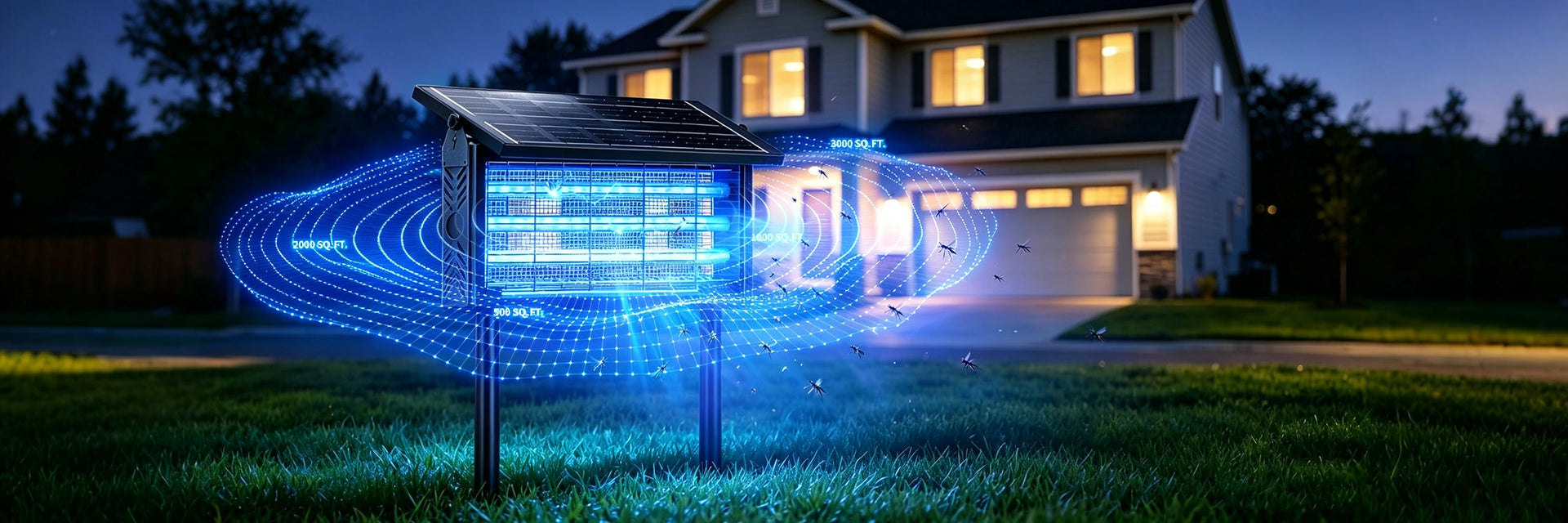
- Solar charging: The built-in solar panel (6V 14W on the G8, 6V 18W on the G8L) charges the internal battery whenever it's in direct sunlight. This is the default, hands-off way to keep the unit powered through the season.
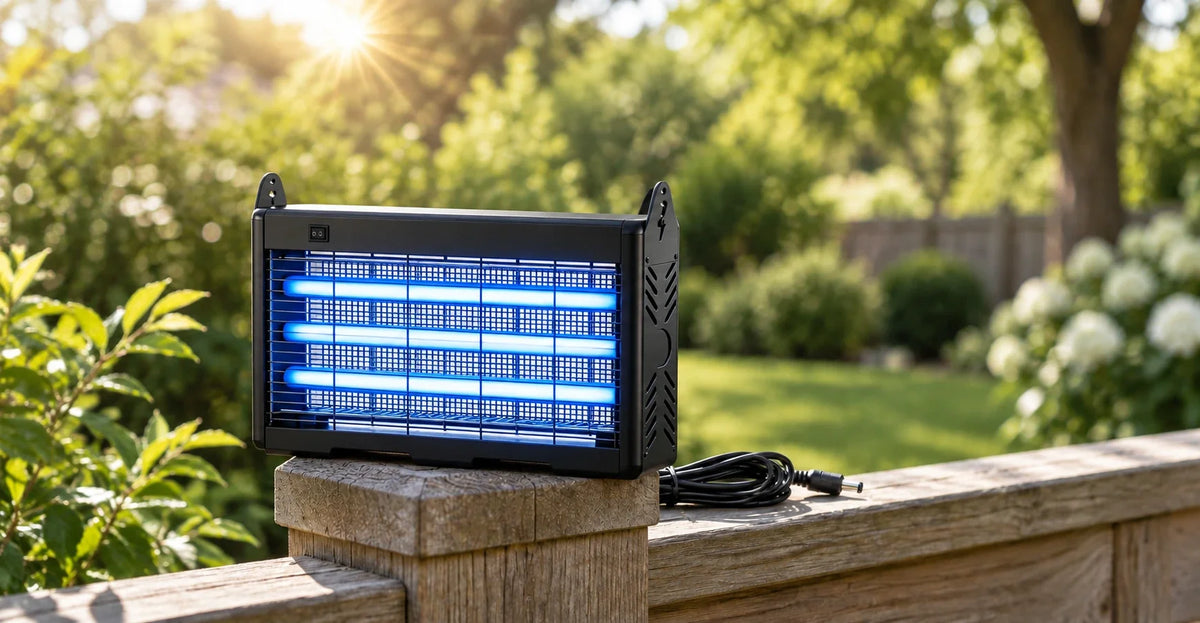
- USB (DC Round Plug) charging: For cloudy stretches, indoor use, or a quick top-off before a trip, both models can also be charged via the included DC round-pin cable — plugged into any standard USB power source. Note: this is a round DC connector, not USB-C, so double-check your cable before ordering a replacement.
You can rely on solar charging alone for most outdoor placements, or use the USB cable as a backup when the unit hasn't seen enough sun.
Battery Capacity: What's Actually Inside
Both models use rechargeable 18650 Li-ion cells with an energy density of 160–180Wh/kg:
- G8: 2 cells at 7500mAh each
- G8L: 3 cells at 9600mAh each
The G8L's extra cell and larger solar panel give it more stored capacity, which is why it holds up better over multi-night use without a full-sun recharge — useful for camping trips or spells of overcast weather.
Smart Auto Mode Does the Rest
Once charged, you don't need to manually switch the unit on and off. Both the G8 and G8L include Smart Auto Mode, a built-in light sensor that turns the zapper on automatically at dusk and off at dawn. That means:
- No remembering to flip a switch every evening
- No wasted battery running during daylight hours
- Charging (solar) and operation (nighttime) happen on their own daily cycle
Getting the Most Out of Each Charge
A few practical habits help maximize runtime on either model:
- Position the solar panel for direct sun exposure. Both units have an adjustable panel angle — point it toward the sun's path for your location rather than leaving it flat.
- Keep the panel surface clean. Dust, pollen, or debris on the solar panel reduces how much charge it collects during the day.
- Use the DC round-pin cable as backup, not a replacement habit. Regular solar exposure is the more sustainable way to keep the unit topped off long-term.
- Use the included extension setup for flexible placement. If your ideal mounting spot doesn't get direct sun, an extension cord option lets you position the solar panel separately from the main unit.
What You Don't Need to Worry About
The G8 and G8L are IPX5 waterproof, so charging and operation continue through normal rain exposure — you don't need to bring the unit in before a storm. The dual UV LEDs inside are sealed and not designed to be replaced, so there's no bulb-changing maintenance involved; the only upkeep is keeping the solar panel clean and charged.
The Bottom Line
Whether you choose the G8 or the G8L, charging comes down to two simple options — let the sun do the work, or use the DC round-pin cable as a backup. Combined with Smart Auto Mode, it's designed to run itself once it's set up.
Compare battery and solar specs side-by-side on the G8 product page and G8L product page.