Mosquito-Free Living Insights
RV & Road Trip Mosquito Control: A Full-Timer's Guide
No outlet needed = ideal for RV life. Learn more about RV mosquito control and how to keep your outdoor space mosquito-free.
If you live the full-time RV life — or you're just planning a long summer road trip — you already know that mosquitoes don't care whether you're parked at a national park, a lakeside campground, or a gravel pull-off for the night. Wherever there's standing water, shade, or dusk, they'll find you. And when your "backyard" changes every few days, the usual mosquito-control tricks people use at home don't always translate.
Here's what actually works when your living room is on wheels.
Why RV Life Makes Mosquito Control Harder
A stationary home can rely on yard treatments, standing water removal, and permanent fixtures like bug zappers plugged into a garage outlet. RVs and campsites don't offer that luxury:
- No guaranteed power source. Many campgrounds offer electrical hookups, but boondockers and dry campers often don't have one at all.
- Constantly changing environment. You can't "mosquito-proof" a piece of land you'll only be on for two nights.
- Limited storage space. Anything you bring needs to be compact and multi-purpose.
- Awning and door traffic. Every time the door or awning opens, mosquitoes get an invitation inside.
The result is a moving target — literally — which means your mosquito control needs to be portable and self-sufficient, not tied to your rig's electrical system.
What to Look for in RV Mosquito Control
1. Battery or Solar Power, Not Just AC
The single biggest limitation for RVers is power. A plug-in bug zapper is useless at a boondocking site with no hookup, and running one off your RV's inverter just to kill bugs is a poor use of battery capacity you need for the fridge, lights, and water pump.
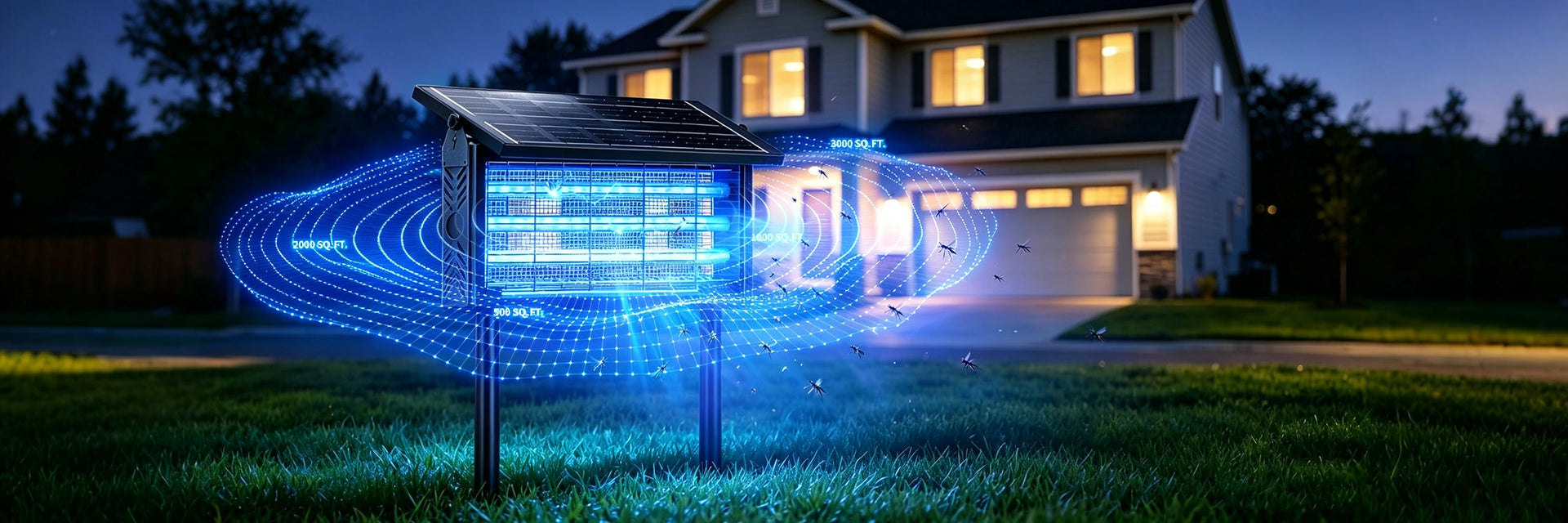
This is exactly why solar-powered options have become the go-to for full-timers. A solar bug zapper charges during the day while you're out hiking or driving to your next stop, then runs off its internal battery in the evening — no cords, no draw on your RV's house batteries, and no outlet required. That means setup works the same whether you're at a full-hookup site or dry camping in the backcountry.
2. Weather Resistance
Your gear gets rained on, dusted, and knocked around in storage bins. Look for devices rated for outdoor use that can handle humidity and light rain without shorting out.
3. Compact, Hangable Design
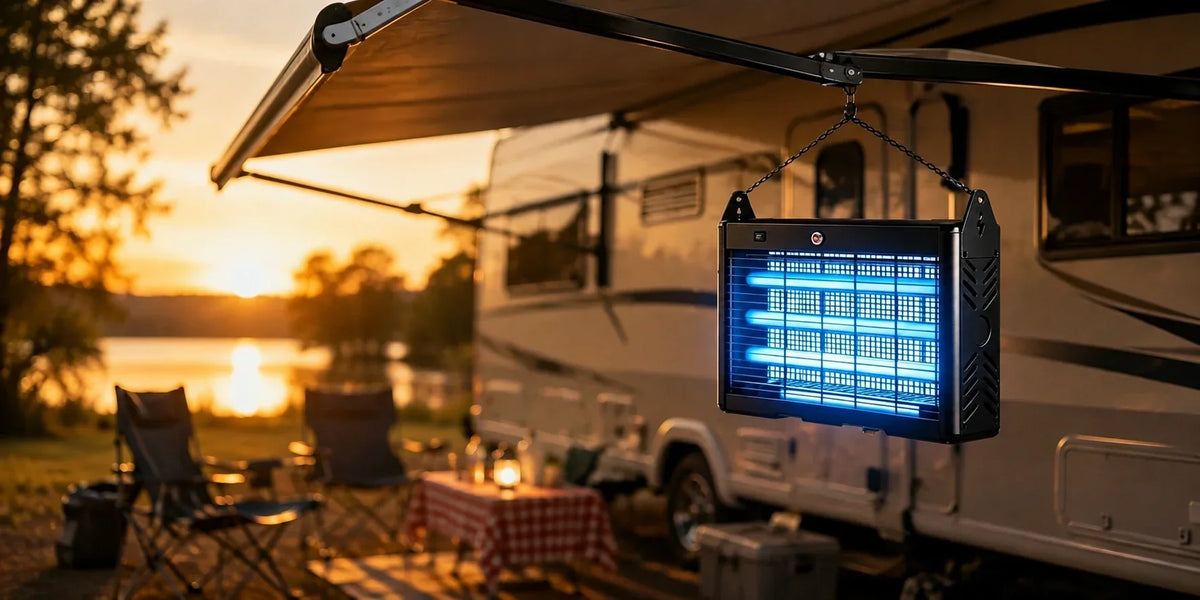
Space in an RV is precious. A unit that can hang from an awning arm, a tree branch, or a freestanding hook near your camp chairs is far more practical than something that needs a table and an outlet.
4. Low Maintenance on the Road
You don't want to be scrubbing out a bulky trap tray every other night. A simple wipe-down and occasional emptying should be enough to keep it working.
Setting Up Mosquito Control at Camp
- Hang it early. Set your bug zapper up in the late afternoon so it has time to attract and start reducing the local mosquito population before dusk, when activity peaks.
- Position it away from seating, not right next to it. Since the unit works by attracting insects toward its UV light, placing it a short distance from your camp chairs — rather than right beside them — helps pull mosquitoes away from where you're sitting instead of drawing them through it.
- Pair it with door discipline. Even the best zapper can't stop every mosquito that sneaks in when the door's open. A simple screen or quick in-and-out habit helps a lot.
- Let it charge during travel days. If you're using a solar unit, clip it somewhere sunny while you drive or hike so it's topped off by evening.
Final Thoughts
Mosquito control on the road comes down to picking gear built for unpredictable, off-grid conditions. Skip anything that depends on a plug, prioritize solar and battery-powered options, and get your setup hung and running before the sun goes down. Your evenings around the campfire — wherever that campfire happens to be parked tonight — will thank you.