Mosquito-Free Living Insights
Northeast Mosquito Season: New York & New England Setup Guide
Why the Northeast Has Its Own Mosquito Timeline
Mosquito season doesn't arrive on the same date everywhere. In the Northeast — New York, Massachusetts, Connecticut, Vermont, New Hampshire, Maine, and Rhode Island — the season is shaped by a specific mix of geography: coastal marshes, inland wetlands, dense tree cover, and a spring thaw that can vary by several weeks from year to year. Homeowners near ponds, creeks, or wooded lots often notice mosquito activity well before neighbors on open, sun-exposed lots.
Understanding this regional pattern is the first step to staying ahead of the problem rather than reacting to it once bites are already happening at backyard cookouts.
How a Solar Mosquito Trap Works
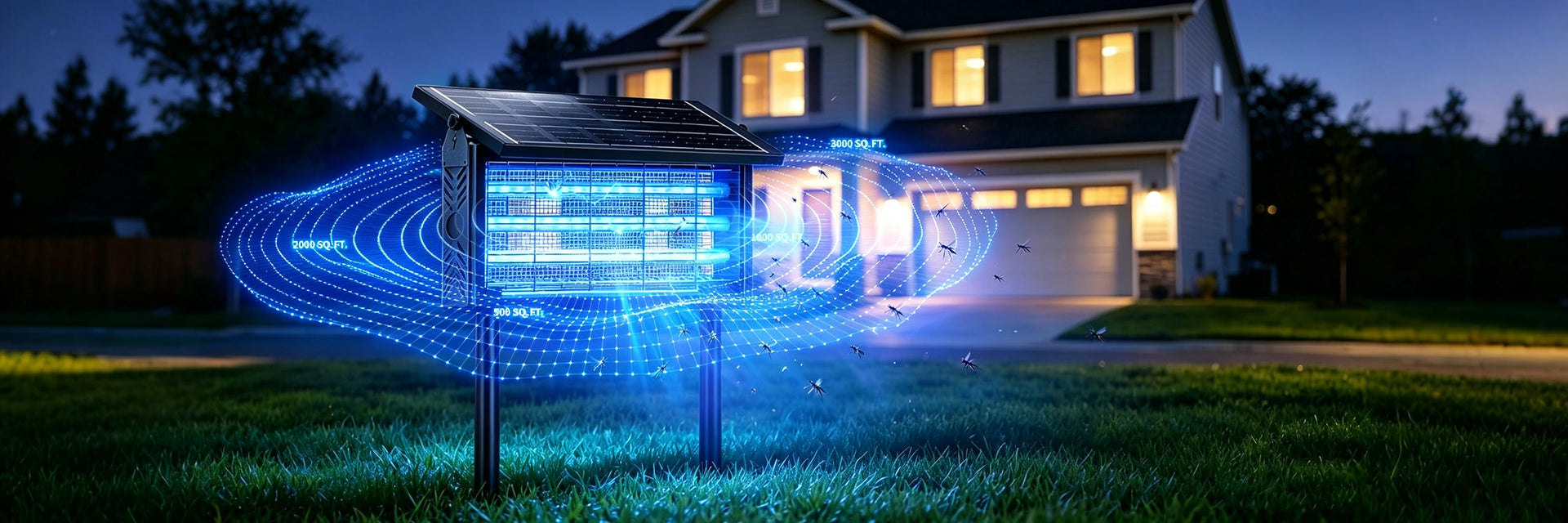
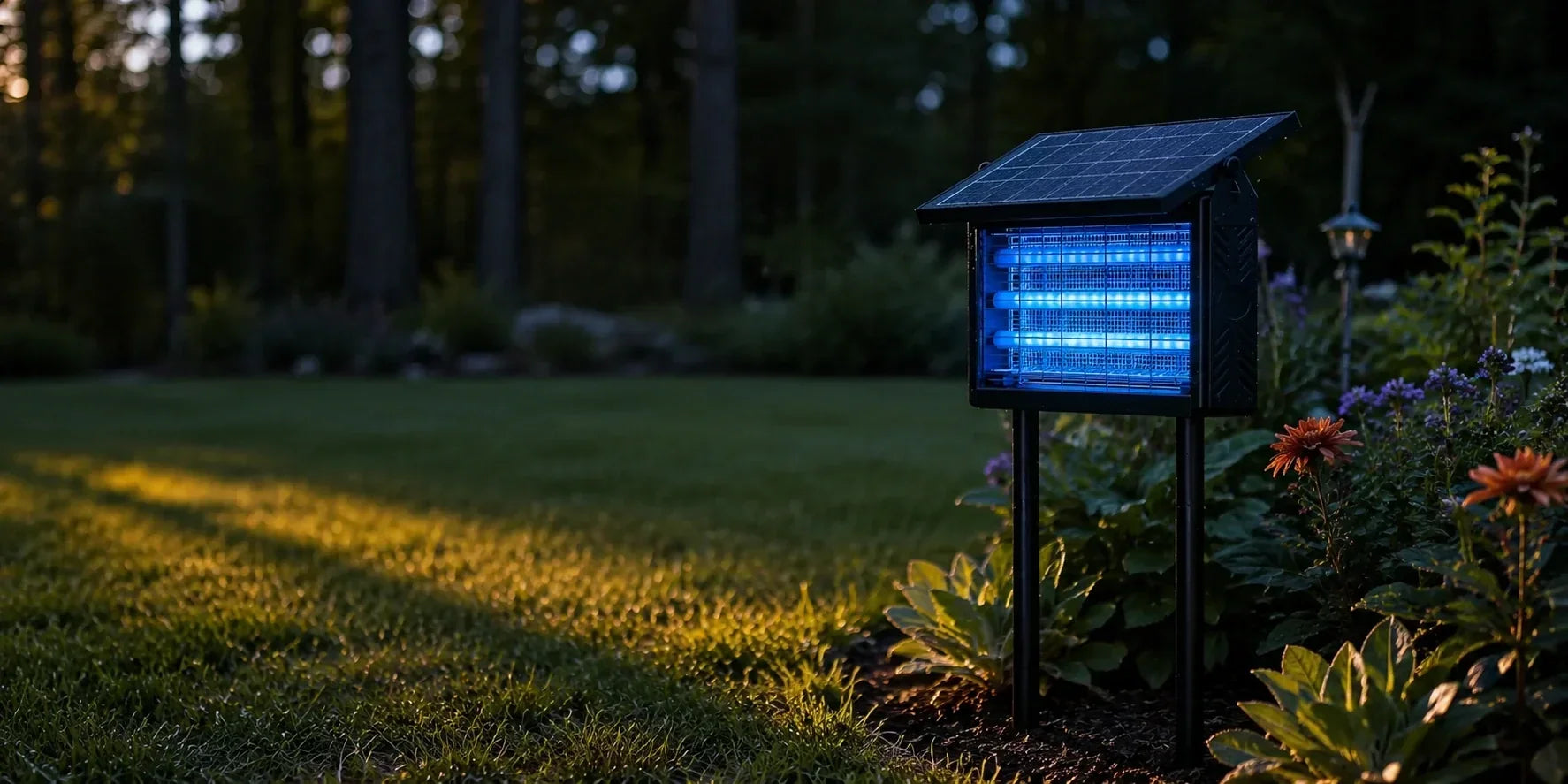
Before getting into timing, it helps to understand what the equipment is actually doing. A solar mosquito trap has three basic parts working together:
- A solar panel that charges an internal battery during the day, so the unit can keep running without being plugged into an outlet.
- A UV light, which is the primary attractant — many mosquito species are drawn to UV wavelengths, especially in low light at dusk and after dark. On Murutoi units, the UV LED is a sealed module built into the unit rather than a separate replaceable part.
- A fan or airflow system that pulls attracted mosquitoes into an internal collection chamber, where they're contained rather than being killed by chemicals or electric shock.
Charging happens through the unit's DC charging port. Because the whole cycle — charge during the day, attract and collect after dark — repeats automatically, placement and timing (covered below) are what determine how much of the local mosquito activity the trap is actually positioned to intercept.
When Mosquito Season Typically Begins in the Northeast
As a general reference point, mosquitoes tend to become active once daytime temperatures consistently climb above roughly 50°F (10°C), which allows dormant eggs and overwintering adults to resume their life cycle. This isn't an exact threshold — it varies by species and location — but it's a commonly used rule of thumb. Across most of the Northeast, that tends to fall somewhere between mid-April and early May, though a warm spring can push activity earlier and a cold, wet one can delay it.
Two local factors matter more than the calendar date:
- Standing water nearby. Wetlands, drainage ditches, retention ponds, and even clogged gutters give mosquitoes a place to breed as soon as temperatures allow. Yards near these features often see activity a week or two before drier properties.
- Shade and humidity. Mosquitoes rest in cool, shaded, humid areas during the day — think dense shrubs, wooded property edges, or shaded decks. Heavily shaded yards tend to hold onto favorable mosquito conditions later into the fall as well.
Setting Up Early: A Practical Checklist
Since the trap needs to already be running to catch early-season activity, waiting until mosquitoes are visibly swarming the patio means it's starting well after the local population has had time to build. For Northeast homeowners near wetlands, ponds, or shaded lot edges, that makes timing worth planning around:
- Watch the 10-day forecast starting in early April, and treat nighttime lows reliably above 50°F as a signal to get equipment in place.
- Walk the property and note standing water, shaded corners, and lot edges near wetlands — these areas typically activate first.
- Set up in priority zones (shaded, low-lying, near water) before mosquitoes become visibly active, rather than waiting for the first bites.
- Recheck placement after tree leaf-out, since new shade patterns shift where mosquitoes rest.
- Plan for continued operation into early fall, since Northeast wetland and shaded areas tend to stay active later than open, sunny yards.
Placement Tips for Wetland-Adjacent and Shaded Yards
- Position the trap along the transition zone between open yard and tree line or brush — this is a common mosquito resting and travel corridor.
- Keep it a reasonable distance from where people actually gather (patios, decks, play areas) so the trap is drawing mosquitoes toward itself rather than through your gathering space.
- For yards near ponds, marshes, or drainage areas, a spot with a clear line toward that water source can be useful, since that's typically where mosquito density is highest.
- Because the trap relies on its solar panel for daytime charging, choose a spot that still gets a reasonable amount of direct sun during the day, even if the unit itself will operate in a shaded resting zone at dusk.
Northeast mosquito season isn't one single start date — it's a gradient shaped by wetlands, shade, and how quickly spring warms up in a given yard. Setting up early, especially in low-lying or shaded areas near standing water, is a straightforward way to be ahead of the season instead of reacting to it.