Mosquito-Free Living Insights
Where to Place Your Solar Bug Zapper for Maximum Sun Exposure
A solar bug zapper is only as strong as the charge it gets during the day. If yours seems dimmer than expected or doesn't last the whole night, the problem is often less about the unit and more about where it's set up. Getting placement right is the single easiest way to get the most out of your Murutoi G8 or G8L.
Aim for At Least 6 Hours of Direct Sun
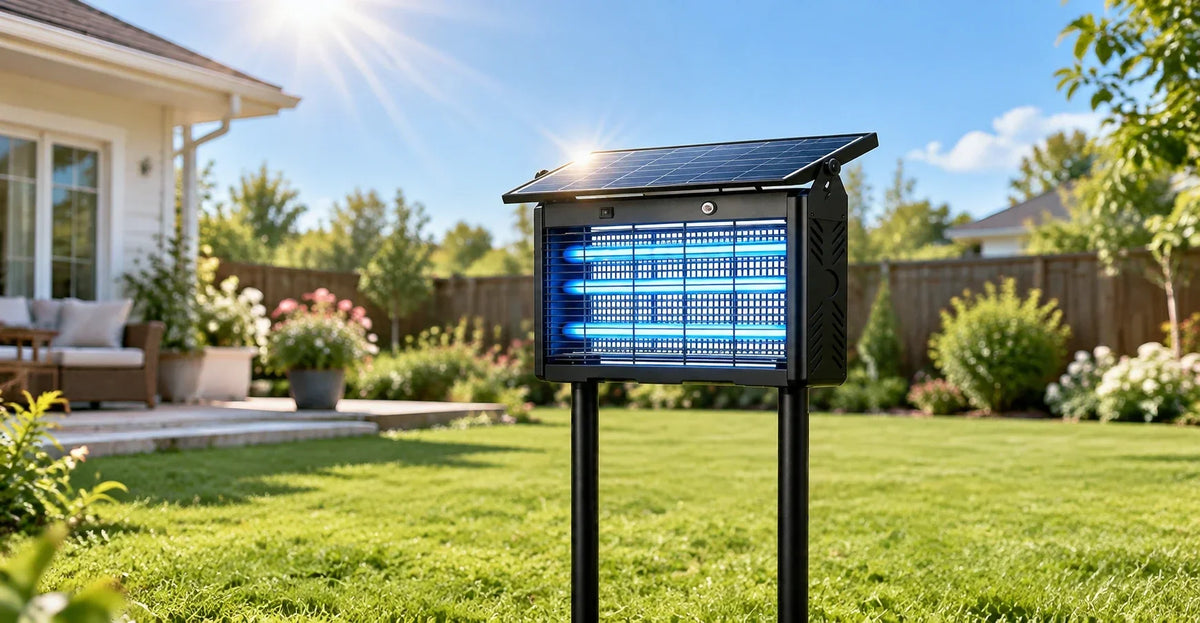
Solar panels need direct, unobstructed sunlight — not just daylight — to charge efficiently. A spot that gets six or more hours of direct sun (even if it's partial shade in the early morning or late afternoon) will charge far better than a spot under a covered patio or dense tree canopy.
Watch for Shade That Moves
The sun's angle shifts through the seasons, so a spot that was full sun in July might fall into shade by September as trees grow or the sun's path lowers. Walk your yard at different times of day when choosing a permanent spot, and check back in every few months if you leave it mounted long-term.
Good Placement Spots
- Open lawn areas using the included support pole (9.5" on the G8, 17.7" on the G8L), planted away from overhanging branches
- Hanging from a hook or branch using the built-in chain, in a clearing with a full view of the sky
- Near an outlet using the 20ft extension cord, if you want the sunniest spot even when it's farther from where you'd normally plug in
- Rooftops of sheds or low structures with a clear sky view
Spots to Avoid
- Directly under trees, awnings, or pergolas
- Against north-facing walls (in the Northern Hemisphere), which get the least direct sun
- Low areas that flood or collect standing water after rain
Balance Sun Exposure With Coverage
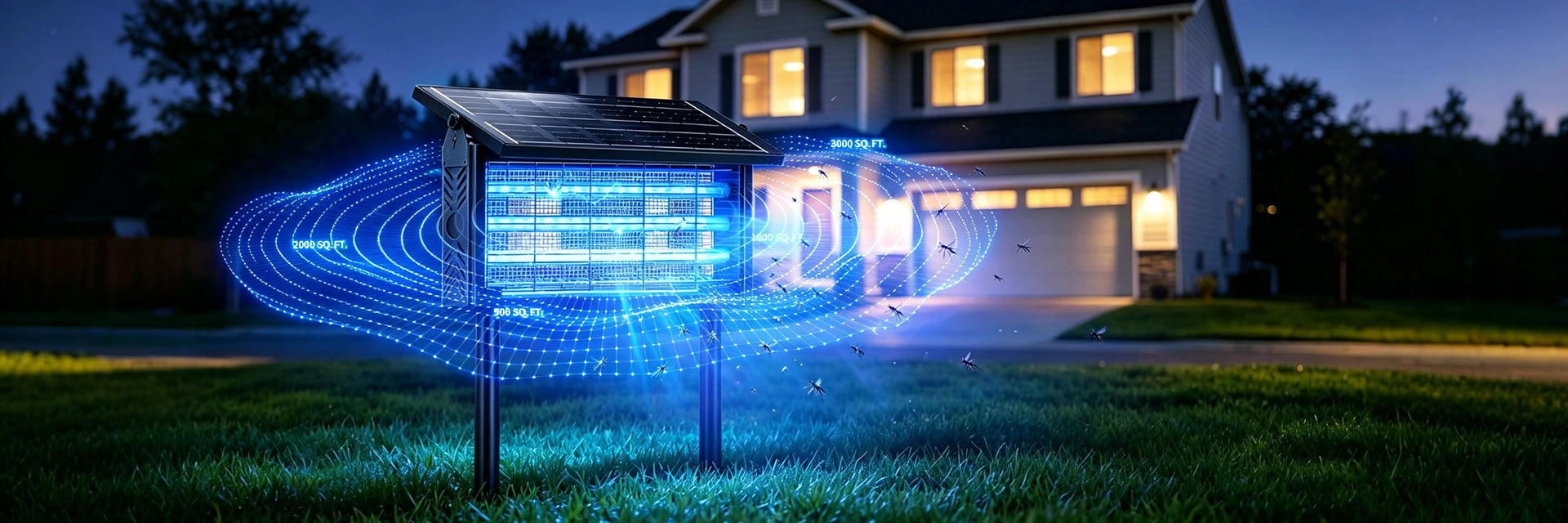
The best charging spot isn't always the same as the best mosquito-catching spot — mosquitoes tend to gather near shaded, humid areas like garden beds or near standing water, which are often shadier. If you have to choose, prioritize a sunny mount and let the UV tubes' attraction radius do the work reaching into shadier zones nearby. For larger yards where one placement can't do both well, consider a second unit — our guide on how many zappers your yard needs walks through sizing your setup.
Quick Check for Your Current Spot
If your zapper's light seems weaker than usual by evening, spend a day observing shadow patterns in that exact location before assuming there's a hardware issue. In most cases, moving it just a few feet — or adjusting the panel's tilt angle — into more open sun solves the problem.