Mosquito-Free Living Insights
Will It Kill Bees and Butterflies Too? What the Data Shows
It's one of the most common hesitations people have before buying a bug zapper: will it kill the bees and butterflies I actually want in my yard? It's a fair question, and the honest answer is more nuanced than a simple yes or no.
How Bug Zappers Actually Attract Insects
Bug zappers work by emitting ultraviolet (UV) light, which many flying insects are drawn to. But not all insects respond to UV light the same way, and not all insects are active at the same time of day — and that second point matters more than most marketing copy admits.
Bees and butterflies are overwhelmingly diurnal, meaning they're active during daylight hours when they can see color, navigate by the sun, and forage for nectar. By contrast, mosquitoes and many of the nuisance insects zappers are designed to target are most active at dusk and into the night — exactly when a UV zapper is doing its work and exactly when bees and butterflies have already returned to their hives or roosting spots.
This timing gap is the main reason bug zappers catch far fewer bees and butterflies than people assume. It's not that the light can't attract them in theory — it's that the hours of peak zapper activity and the hours of peak bee/butterfly activity barely overlap.
What the Data Actually Shows
Entomology research on UV light traps has generally found that most insects caught are non-target species — moths, beetles, and other night-flying insects — rather than mosquitoes, with bees typically making up a small share of any catch. This tracks with how mosquitoes actually locate hosts: they rely more on body heat and carbon dioxide detection than on UV light, which is one reason zappers are considered a fairly modest tool for mosquito control specifically, even as they attract a broad range of other night-flying insects.
(Note: if you want to cite a specific study/percentage here, verify a real source before publishing — the language above deliberately avoids inventing exact figures.)
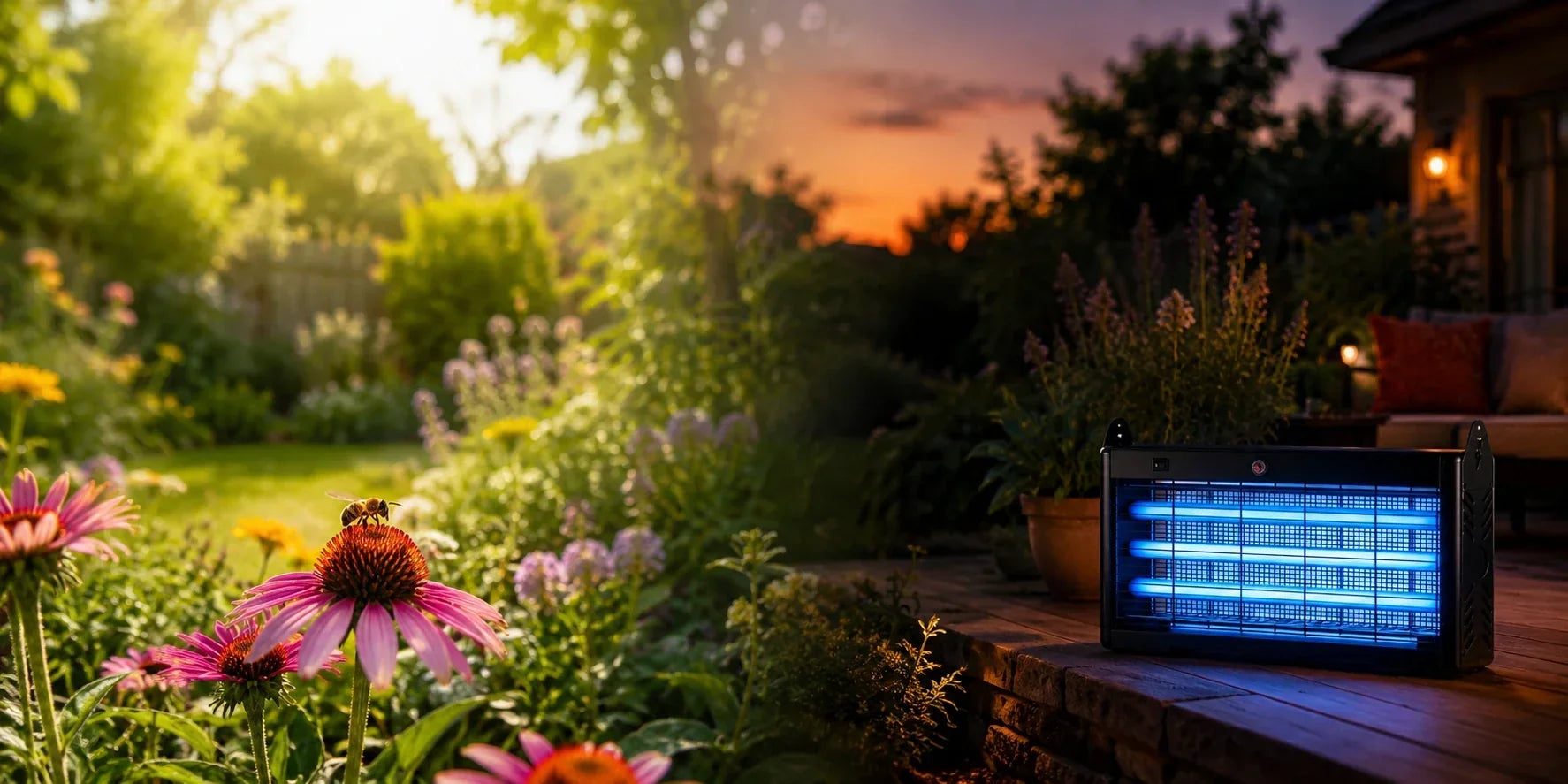
The honest caveat here: "low" doesn't mean "zero." Some studies have documented bee and butterfly deaths from UV traps, particularly in situations where zappers are run continuously through daylight hours or placed very close to gardens and flowering plants. If pollinator protection matters to you — and for most gardeners and homeowners, it should — placement and run-time make a real difference.
How to Minimize Pollinator Impact
If you want the mosquito control without unnecessary risk to bees and butterflies:
- Run zappers at dusk through night, not all day. This aligns operation with mosquito activity and away from peak pollinator hours.
- Position away from flowering plants and gardens. Place the zapper near seating areas instead of directly beside the plants pollinators are visiting.
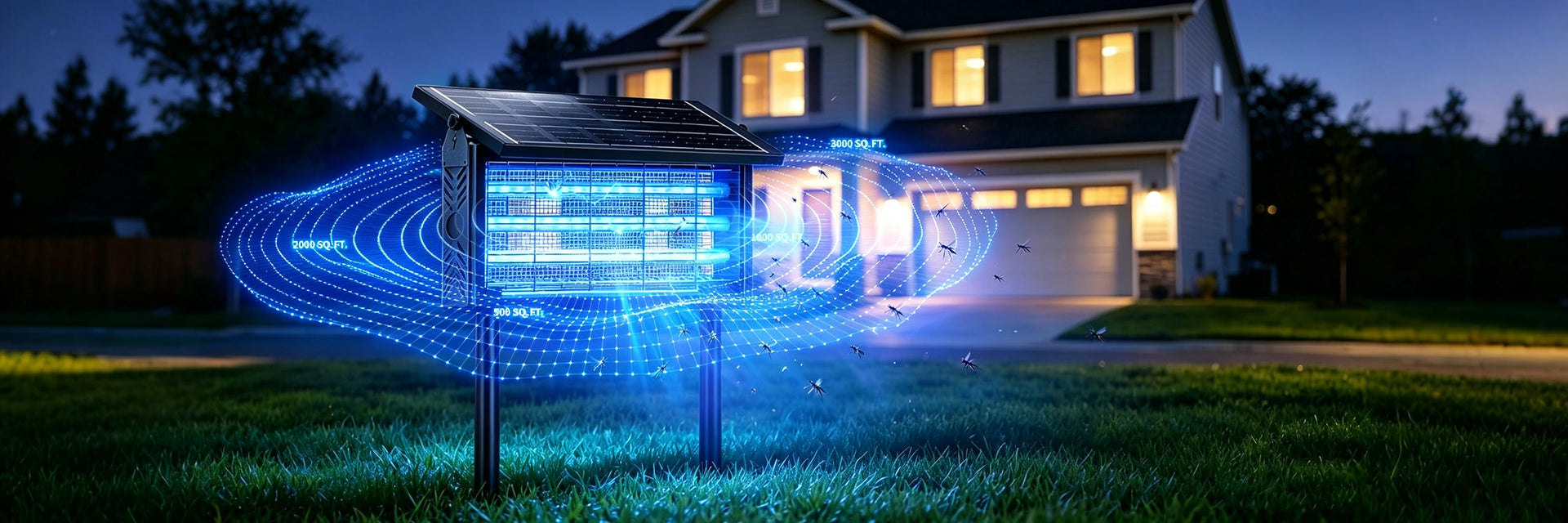
- Choose a solar-powered zapper with a light sensor. Devices that activate automatically at dusk and shut off at dawn naturally limit daytime operation without you having to remember to turn it on and off.
Bug zappers aren't bee-killing machines, but they aren't perfectly selective either. The data shows the risk to bees and butterflies is real but small, driven mostly by the mismatch between diurnal pollinators and nocturnal zapper activity. Smart placement and dusk-to-dawn timing — rather than all-day operation — is what actually keeps that risk low.