Mosquito-Free Living Insights
3-Night Camping Test: Does This Solar Bug Zapper Really Work Off-Grid?
I've tested a lot of "outdoor" gear that quietly assumes you'll be near an outlet. A solar bug zapper makes a bigger promise: no batteries to swap, no power bank, no cord — just sunlight in, mosquitoes gone. So I took one on a 3-night camping trip with genuinely no access to power, and wrote down exactly what happened each night. No polish, just the log.
Day 1: Setup and First Night
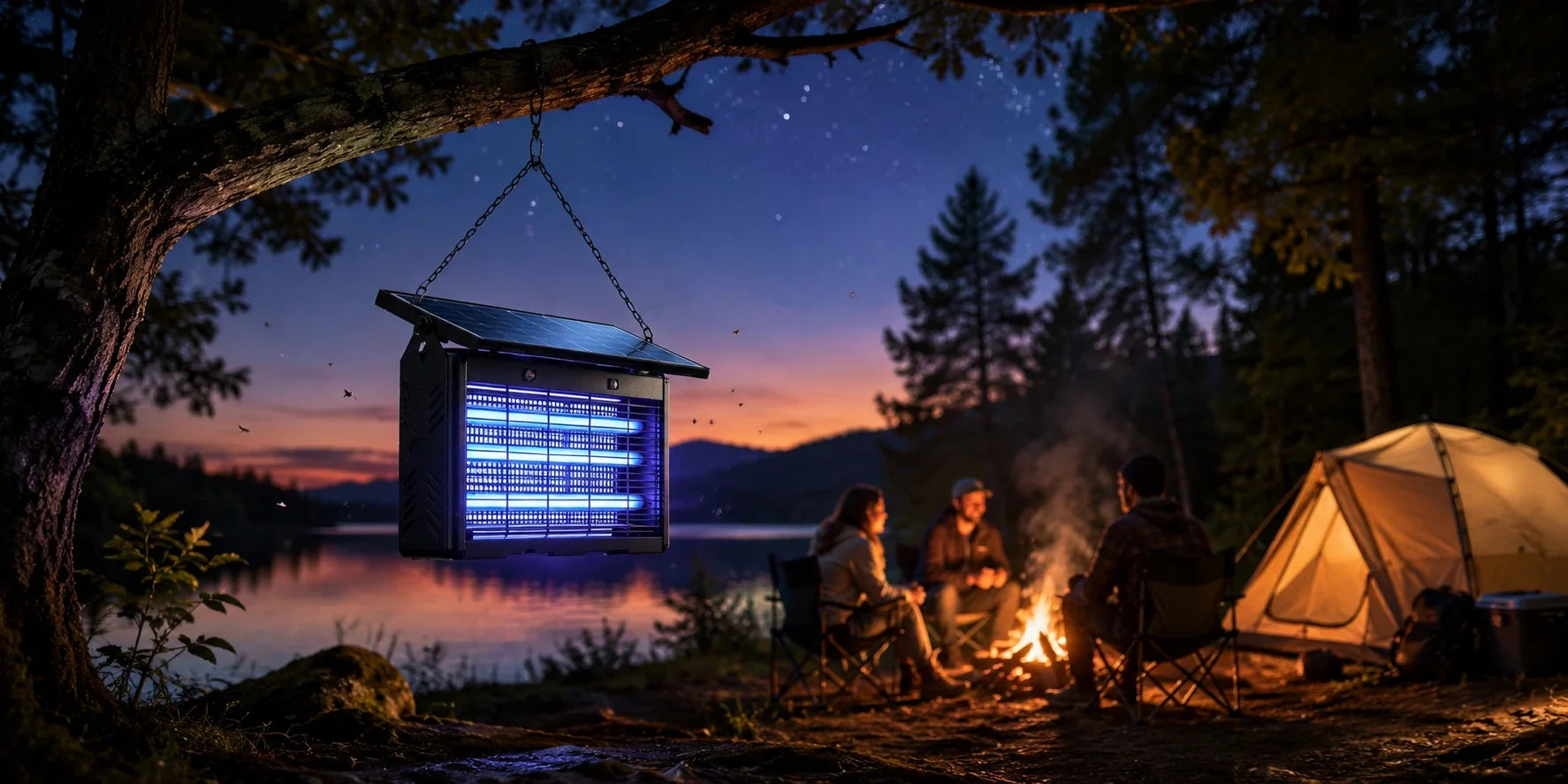
Arrived at the campsite mid-afternoon with a solid four hours of direct sun left. Mounted the zapper on a low branch near the tent, angled toward open sky rather than under canopy, since it needs real sunlight to charge — not filtered shade.
By the time the sun went down, the indicator light showed a full charge. No app, no gauge to squint at, just a light. I'll take it.
First impression: mosquitoes here are aggressive — this is a low, damp site near the water, exactly the kind of place that usually chews us up by 8pm. Turned the zapper on at dusk and went about making dinner.
Result: Noticeably fewer mosquitoes landing on us during the cooking window compared to previous trips to this same site without any protection. Not zero, but a real difference. Heard the occasional zap from the unit throughout the evening — oddly satisfying.
Sleep: Good. No mosquitoes got into the tent, though that's partly good tent discipline too.
Day 2: Cloudy Skies, Real Test
This is the day that actually mattered. Woke up to overcast skies — the kind of gray that makes you wonder if solar anything is going to work today. No direct sun until nearly noon, and even then it was hazy.
I was skeptical. Solar gear has burned me before on cloudy days.
Result: The zapper still had partial charge carried over from Day 1, plus whatever it pulled in through the haze. It ran the full night again, maybe slightly dimmer on the UV lure than the night before, but still active and still catching. This is the real advantage of the design — it's not relying on a single day's charge to make it through the night, so one cloudy stretch didn't leave us defenseless.
Bonus: Set it up near the communal cooking area this time since that's where everyone congregated after dark. Fewer mosquito complaints from the group than on past trips, though I'll admit I wasn't running a controlled study with everyone else swatting for comparison.
Day 3: Full Sun, Full Confidence
Clear skies all day. By dusk, full charge, and by this point the routine felt genuinely effortless: move it into open sun in the morning, forget about it, let it switch on automatically at night.
Result: Best night of the trip. Sat around the fire until close to midnight — later than usual specifically because the bugs weren't chasing everyone inside their tents early. That's really the metric that matters on a camping trip: not "zero mosquitoes exist" but "we stayed outside longer than we normally would."
No power source used. No batteries changed. No charging cable packed. That's the whole point of it working off-grid, and three nights in, it held up.
What I'd Tell a Friend
- It's not instant. This isn't a spray that clears the air around you in seconds — it works by trapping insects over the course of the evening. Expect a gradual reduction, not an instant bubble of protection.
- Placement matters. Mount it somewhere it gets real, direct sun during the day, and somewhere central to where you'll actually be sitting at night. Shoving it in a shaded corner defeats half the purpose.
- Cloudy days are fine, not ideal. One overcast day didn't kill it, thanks to charge carryover. I wouldn't push it through three cloudy days in a row without direct sun, but for a normal camping trip, it kept pace.
- The best part is the mental load it removes. No gear checklist item that says "remember to pack coils" or "don't forget the spray." Set it, forget it, let it run.
Final Verdict
For off-grid use, this held up better than I expected — especially through the cloudy second day, which is usually where solar gear lets you down. If you camp anywhere near water, low ground, or anywhere mosquitoes are a given, this is the kind of gear you set up once at camp and then genuinely stop thinking about, which after enough trips of slapping your own neck at the campfire, is worth a lot.
Heading off-grid soon? A solar bug zapper means one less thing to pack, charge, or run out of — just sun in, mosquitoes handled.