Mosquito-Free Living Insights
Arizona & Nevada Monsoon Season: Desert Mosquito Prep Guide
Desert Doesn't Mean Mosquito-Free
If you live in Arizona or Nevada, it's easy to assume mosquitoes are someone else's problem — after all, this is desert country, not swampland. But anyone who has spent a July evening outdoors in Phoenix, Tucson, Las Vegas, or Henderson after a summer storm knows better. Mosquitoes don't need a swamp. They need standing water, warmth, and about a week of undisturbed time to complete their life cycle — and monsoon season delivers exactly that.
Arizona mosquito season typically ramps up as the North American monsoon arrives, generally from mid-June through September, bringing sudden, heavy downpours to a landscape that isn't built to drain them quickly — and mosquitoes take full advantage of what's left behind.
Why Monsoon Rain Is a Mosquito Trigger, Not Just a Nuisance
A single monsoon storm can drop more rain in an hour than a typical spring week elsewhere. Desert soil is often compacted or clay-heavy, which means water pools instead of soaking in. Add daytime temperatures that stay warm well into the evening, and you have the two things mosquitoes need most: standing water and heat. Under these warm conditions, some mosquito species common to the Southwest can complete their life cycle — egg to biting adult — in roughly 7 to 10 days, though the exact timing varies by species and temperature. That's fast enough that a yard clear in May can feel overrun by August.
Pools and Irrigation: The Breeding Spots Homeowners Miss
When people think about mosquito breeding grounds, they often picture obvious things — a forgotten bucket, a clogged gutter. In Arizona and Nevada specifically, two very common backyard features deserve extra attention before monsoon season hits:
Pools and spas. A well-chlorinated, actively filtered pool is generally inhospitable to mosquito larvae. The risk shows up around the pool, not necessarily in it: pool covers that pool water on top, decorative water features with low circulation, and neglected or "closed for the season" pools where chlorine levels have dropped. Even a pool cover with a few inches of trapped rainwater can become a breeding site within days.
Irrigation systems. Flood irrigation, drip lines, and even leaky sprinkler valves are a distinctly desert-Southwest issue. Flood-irrigated yards and citrus groves, common in older Phoenix and Tucson neighborhoods, can leave standing water in low spots for a week or more after each cycle — right in the window mosquitoes need to develop. Drip irrigation systems with a cracked line or a low spot in the yard can quietly pool water under mulch or landscaping rock, out of sight and easy to overlook.
A Pre-Monsoon Backyard Checklist
Getting ahead of Arizona mosquito season means walking your property before the first big storm, not after. Focus on:
- Pool covers and spas — Check for standing water on top of covers after any rain, and confirm spa chemical levels are maintained even when not in use.
- Irrigation timing and drainage — Look for low spots where flood irrigation or drip systems leave water sitting for more than 2–3 days.
- Gutters and downspouts — Desert homes often have minimal gutter maintenance since it "doesn't rain much" — until monsoon proves otherwise.
- Saucers under potted plants — A classic overlooked breeding spot, especially for patio container gardens.
- Decorative water features — Fountains and ponds without active circulation should be checked weekly during monsoon.
- Tarps, pool toys, and patio furniture — Anything with a concave surface can collect and hold rainwater after a single storm.
Where Passive, Automatic Protection Fits In
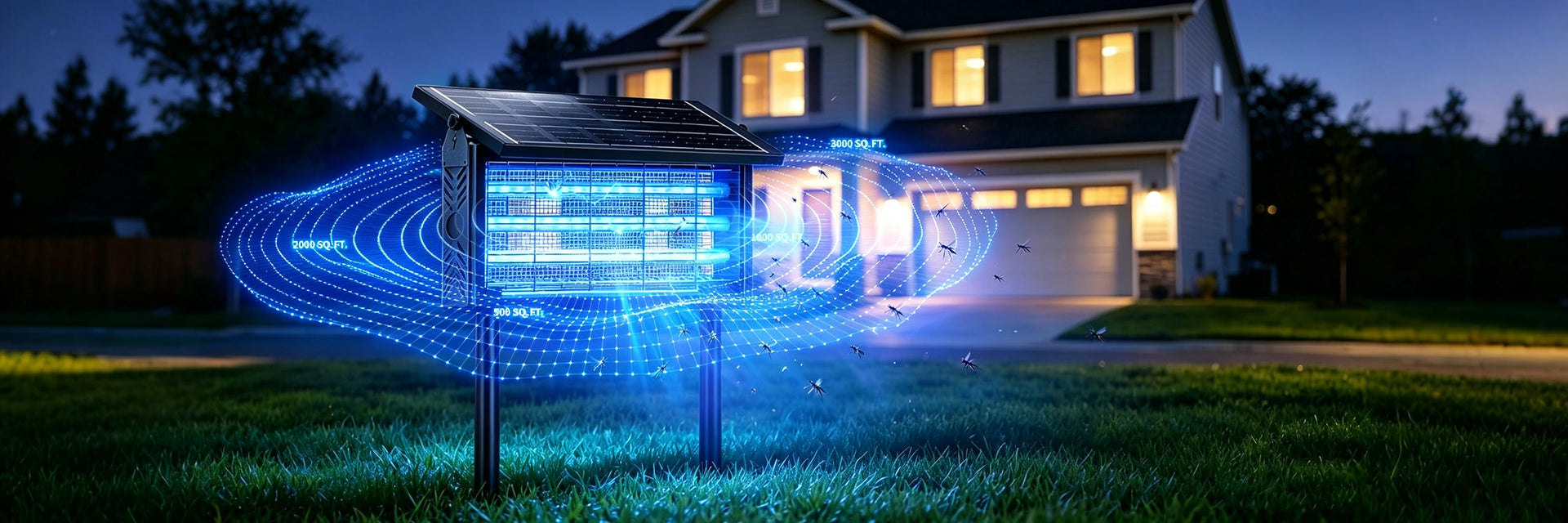
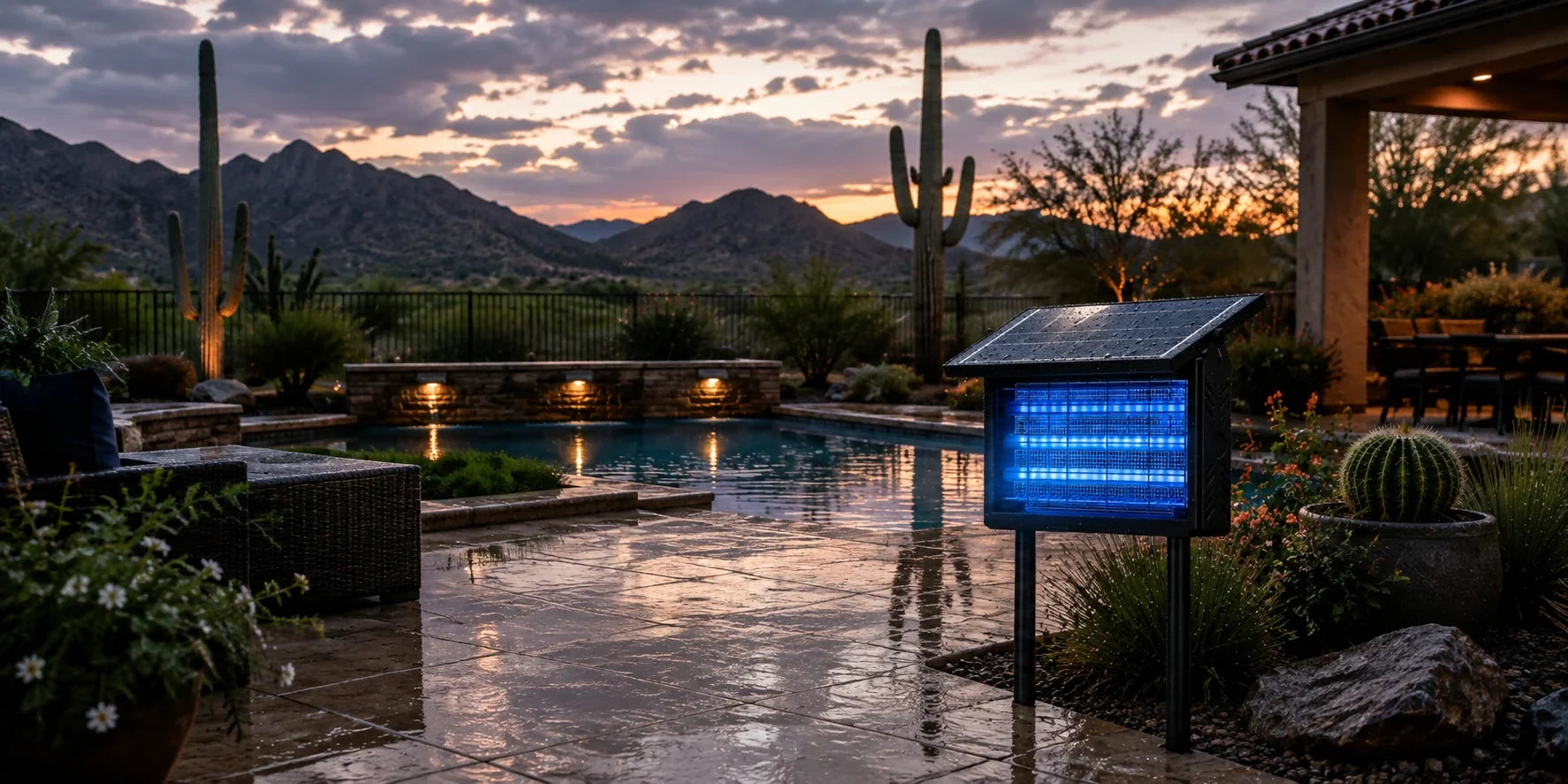
Manually checking every irrigation low spot and pool cover after each storm is a lot to keep up with over a full monsoon season. This is where an automatic, low-maintenance layer of protection can help fill the gaps between checks — something that runs continuously in the background rather than requiring you to remember to act after every rainfall. A solar-powered mosquito trap placed near common gathering areas, such as a patio or pool deck, can provide ongoing coverage through the parts of the season when you can't be out inspecting the yard daily. As with any prevention tool, it works best as one layer in a broader strategy that starts with eliminating standing water at the source.
When to Start Prepping
Ideally, walk your property and address drainage or standing-water issues in late May or early June — before the monsoon's first storms arrive. Arizona and Nevada mosquito activity tends to lag a week or two behind the first significant rains, so early prep gives you a real head start rather than a reaction after mosquitoes are already established.