Mosquito-Free Living Insights
Chemical Sprays vs UV Zappers: What's Actually in DEET?
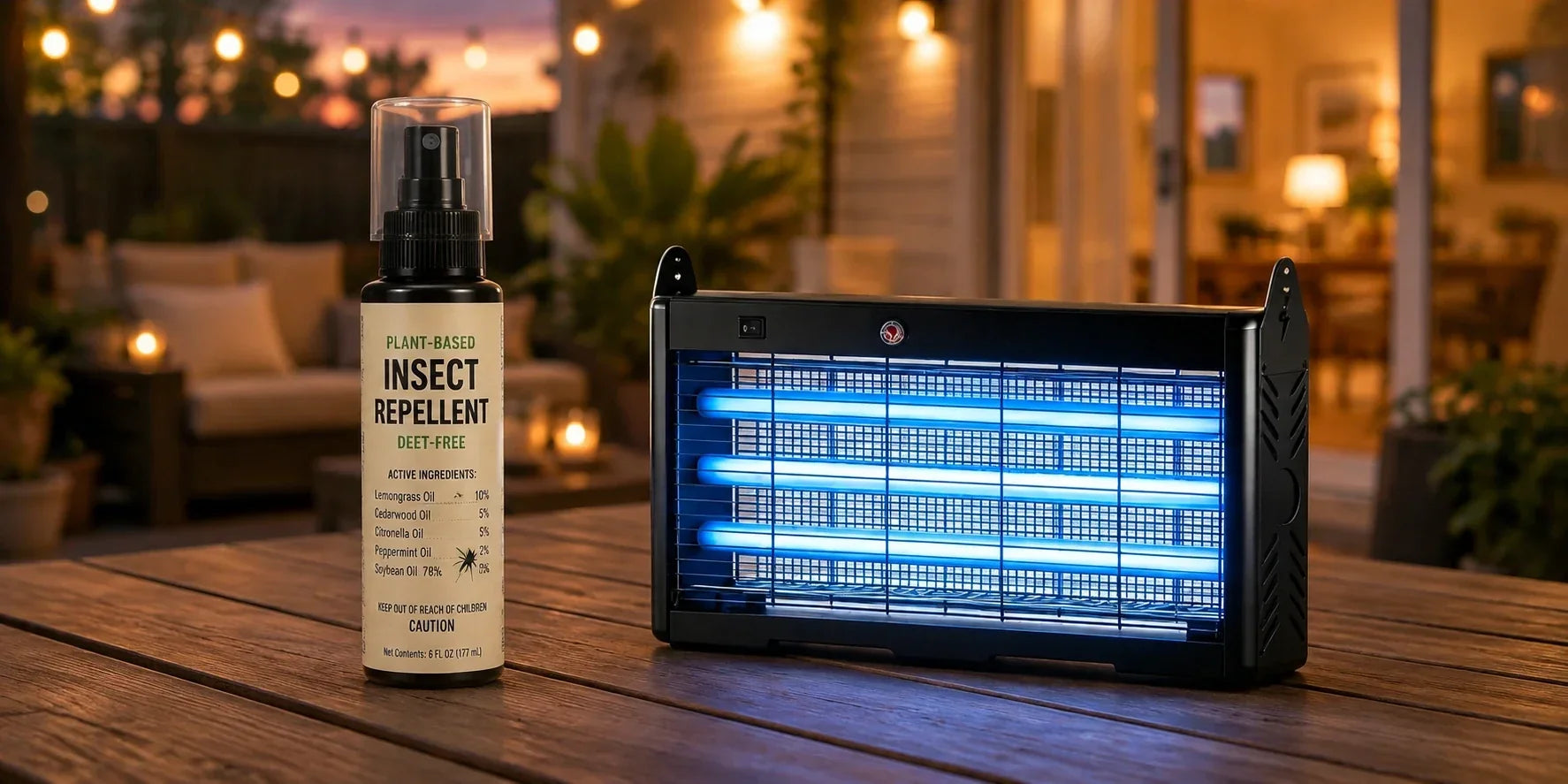
Most people reach for a bottle of bug spray without ever reading the label. But if you've ever wondered what's actually in that spray — or compared DEET vs a bug zapper as a lower-effort, chemical-free alternative — you're not alone. This guide breaks down what DEET is, how it works, what the research says, and how UV-based bug zappers like Murutoi fit into the picture as a different approach to the same problem.
What Is DEET, Exactly?
DEET (N,N-Diethyl-meta-toluamide) is a synthetic compound first developed for military use in the 1940s and later approved for civilian insect repellents. It's one of the most studied repellent ingredients in the world and remains the active ingredient in many drugstore sprays and lotions.
DEET doesn't kill insects. Instead, it works by interfering with a mosquito's ability to detect the carbon dioxide and body odors humans give off, which makes it harder for them to locate exposed skin. It's typically sold in concentrations ranging from around 5% to 30%, with higher concentrations generally providing longer protection time rather than stronger protection.
Common Questions People Have About DEET
- Is it safe? Regulatory agencies including the EPA have reviewed DEET extensively and consider it safe for use as directed on product labels, including for children over a certain age (always check label guidance). Some people report skin irritation or dislike the scent and greasy texture.
- Does it damage anything? DEET is known to degrade certain plastics, synthetic fabrics, and some watch faces or sunglasses coatings on contact.
- How long does it last? Duration varies by concentration and activity level (sweating, swimming, and reapplication all affect this), so it's worth checking the specific product's label rather than assuming a blanket protection window.
How UV Zappers (Bug Zappers) Take a Different Approach
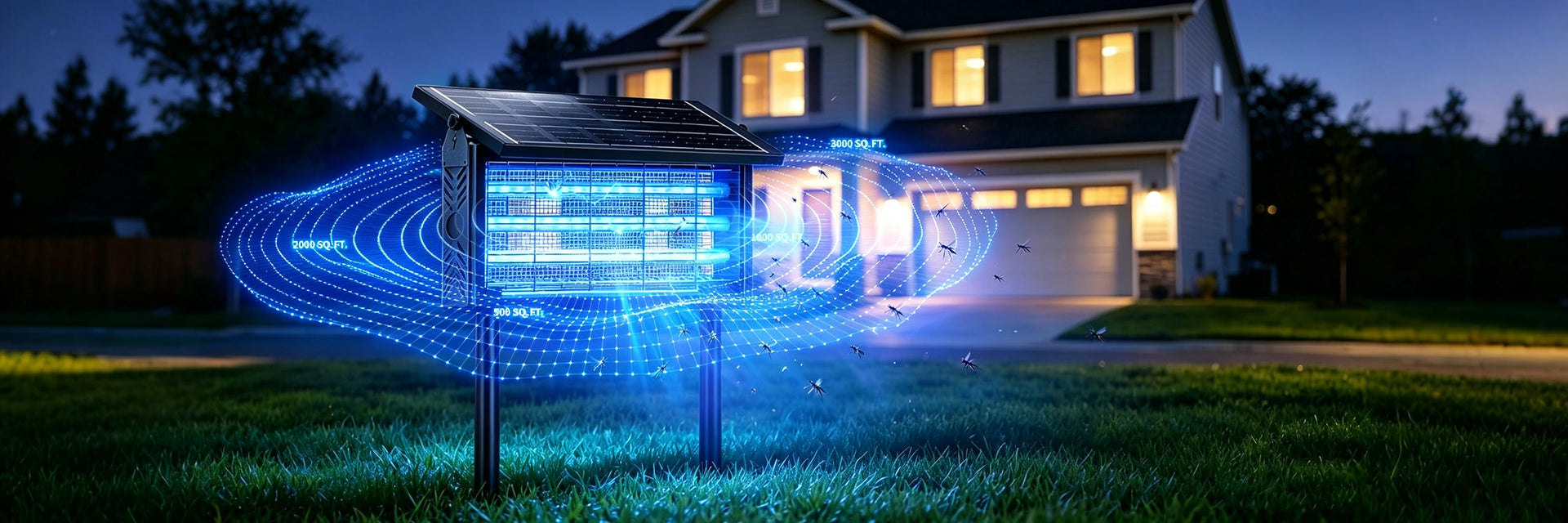
Rather than being applied to skin, UV-based bug zappers work by using ultraviolet light to attract flying insects toward a device, where they're captured or contained. This shifts the strategy from "make yourself undetectable to mosquitoes" to "make the area around you less appealing for mosquitoes to linger in."
A solar mosquito zapper like Murutoi charges during the day, so it typically doesn't require frequent battery swaps to keep running outdoors. The housing is built for outdoor conditions, and the UV LED is a sealed component — there's nothing to apply to your skin, nothing to wash off at the end of the night, and no spray drifting near food or drinks at a cookout.
Side-by-Side: What Each Option Actually Involves
| DEET Spray/Lotion | UV Zapper (e.g. Murutoi) | |
|---|---|---|
| Application | Applied directly to skin/clothing | Placed in the yard or patio area |
| Reapplication | Needed periodically, especially after sweating/swimming | Not needed — runs continuously once set up |
| Scent/Feel | Noticeable scent, can feel greasy | No scent or residue on skin |
| Power source | N/A | Solar-charged |
| Best suited for | Direct personal protection while moving around (hiking, working outdoors) | Stationary outdoor areas — patios, decks, yards, docks |
Neither approach is a strict upgrade over the other — they solve slightly different problems. If you're going to be hiking through brush, a skin-applied repellent is going to travel with you in a way a stationary device can't. If you're trying to make a fixed outdoor space like a patio or backyard more pleasant to sit in over the course of a season, a device that just runs on its own without reapplication starts to make a lot of sense.
Why Some People Are Moving Toward a Chemical-Free Mosquito Repellent
A lot of the interest in bug zappers isn't about DEET being unsafe when used correctly — it's about convenience and preference. Not wanting a chemical scent on skin, not wanting to remember to reapply, not wanting product residue near kids or pets, or simply preferring a chemical-free mosquito repellent alternative altogether, are all common reasons people look for something different. A solar mosquito zapper fits into that "set it up once, let it work" category, which is part of why it tends to appeal to people setting up a semi-permanent outdoor space — a patio, a deck, or a dock — rather than someone who needs protection on the move.
DEET and UV zappers aren't really competing for the same job. DEET travels with you; a zapper works an area for you. Understanding what's actually happening with each — what's in the spray, and what the device is doing — makes it easier to figure out which one (or both) makes sense for how you actually spend time outside.