Mosquito-Free Living Insights
How Long Does the Battery Really Last? A Look at the Full Charge Cycle
One of the questions we hear often from people considering a solar bug zapper is simple: how long does the battery actually last? Here's a straightforward look at how charging works on both Murutoi models, what the indicator light tells you, and what to expect on sunny versus cloudy days.
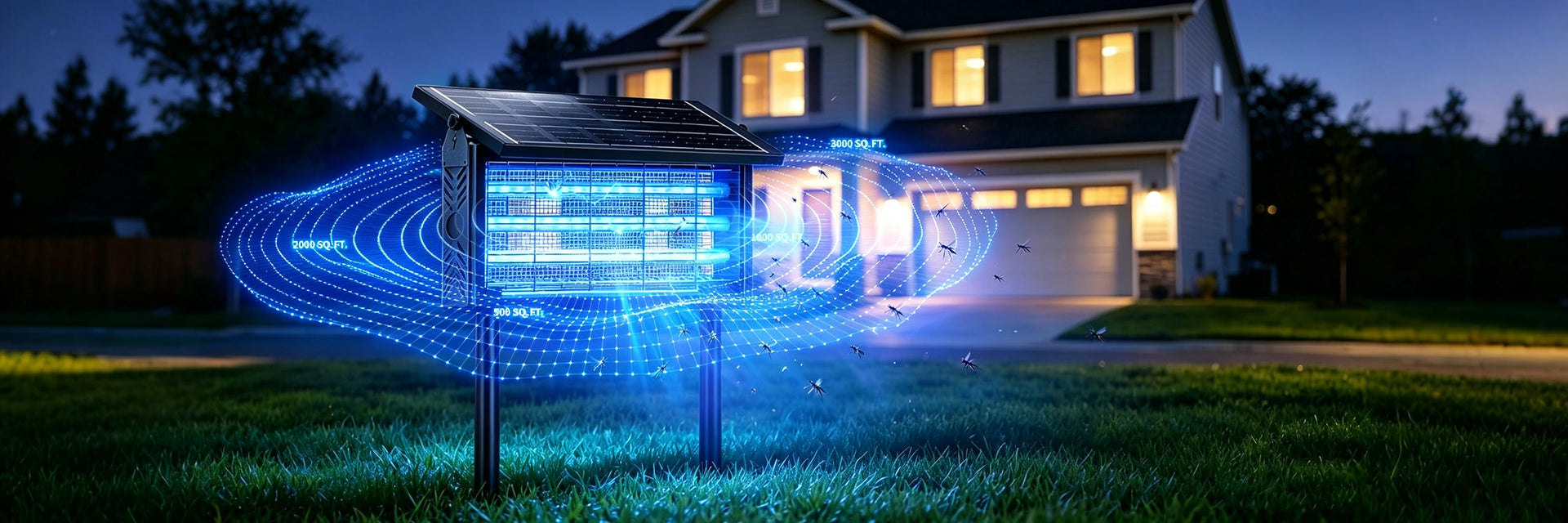
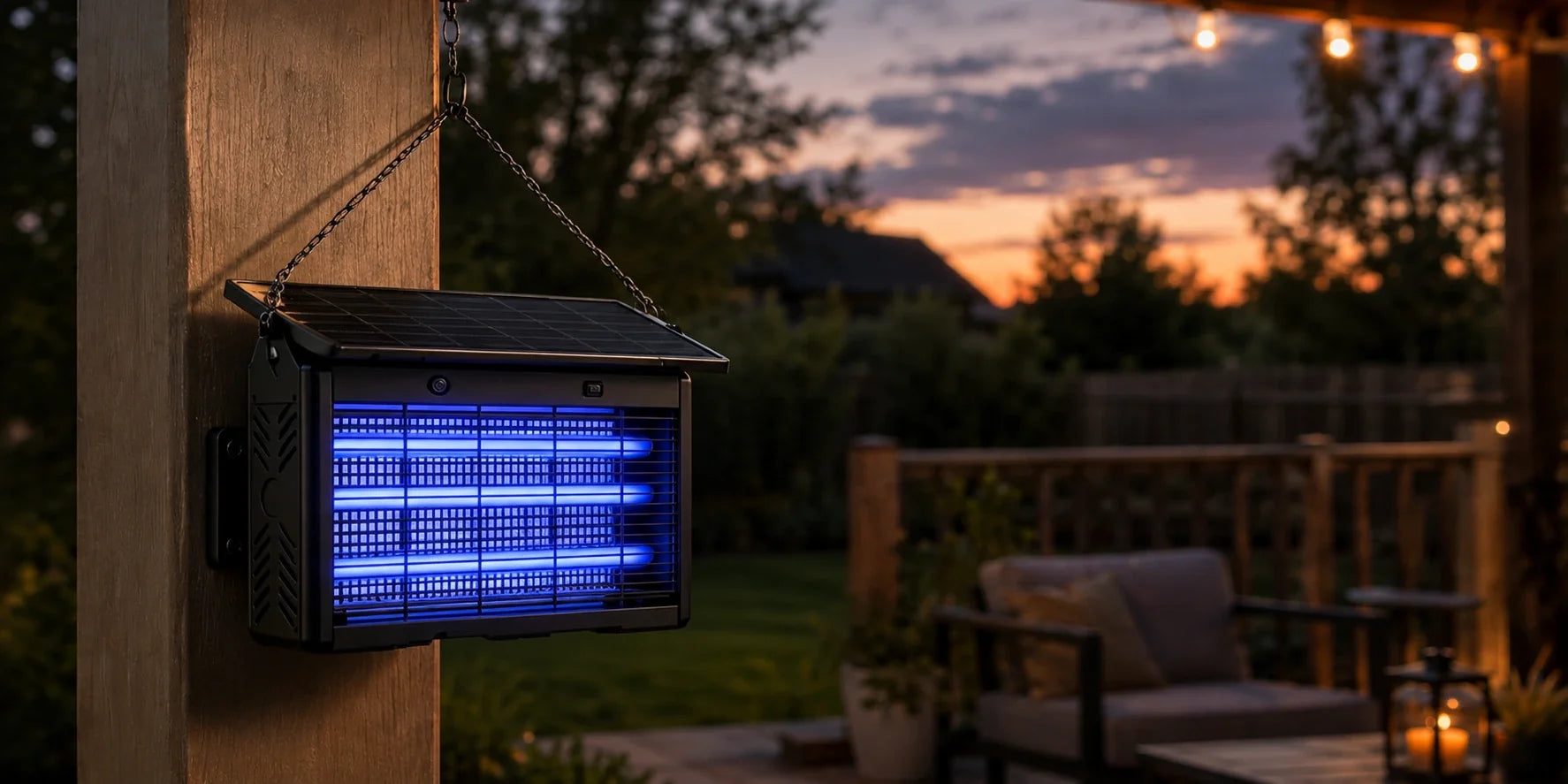
The Two Models
- Standard (G8): 14W solar panel, battery pack rated at a total of 7500mAh
- Large (G8L): 18W solar panel, battery pack rated at a total of 9600mAh
The G8's battery is a 2-cell pack and the G8L's is a 3-cell pack, but the 7500mAh and 9600mAh figures already reflect the combined capacity of the full pack — not a per-cell number to be multiplied further. In practical terms, the G8L's larger panel and higher-capacity pack give it more charging power and more reserve than the G8, which is the main tradeoff between the two models.
What the Red and Green Indicator Tells You
The indicator light is the quickest way to check where your unit stands. In general:
- Solid green typically means the battery is charged and the unit is operating normally.
- Blinking or dim red typically signals the battery is running low.
- Solid red or the light being off typically means the unit needs a recharge before it resumes normal operation.
These are general patterns for how solar-powered indicator lights of this kind behave — for the exact, official definitions specific to your unit, always check the product manual, since indicator behavior can vary slightly by firmware or production batch.
How Sunny vs. Cloudy Days Affect Charging
Solar panels charge using ambient daylight, not just direct sun, so charging can still happen on overcast days — though at a reduced rate compared to full sun. Because the G8L has a larger panel and higher-capacity pack, it generally has more buffer to draw on during stretches of cloudy weather compared to the G8. If your location tends to get frequent overcast days, that extra buffer is the main reason to consider the Large model over the Standard.
We don't have controlled day-by-day test data to publish specific runtime hours at this time — if that's something you'd like us to develop into a follow-up post with real logged results, let us know and we can put together an actual test protocol.
A Few Notes on Charging
The charging cable is a USB-to-DC round plug, not USB-C — if you ever need a manual top-up indoors, make sure you're using the correct cable, since a standard USB-C cord won't fit the port.
Tips for Getting the Most Out of Your Battery
- Position the panel where it gets unobstructed daylight for as much of the day as possible — even partial shade can reduce charging efficiency.
- Get in the habit of checking the indicator light periodically, not just when the unit seems to stop working.
- If you're expecting an extended stretch of cloudy weather, a manual top-up with the USB-to-DC cable can help keep the unit at full charge going in.
- Wipe the panel surface occasionally — dust and pollen buildup can reduce how much light reaches the cells.
Both Murutoi models are designed to run on solar charging under typical sunny-to-partly-cloudy conditions. If your climate leans toward frequent overcast days, or you want more reserve capacity, the Large (G8L) offers a bigger panel and higher-capacity battery pack for extra buffer. The red/green indicator gives you an at-a-glance way to check your battery status — for precise definitions, your product manual is the best reference.