Mosquito-Free Living Insights
How Solar Bug Zappers Actually Work: UV Light, Grids & Charging
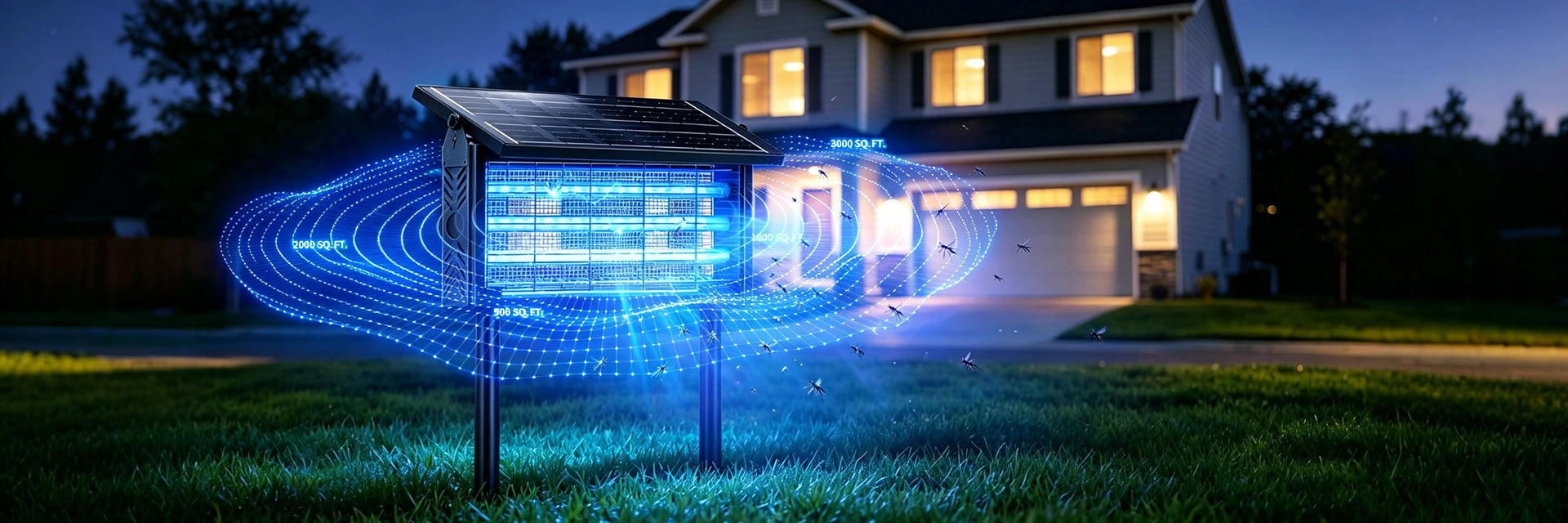
A solar bug zapper looks simple from the outside — a small lantern-shaped device hanging in the yard. But underneath that housing, three separate systems are working together every single night to lure, trap, and eliminate flying insects without a single drop of chemical spray. Understanding how each part works makes it much easier to get the most out of the device.
Step 1: The Solar Panel Stores Daytime Energy
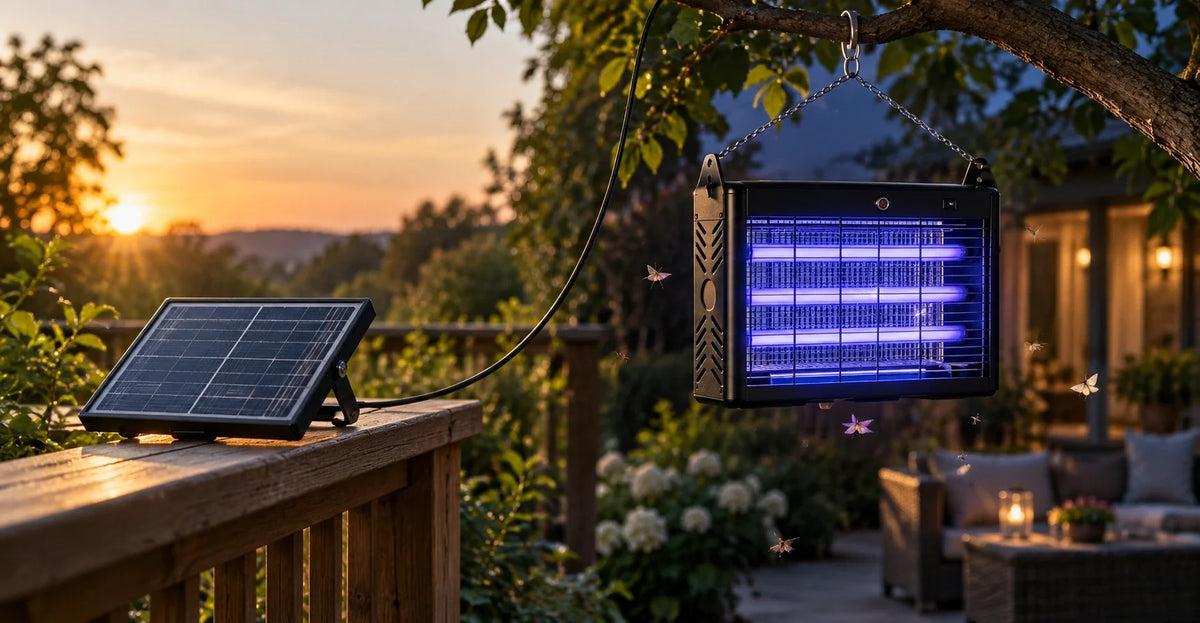
During the day, the solar panel — connected to the unit by an extension cable rather than fixed to the housing — absorbs sunlight and converts it into stored electrical energy, similar to a solar garden light. This separate-panel design is intentional: it lets you place the panel itself in direct sun while hanging or setting the lamp unit somewhere shadier, like under a porch roof or indoors. Placement still matters for charging speed — a panel getting several hours of direct sun each day will keep the unit running longer after dark than one left in partial shade. Most units also include a USB charging cable as a backup method for cloudy stretches.
Step 2: Dual UV LEDs Attract Insects
Once dusk falls, the dual UV LEDs switch on automatically. Mosquitoes and many other flying insects are drawn to ultraviolet wavelengths far more than they are to visible light, which is why a bug zapper's glow pulls insects in from across a yard or patio rather than relying on scent or heat alone.
Step 3: The 2500V Grid Does the Work
Surrounding the UV light is a wire grid carrying roughly 2500 volts. When an insect lands on or brushes against the grid, it completes the circuit and is eliminated instantly. There's no aerosol, no scent, and nothing released into the air — the entire process is contained inside the housing.
Step 4: The Tray Catches What's Left
A removable collection tray at the base collects the results of the night, so cleanup is as simple as sliding it out and tapping or brushing the debris away — the tray shouldn't be submerged or rinsed under water, even though the unit itself is IPX5 waterproof-rated. Regular cleaning also keeps the grid working efficiently, since built-up debris can reduce its effectiveness over time.
Why This Combination Works Better Than One Feature Alone
None of these three systems does much on its own — UV light without a grid just attracts bugs closer, and a powered grid without UV light has nothing pulling insects toward it. It's the combination of attraction and elimination, powered independently by the sun, that makes a solar bug zapper a low-maintenance option for ongoing mosquito control.
The Takeaway
A solar bug zapper isn't magic — it's straightforward engineering: sunlight in, UV attraction out, and a safe electric grid to finish the job. Understanding the mechanics behind it makes it easier to choose the best spot, keep it charged, and get consistent results night after night.