Mosquito-Free Living Insights
Inside the Sensor: How Dusk-to-Dawn Auto Mode Works
If you've ever wondered why a solar bug zapper seems to "know" when it's dark out, the answer is a small light sensor built into the unit. Here's what it's actually doing — and why it doesn't always behave the way people expect.
How the sensor decides when to turn on
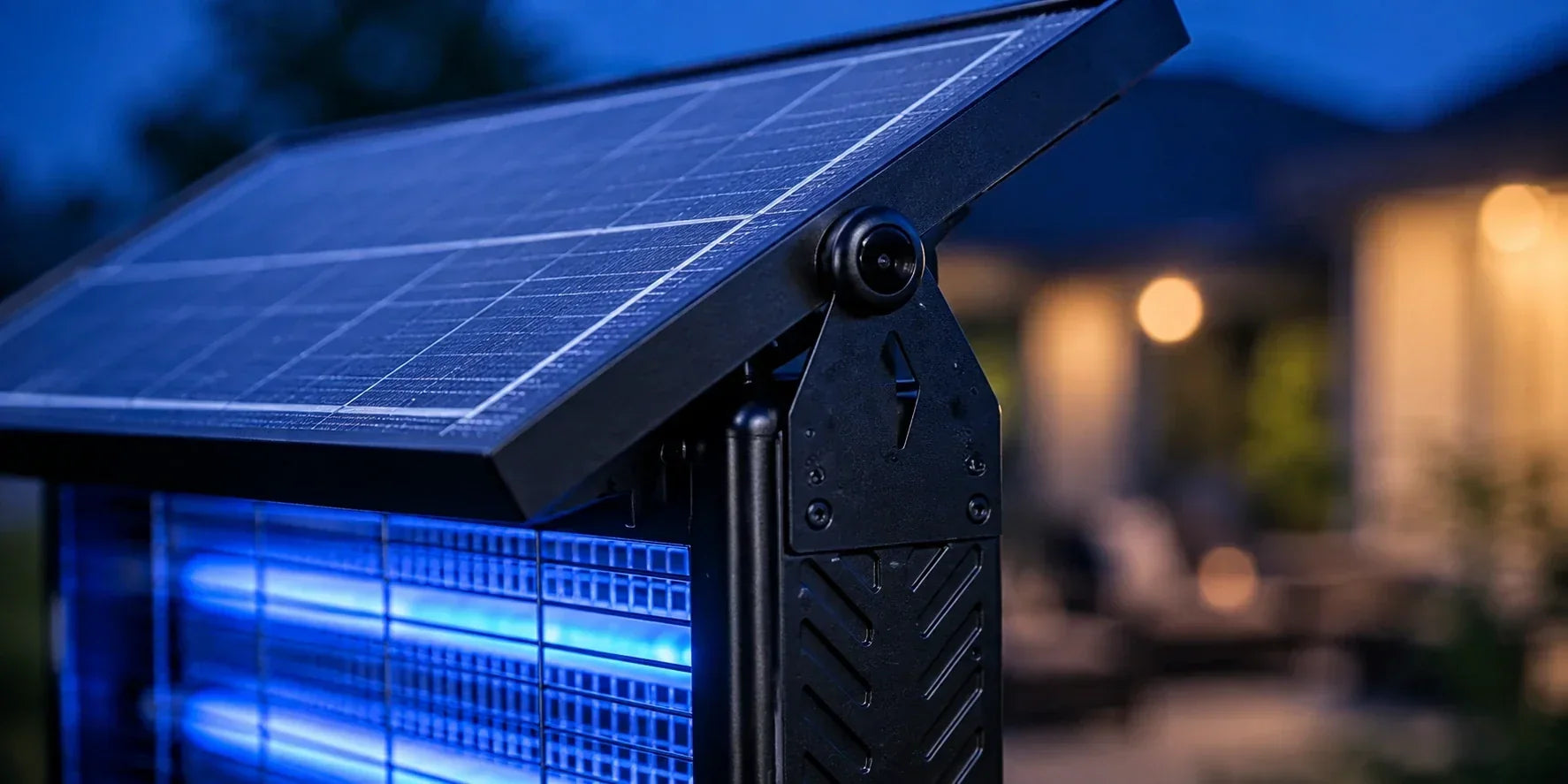
A dusk-to-dawn light sensor works by continuously measuring the amount of ambient light around it. When light levels drop below a certain threshold — roughly the amount of natural light at dusk — the sensor triggers the device to switch on. When light levels rise again at dawn, it triggers the device to switch off.
This is the same basic principle used in outdoor solar lights and other light-activated devices: the sensor isn't reading a clock or a timer, it's reading the actual brightness of its surroundings. That's what makes it "automatic" — no manual switching required, as long as the sensor is getting an accurate read on the light around it.
Note: the exact sensor component varies by manufacturer and product generation. If you need the precise technical specification for your unit, check the product manual or reach out to support rather than assuming — sensor hardware can differ even between similar-looking products.
Why auto mode sometimes doesn't turn on
Auto mode depends entirely on the sensor detecting low light. If the unit is installed somewhere that never gets dark enough to trip the threshold — under a covered patio, in a spot lit by porch lights or string lights all night, or in heavy shade during the day that confuses the daytime reading — the sensor may not switch on when you expect it to, or may behave inconsistently.
This isn't a defect. It's a mismatch between where the light sensor is reading from and the actual lighting conditions the device is sitting in.
When to use manual mode instead
Manual mode bypasses the light sensor entirely and simply runs the device continuously, or for however long you set it to run. This is the better option for:
- Covered or shaded patios where ambient light rarely drops low enough to trigger auto mode
- Spaces with artificial lighting (string lights, porch lights) running all evening
- Situations where you want guaranteed operation during a specific window, regardless of ambient light
Auto vs. manual: which uses more power
Because auto mode only runs during low-light hours, it typically draws less total runtime than manual mode running continuously — simply as a function of operating fewer hours per day, not because of any difference in the device itself. If your unit is solar-charged, this is worth keeping in mind when choosing which mode fits a shaded or heavily-covered installation spot.