Mosquito-Free Living Insights
What's the Best Time to Run a Bug Zapper?
If you've ever asked "when should I actually turn on a bug zapper," you're not alone — it's one of the most common questions people have before their first outdoor evening of the season. The honest answer isn't a single hour on the clock. It depends on what's flying around your yard, the weather, and even the season you're in.
How a Bug Zapper Actually Attracts Insects
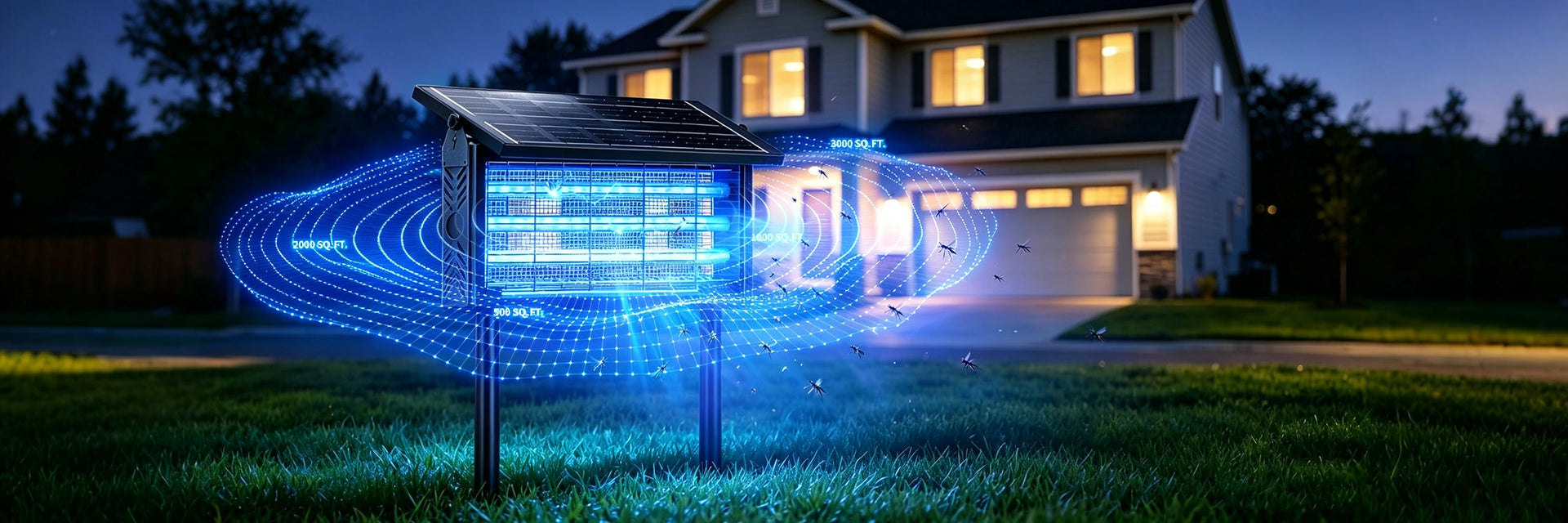
Before getting into timing, it helps to understand the basic mechanism. Bug zappers work by using UV LED light to mimic the light spectrum many flying insects are naturally drawn to. Insects don't see light the way humans do — many species are far more sensitive to UV wavelengths, which is why a UV source stands out to them in a way it doesn't to us.
This is also why timing matters in the first place: during bright daylight, natural sunlight overwhelms a UV light source, so the contrast between the zapper's light and its surroundings is low. As ambient light fades, that contrast increases, and the UV source becomes comparatively more noticeable against a darker background. That's the underlying reason lower-light conditions tend to be associated with more visible activity around a zapper — it's a matter of relative contrast, not a fixed switch that flips at a certain hour.
Different Bugs, Different Schedules
Not all flying insects operate on the same internal clock. Mosquito activity is a good example: some species are most active right around dawn and dusk, while others stay active well after dark, and a few will bite during the day in shady, humid spots. Moths and other night-flying insects tend to follow light and temperature cues rather than a strict schedule. That's why there's no universal "best hour" that works for every species or every backyard — the real answer is that timing depends on what's actually bothering you and where you live.
Rather than chasing a single perfect moment, it helps to think in terms of windows of higher activity, and let your zapper run through them.
Dusk: A Common Turning Point for Outdoor Time
For a lot of households, dusk is simply when outdoor life happens — dinner on the patio, kids playing before bed, a last walk around the yard. It also tends to be a transition period when temperatures cool and, based on the contrast effect above, many flying insects become noticeably more active around light sources. That doesn't mean activity stops the moment it gets fully dark, or that every bug problem is limited to this window. It's more useful to think of dusk as a natural checkpoint: if you're going to be outside anyway, it's a sensible time to have a zapper already running rather than switching one on reactively once you notice bites.
Solar Power Makes the Timing Easier
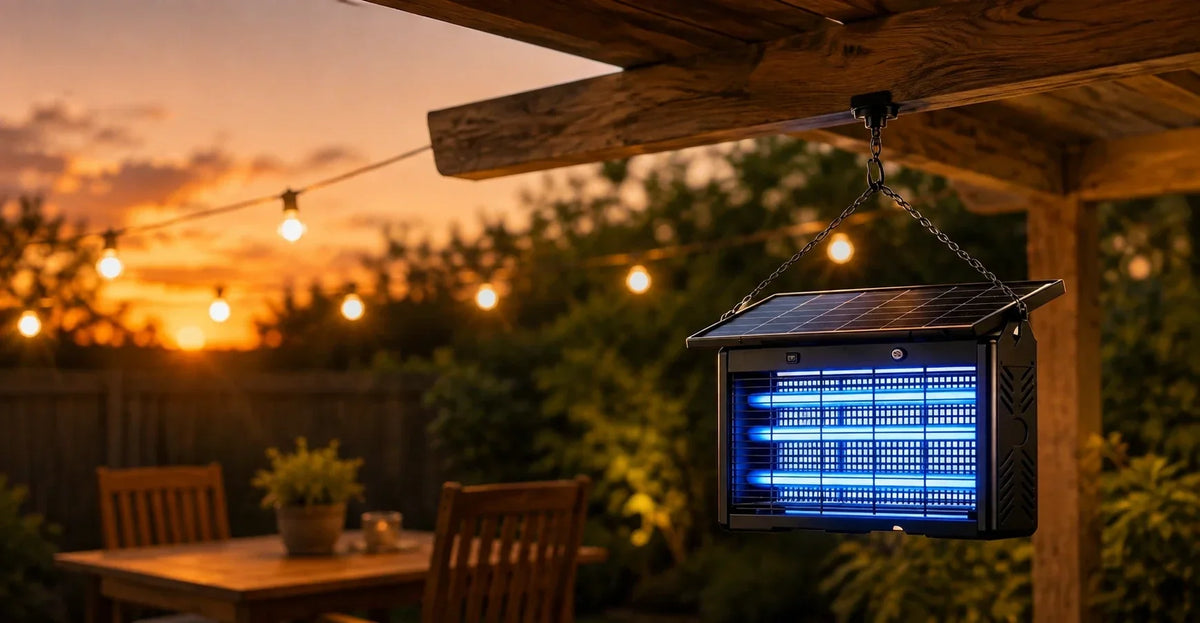
This is where a solar-powered design earns its keep. Instead of remembering to plug something in or bring a unit indoors to recharge, a solar bug zapper like Murutoi stores energy from sunlight during the day, so it has power available once evening activity typically picks up — no outlet, extension cord, or manual charging required.
Because it isn't tied to a power cord, you also have more freedom in where you place it: near a patio, by a garden bed, or anywhere else insects tend to gather, without worrying about proximity to an outlet. The practical upshot is that you don't have to plan your evening around it — you mount it where it gets good daylight exposure, and it carries a charge into the hours when it's most likely to be useful.
The Takeaway
There's no single "best time" that applies to every mosquito, moth, or yard — activity varies by species, climate, and even the specific evening, and it comes down to how UV contrast changes as ambient light drops. What you can control is making sure your zapper is already running before insects become active, rather than after you've noticed the problem. A solar design like Murutoi takes the guesswork out of the power side of that equation, so you're covered whether the bugs show up right at dusk or later into the night.