Mosquito-Free Living Insights
Why Cloudy Days Aren't a Problem for Solar Bug Zappers
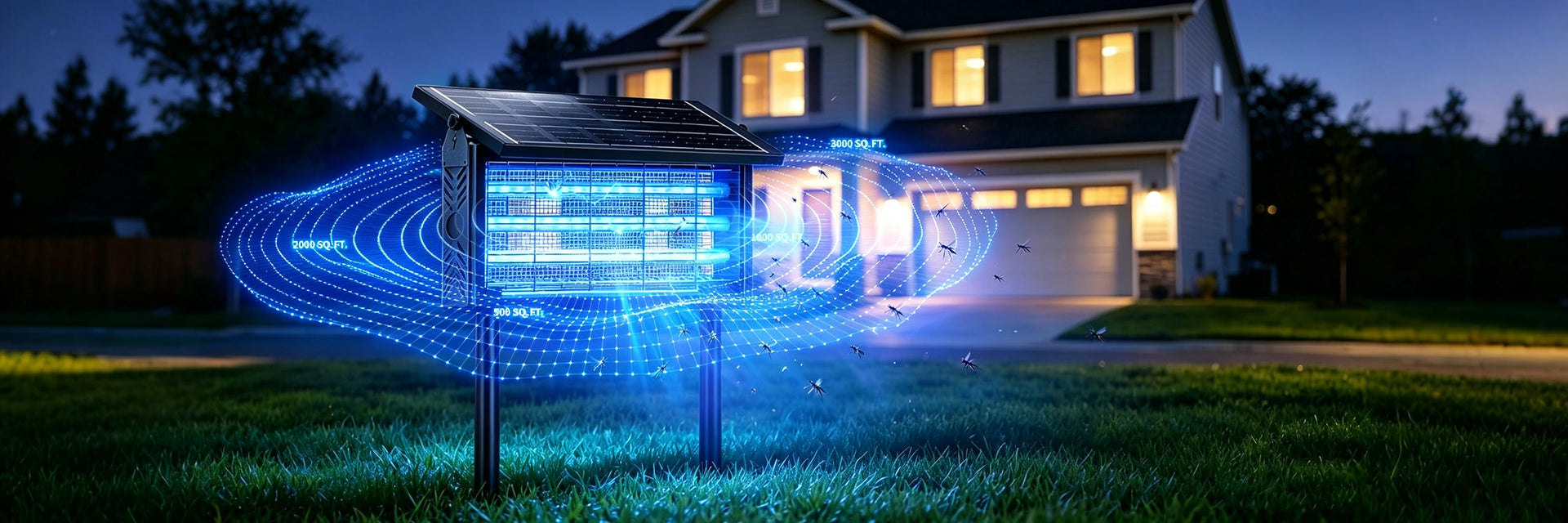
If you've just invested in a solar-powered bug zapper, it's natural to eye the weather app with a little suspicion. A week of grey skies can make anyone wonder: will my zapper actually turn on tonight? The short answer is generally yes — and the reason comes down to two things engineers think about a lot more than most of us do: battery reserve capacity and how solar panels behave in diffuse light.
Solar Panels Don't Need Direct Sun to Work
It's easy to assume solar panels are all-or-nothing — full sun or nothing at all. In reality, photovoltaic panels convert ambient light, not just direct beams from the sun. On an overcast day, sunlight is scattered by cloud cover rather than blocked outright, which means panels are still absorbing usable energy, just at a reduced rate compared to a clear afternoon.
That's why a few gray days in a row don't typically mean zero charging — the panel keeps drawing in whatever light is available, even if the rate slows down.
Battery Reserve Capacity Is the Real Safety Net
The bigger reason your zapper keeps running has less to do with the panel and more to do with the battery behind it. A well-designed solar bug zapper doesn't run directly off the panel — it charges an internal battery throughout the day, then draws from that reserve at night when mosquitoes are most active.
That reserve is what carries the unit through a run of weaker sunlight. Instead of needing a full day of clear skies to work that night, the battery banks energy over time, so a single cloudy afternoon is far less likely to interrupt nightly protection. Exactly how much reserve buffer a unit has will vary by model and battery size, so if uninterrupted operation matters to you, it's worth checking your specific unit's battery capacity.
What Actually Affects Charging
A handful of factors matter more than "sunny vs. cloudy" when it comes to keeping your zapper topped off:
- Panel placement. Even in overcast conditions, a panel with a clear, unobstructed view of the sky charges better than one tucked under a porch roof or shaded by trees.
- Consecutive low-light days. One cloudy day barely dents a full battery. A full week of heavy overcast is a different story, so it's worth an occasional glance to make sure the unit is still charging as expected.
- Panel cleanliness. Dust, pollen, and grime block light regardless of the weather. Wiping the panel down periodically helps it capture whatever light is available.
Simple Habits for Reliable Nightly Protection
- Position the zapper somewhere with open sky exposure, away from overhangs and dense foliage.
- Give the panel a quick wipe every few weeks, especially during pollen season.
- If your region has an unusually long stretch of overcast weather, check the unit's charge indicator (if it has one) so you're not caught off guard.
The Bottom Line
A cloudy forecast doesn't have to mean a mosquito-filled evening. Between diffuse-light panel efficiency and a battery built to carry reserve charge through the day, solar bug zappers are designed to handle typical weather swings — sun or clouds. As long as the panel has a clear line to the sky, your outdoor space stays protected after dark on most ordinary cloudy days.