Mosquito-Free Living Insights
Do Mosquitoes Disappear in Fall? What September Means for Zappers
As soon as the calendar flips to September, a lot of people mentally check out of mosquito season. Temperatures start to dip, kids go back to school, and it's tempting to assume the bugs are packing up along with summer. In most of the country, that's not quite true yet — and understanding why can save you from an uncomfortable surprise on the porch this month.
Mosquitoes Don't Read the Calendar
Mosquitoes are driven by temperature, not the date. As long as nighttime temperatures stay above roughly 50°F (10°C), many species remain active, and in much of the U.S. — especially the South, the coasts, and anywhere with a mild fall — that threshold isn't reached until well into October or later. Early September evenings, in particular, are often warm enough that mosquito activity barely changes from August.
Fall Can Actually Be a Peak Feeding Period
In some regions, late summer and early fall bring a second wave of mosquito activity. Standing water from late-summer rain, combined with mosquitoes feeding heavily to prepare for the colder months ahead, can mean more bites — not fewer — right around this time of year. If your yard has any lingering water from summer storms, that's worth checking now.
Shorter Days Change How You Should Run Your Zapper
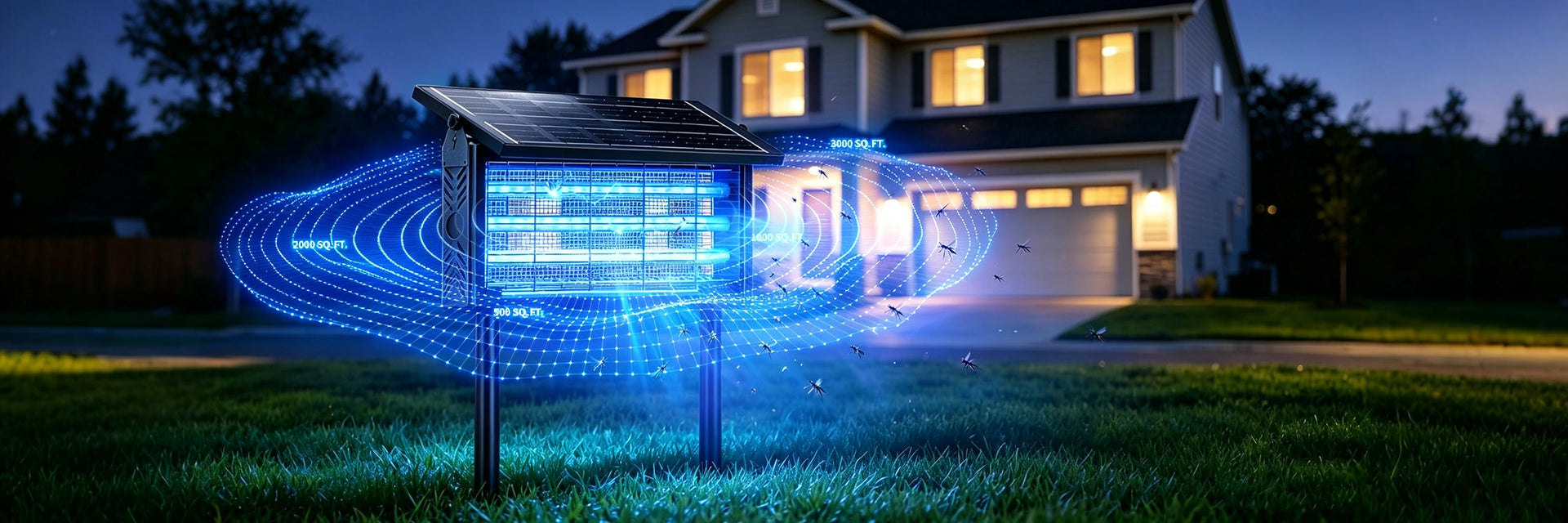
The one real shift in September is daylight. With the sun setting earlier, your solar zapper has fewer daytime hours to recharge. A few adjustments help it keep up:
- Make sure the solar panel faces an unobstructed patch of sky — any late-summer tree growth or overhangs can now block more direct light than they did earlier in the season.
- Wipe the panel down occasionally; dust or pollen buildup over the summer can quietly reduce charging efficiency.
- If evenings are getting noticeably longer relative to daylight hours, consider a quick manual USB top-up charge on cloudy days so the unit doesn't run low mid-evening.
Keep It Running Until Nights Consistently Drop Below 50°F
Rather than pulling your bug zapper down the moment September starts, a better rule of thumb is to keep it up until nighttime lows in your area consistently fall below that 50°F range. For many parts of the country, that's still weeks away — plenty of time for more bug-free evenings on the patio.
The Bottom Line
September often feels like the unofficial end of mosquito season, but the bugs themselves are usually still very much around. Keeping your solar bug zapper charged and running through the early fall — with a little extra attention to sunlight and panel placement as days shorten — means you get the most out of the season instead of packing it away too soon.