Mosquito-Free Living Insights
RV and Camping: Getting the Most Out of Your Solar Bug Zapper Off-Grid
Campsites and RV sites tend to be exactly where mosquitoes show up in force — near water, tall grass, and tree cover, often with no outlet in sight. That's the situation a solar bug zapper is actually built for. Here's how to get the most out of one when you're off-grid.
Why Solar Matters More When You're Camping
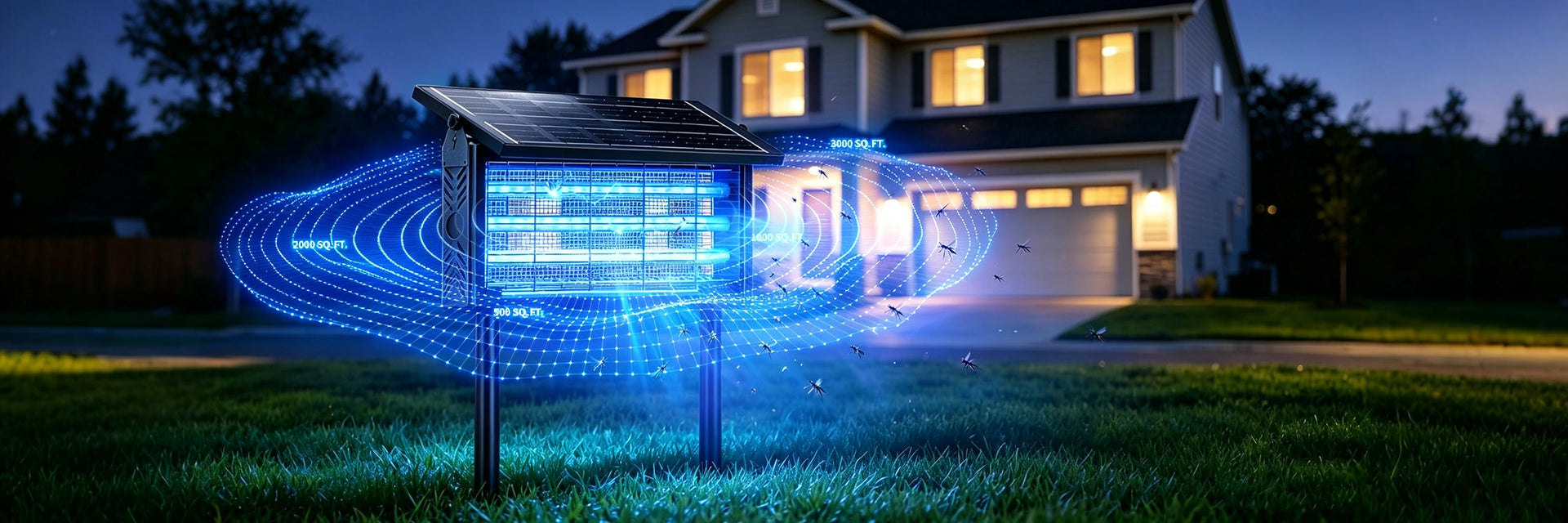
At home, running an electric appliance off a wall outlet is a non-issue. At a campsite or a boondocking spot, it usually isn't an option at all. A solar-powered zapper like the Murutoi G8 or G8L charges through its panel during the day and stores that power in an onboard battery, so it doesn't need a generator, an inverter, or a campsite hookup to run through the night.
Picking a Spot at the Campsite
Placement matters more outdoors than it does on a backyard patio, since there's usually more open ground and fewer walls or fences to work with:
- Set it up at the edge of your camp area, not right next to the table or tent — this pulls mosquitoes toward the unit and away from where people are sitting.
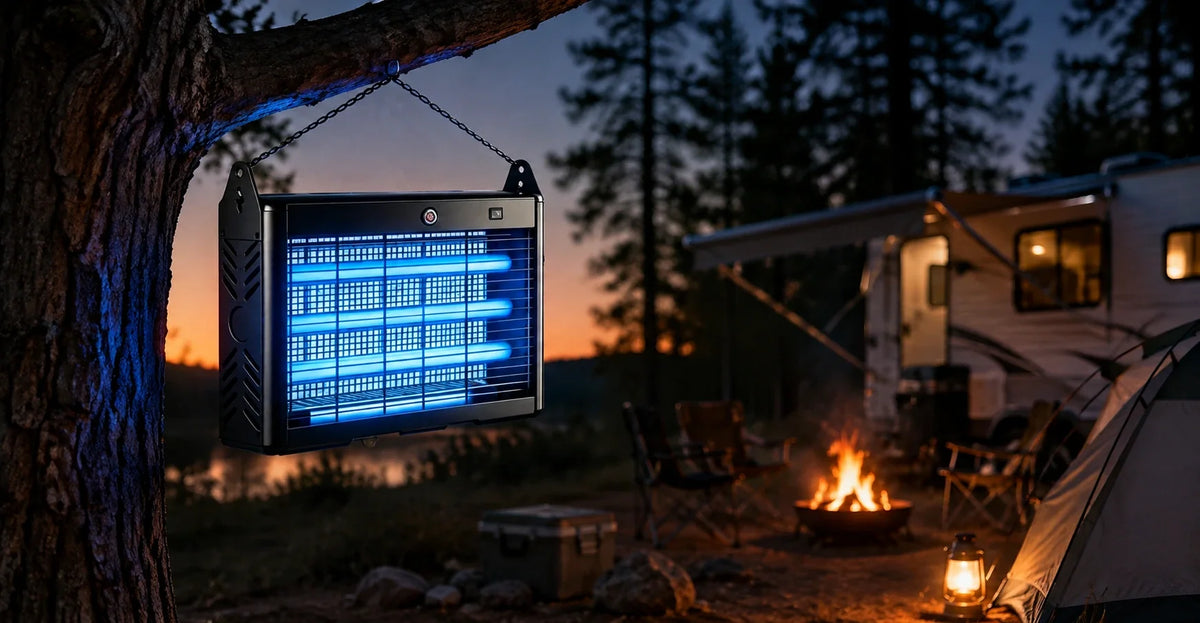
- Keep it a few feet off the ground on a stake, hook, or tree branch rather than directly on the dirt, especially in tall grass.
- Avoid pointing it straight at a lantern or campfire — competing light sources can pull some of the mosquitoes' attention away from the UV LEDs.
Battery Life for Multi-Day Trips
This is usually the first question campers have. The G8 and G8L differ mainly in battery capacity — 2×7500mAh vs 3×9600mAh — so if you're out for several days in a row without much direct sun, the G8L's larger capacity gives you more of a buffer. On a normal day with decent sunlight, the solar panel tops the battery back up during daylight hours, and the built-in dusk-to-dawn sensor means it only runs when it's actually needed, which helps stretch runtime further on cloudy stretches.
Weather and Waterproofing
Camping means dealing with rain, dew, and dust that a backyard patio rarely sees. An IPX5 waterproof rating means the unit is built to handle rain and splashing without needing to be brought inside every time the weather turns — useful when you don't want to be unmounting and remounting gear every evening of a trip.
RV-Specific Setup Tips
If you're parked at an RV site rather than tent camping:
- Mount it near the awning or entry step, where mosquitoes tend to gather as soon as the door opens.
- Use the extension cord (where included) to position the solar panel in direct sun even if the unit itself is hung in a shadier spot near the RV.
- If you're moving sites frequently, a hook or stake mount is faster to pack up than anything that needs tools.
Manual Mode for Active Evenings
The automatic dusk-to-dawn sensor is convenient for a stationary campsite, but if you're cooking dinner right as the sun goes down and want protection a little earlier, switching to manual mode keeps it running on your schedule instead of waiting for full dark.
Bottom Line
Camping and RV trips are one of the more demanding environments for a mosquito zapper — no outlets, unpredictable weather, and a new spot to set up every few days. A solar unit is built around exactly those constraints: it charges itself, doesn't need a power source, and can take a stake, hook, or hang wherever the campsite allows.