Mosquito-Free Living Insights
Dockside & Lake House Mosquito Control Guide
If you spend your evenings on a dock, a lakeside deck, or a screened porch overlooking the water, you already know the tradeoff: the same water that makes the view worth it is also exactly what mosquitoes need to breed. Standing water, still air near the shoreline, and shaded vegetation along the bank all add up to one of the more mosquito-dense environments a homeowner deals with. This guide walks through why lake house and dock mosquito control needs a different approach than a typical backyard, and what a practical setup looks like.
Why Lakefront Properties Are Different
Mosquitoes need standing water to complete their life cycle, and a lake property rarely has just one water source. Beyond the lake itself, there are often secondary spots that go unnoticed: a clogged rain gutter, a tarp-covered boat with pooled water, a birdbath, a low spot in the yard that doesn't drain, or even a forgotten bucket near the shed. Each of these can function as a breeding site independent of the lake.
On top of that, shoreline vegetation — reeds, tall grass, overhanging trees — creates shaded, humid microclimates that adult mosquitoes use for resting during the day. Combine a breeding source with nearby resting cover, and a dock or lakeside patio can end up with significantly more mosquito pressure than a yard just a few blocks inland.
Start With Source Reduction
Before any device or repellent, it's worth doing a walk-around of the property specifically looking for standing water that isn't the lake itself:
- Empty and flip over any containers that collect rainwater (buckets, kiddie pools, plant saucers)
- Check that gutters are draining properly and not holding water
- Cover or drain any water pooling under docks, boat covers, or tarps
- Change birdbath water every few days if you keep one
- Look at low-lying areas of the yard after rain for puddles that sit for more than a couple of days
This step doesn't eliminate the lake as a breeding source (that's not really something a homeowner can control), but it does remove the secondary sources that are often just as productive and much closer to where people actually sit.
Why a Waterproof Mosquito Zapper Matters More Here
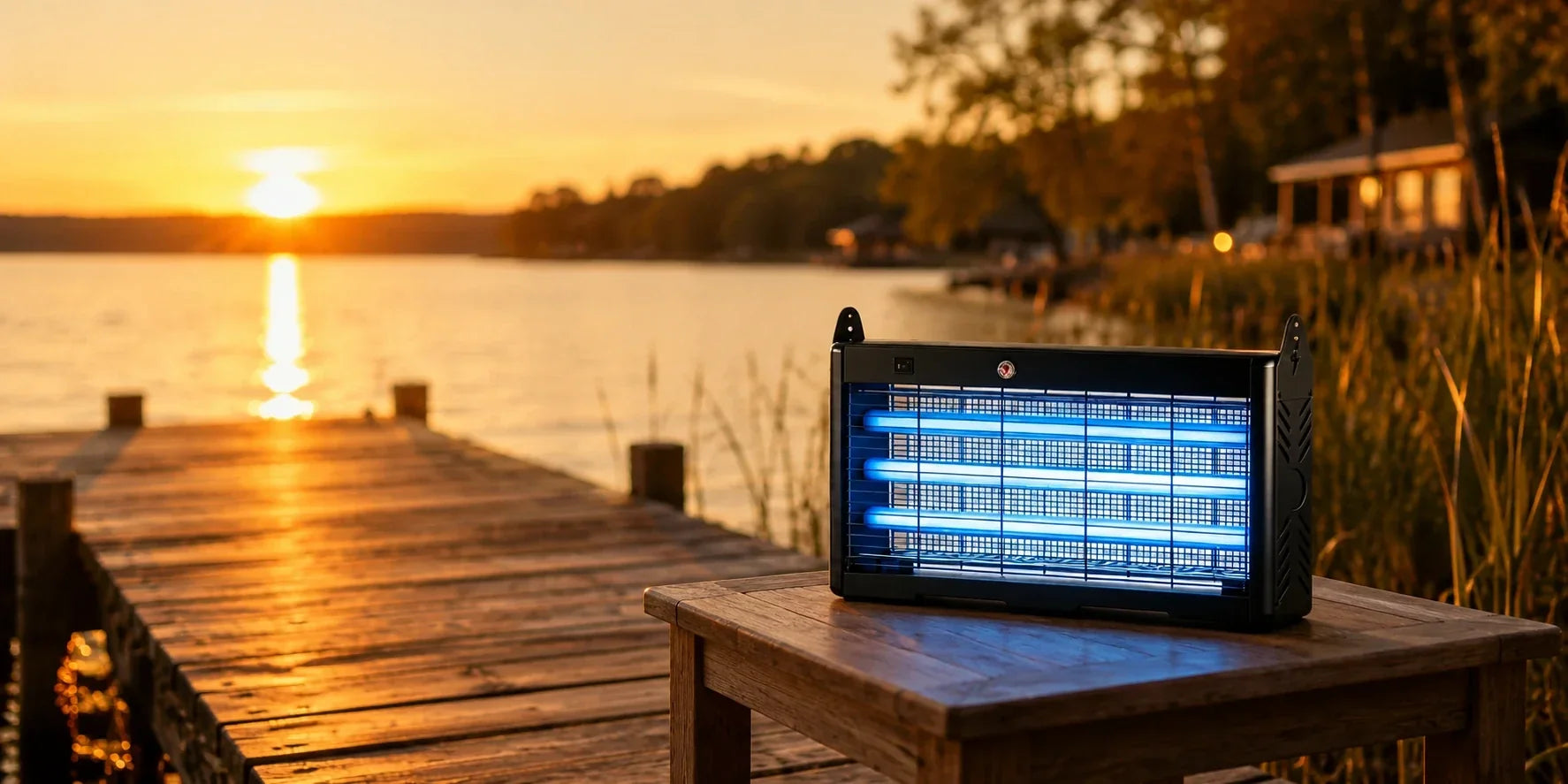
Lakefront and dockside environments expose outdoor equipment to more moisture, humidity, and temperature swings than a typical backyard — splashing water, rain blowing in off the lake, and condensation from being near water constantly are all part of the environment. Any device meant to sit outside on a dock or lakeside deck through a full season needs a genuinely waterproof mosquito zapper, not just something with light rain resistance.
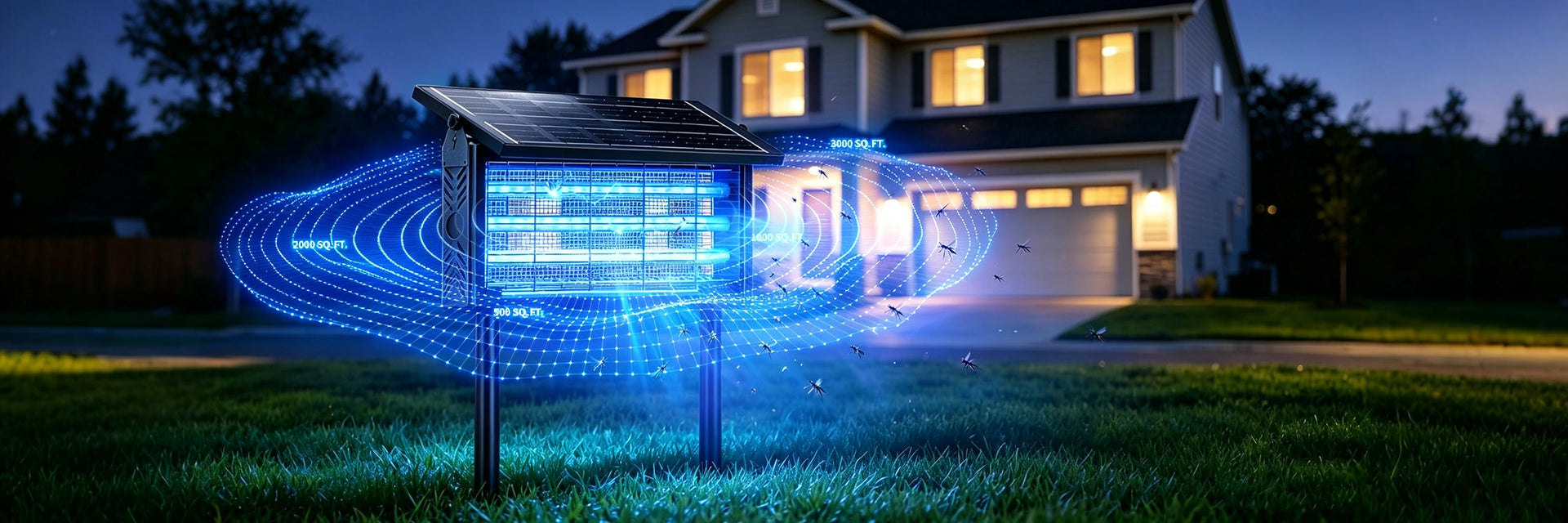
This is one of the reasons a solar-powered UV zapper tends to suit dockside and lake house settings well: it's designed to sit outdoors continuously without needing to be brought inside every time weather shifts, and it charges during the day using the same sun exposure that a lake property usually has plenty of. There's no cord running down to a dock, no outlet needed near the water, and no battery to remember to swap.
Placement Tips for Docks and Waterfront Patios
- Position the unit away from direct, prolonged water spray (near a dock ladder or swim area) even if the housing is weatherproof — extending equipment life is easier than testing its limits
- Place it at the edge of the seating or activity area rather than directly at the shoreline, so it's drawing mosquitoes away from where people are sitting rather than through the middle of the group
- If there's shoreline vegetation nearby, positioning the unit between that vegetation and the seating area can help intercept mosquitoes moving from resting cover toward people
- For docks specifically, a stable, level surface matters — a unit that gets knocked into the water isn't doing anyone any good
A Realistic Seasonal Approach
Mosquito pressure near water tends to build through the season rather than being constant, so it helps to think in terms of a routine rather than a one-time setup:
- Early season: Do the source-reduction walk-around before mosquito activity ramps up
- Throughout the season: Keep a UV zapper running in the main gathering area (dock, patio, or porch) so it's doing continuous work without daily effort
- After heavy rain: Recheck for new standing water — a single storm can create several new breeding spots overnight
- Peak evening hours: This is when mosquito activity is generally highest near water, so it's worth timing bigger gatherings with that in mind if mosquito pressure has been noticeably heavy
A lake house or dock isn't going to be mosquito-free the way an inland patio might be — the water that makes the property appealing is also what makes it a harder environment to manage. But a combination of removing secondary standing water sources and running a weatherproof device suited to being outside continuously goes a long way toward making evenings on the water actually enjoyable again.