Mosquito-Free Living Insights
How Many Solar Bug Zappers Does Your Yard Actually Need?
If you've ever set up a single zapper in the middle of your backyard and wondered why the corner by the fence is still buzzing with mosquitoes, you're not alone. One of the most common questions we hear is simple: "Do I need more than one?" The honest answer depends less on your yard's total square footage and more on its shape, layout, and where people actually spend time outdoors.
Coverage isn't a perfect circle
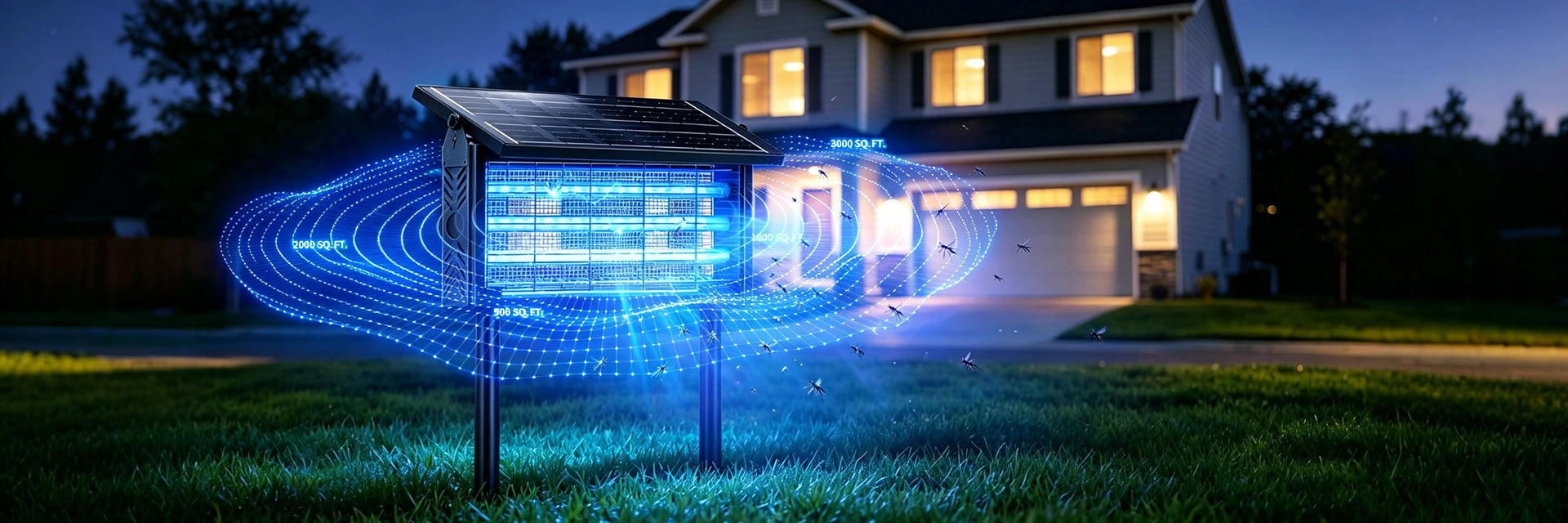
A solar bug zapper attracts insects toward its UV light from roughly all directions, but real yards aren't open fields — they have fences, sheds, raised garden beds, patio furniture, and trees that block light and airflow. A zapper tucked behind a shed corner won't do much for the dining table twenty feet away on the other side of the house. Think of coverage less as "one device handles X square feet" and more as "one device handles one open, unobstructed zone."
When one zapper is usually enough
- A single patio, balcony, or small backyard with one main gathering area
- A yard without major visual or physical barriers between the zapper and where you sit
- A property where you mainly want relief right around a seating area, not the entire lot
When it's worth adding a second unit
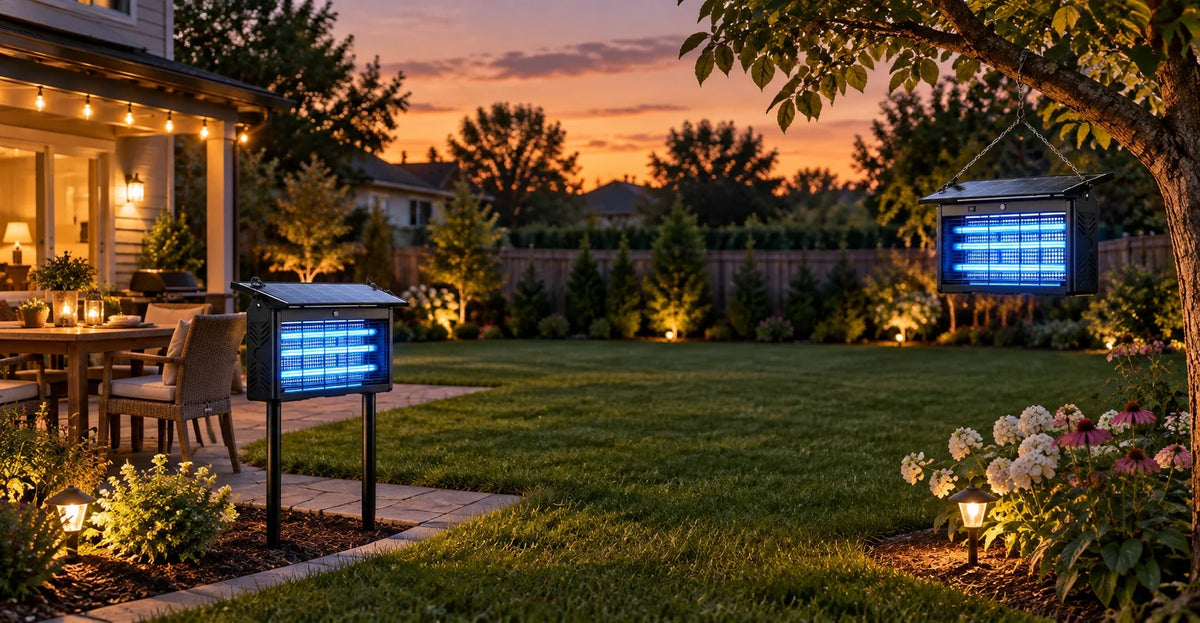
- L-shaped or split-level yards with two distinct outdoor living areas (say, a front porch and a back patio)
- Larger lots where the seating area, garden, and play area are spread far apart
- Properties with a lot of standing water sources (ponds, low spots, gutters) on opposite ends of the yard, since mosquitoes tend to breed near water and travel from there
- Multi-purpose outdoor spaces — a pool zone on one side, a fire pit or dining set on the other
A simple way to plan your layout
Walk your yard at dusk, right when mosquitoes typically become active, and note where people actually stand, sit, or walk through. Those are your priority zones. Place a zapper near — but not directly next to — each zone, giving it enough open space to draw insects in before they reach you. If you find one zone still gets more bites than the rest even after setup, that's usually your cue that a second unit for that specific spot will help more than moving your existing one back and forth.
A few things that won't fix a coverage problem
- Pointing the zapper "at" the seating area — the light draws insects toward itself, not away from you, so distance and placement matter more than aim
- Assuming a stronger unit alone will "reach further" — placement and open sightlines matter more than the unit itself
- Assuming a bigger yard automatically needs proportionally more units — a wide-open lawn with one seating zone may still only need one
Every yard is different, and there's no universal number that fits every layout. But if you map out where you actually spend your evenings and treat each separated zone as its own coverage area, you'll have a much better sense of whether one Murutoi zapper will do the job or whether a second is worth adding.