
Mosquito-Free Living Insights

Winter Storage Guide for Your Solar Bug Zapper
Mosquito season eventually winds down, and when it does, how you store your solar bug zapper over the off-season has a real effect on how well it performs when you bring it back out next spring. A few extra minutes now can save you a frustrating troubleshooting session later.
Step 1: Give it a full clean before storing
Dust, pollen, and the remains of the season's catch can build up inside the grid and collection tray over months of use. Before packing it away, wipe down the housing and gently clean the grid and tray following your usual cleaning routine. Anything left inside tends to harden and get harder to remove the longer it sits, so don't skip this step even if the unit still looks "good enough."
Step 2: Check the charge level — don't store it empty
Rechargeable batteries generally hold up best when they're not left fully drained for long stretches. Before storing your zapper for the season, give it a full charge using the charging cable (Murutoi zappers charge via a DC round plug, not USB-C, so double-check you're using the right one). Storing it at a healthy charge level is a simple way to look after the battery over the winter months.
Step 3: Keep it dry and out of temperature extremes
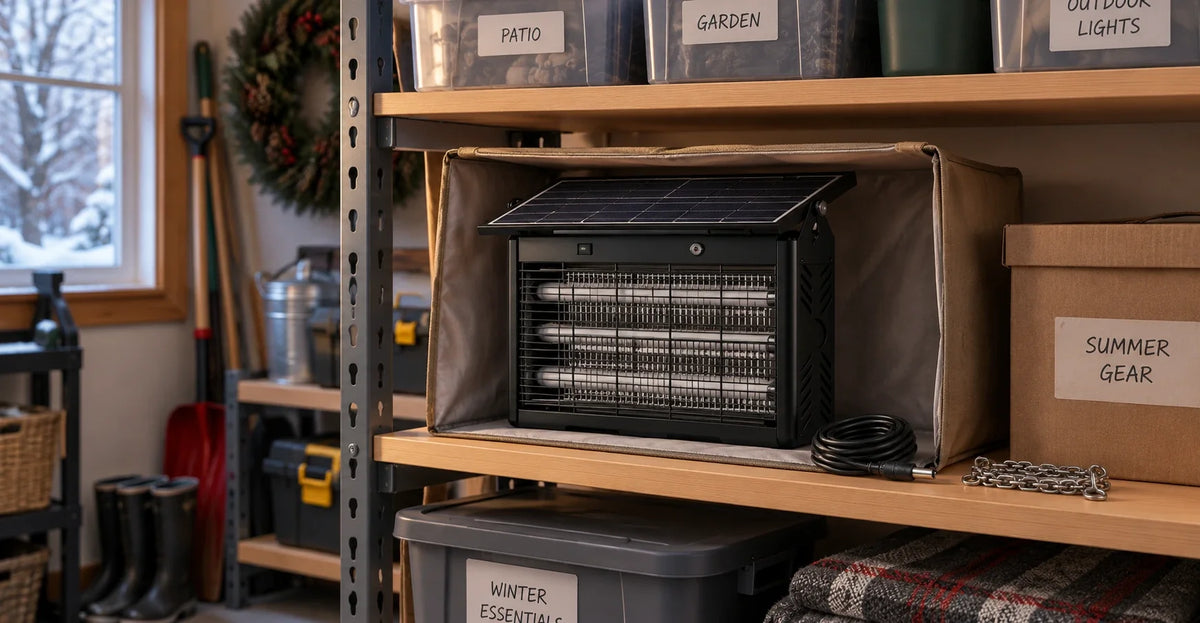
While the housing is built to handle rain and humidity during active use, long-term storage is different from everyday outdoor exposure. Store your zapper indoors — a garage shelf, closet, or storage bin works well — somewhere it won't sit in standing moisture or get exposed to freezing temperatures for months at a time. A breathable storage bag or box is better than sealing it in an airtight plastic bag, which can trap residual moisture.
Step 4: Position the solar panel away from pressure or scratches
If you're storing it alongside other gear, make sure nothing heavy rests directly on the solar panel surface. Small scratches won't necessarily stop it from charging, but keeping the panel protected helps it charge as efficiently as possible when spring rolls around.
Step 5: Do a quick check-in halfway through the off-season
If you're storing it for several months, it doesn't hurt to check on it once partway through — a quick glance to confirm it's still dry and give the battery a top-up charge if it's dropped low. This is optional, but it's a good habit if your storage area isn't climate-controlled.
When mosquito season comes back around
Give the unit a quick wipe-down, a fresh full charge, and inspect the grid and tray one more time before hanging it back up. Starting the season with a clean, fully charged zapper means it's working at its best right from the first warm evening — instead of you troubleshooting a sluggish unit mid-June.
Storing your zapper properly takes maybe ten minutes total, but it's the difference between an easy season-opener and starting from scratch every spring.