
Mosquito-Free Living Insights

Backyard Chickens & Mosquito Control: A Farm Owner's Guide
Why Mosquitoes Are Drawn to Chicken Coops
Chicken coops create nearly ideal conditions for mosquitoes. Water dishes, damp bedding, manure buildup, and shaded corners all hold moisture, and standing water anywhere on a property is one of the most common mosquito breeding sites. Add the fact that mosquitoes are drawn to the carbon dioxide and body heat given off by any warm-blooded animal, and a coop full of chickens becomes an easy target.
Beyond being a nuisance, mosquitoes can be a real health concern for a flock. In some regions they have been associated with certain pathogens that can affect poultry, so managing them around the coop isn't just about comfort — it's part of routine flock care. (Farm owners in areas with known mosquito-borne poultry disease should check with a local extension office or avian vet for region-specific guidance, since risk varies significantly by location.)
Start With Water and Waste Management
Before adding any mosquito control device, most backyard farmers get the biggest results from removing breeding sites:
- Empty and scrub waterers every 2–3 days. Standing water in a fount or dish is often the closest breeding site to the coop itself.
- Check gutters, tarps, and feed buckets near the run for pooling rainwater.
- Keep bedding dry. Damp straw or shavings near the coop's perimeter can hold moisture even after the surface looks dry.
- Clear tall grass and brush within a few feet of the coop, since mosquitoes rest in shaded vegetation during the day.
Placement Matters More Than People Expect
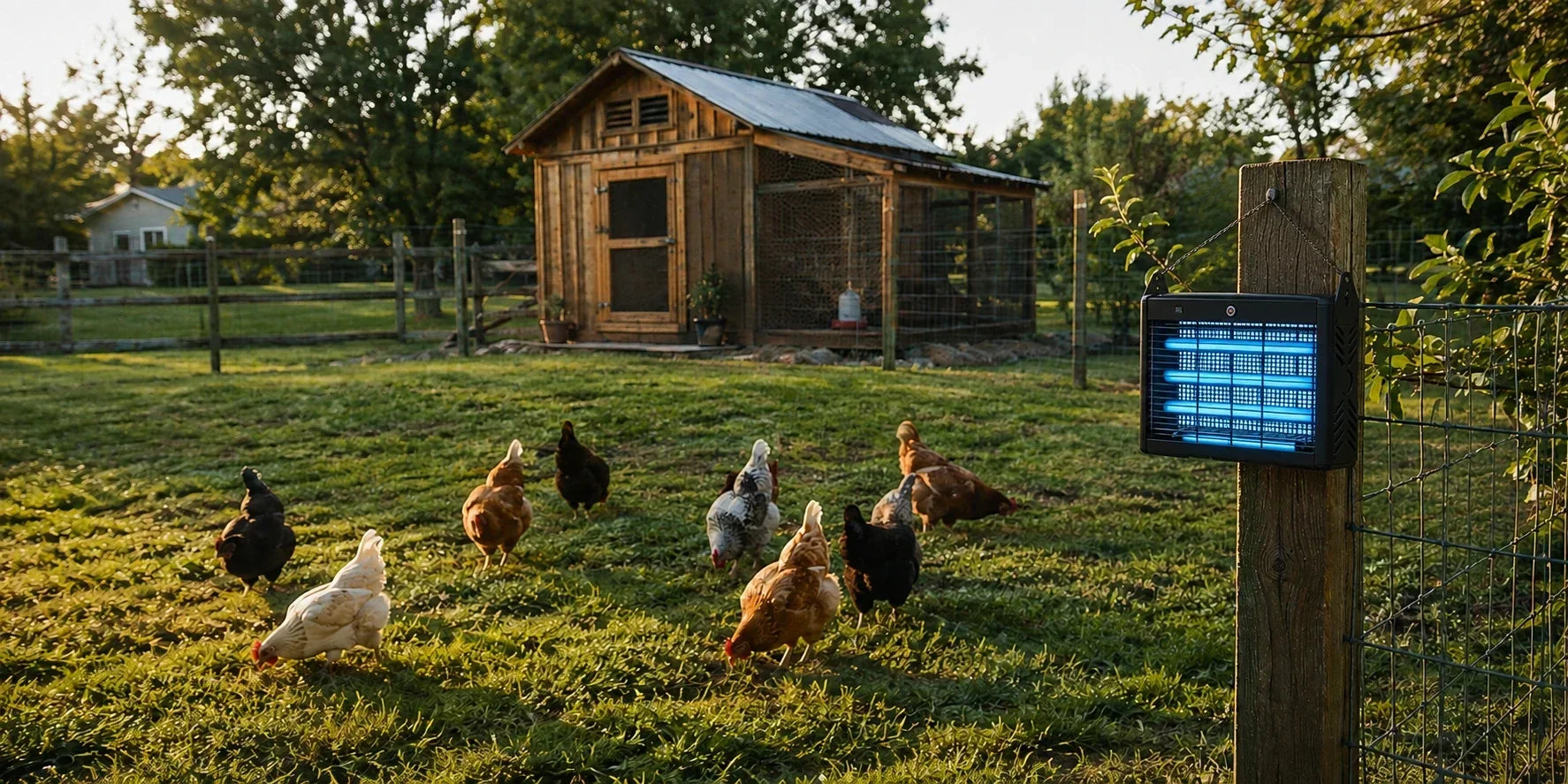
A common mistake is placing a mosquito trap or repellent device directly inside the coop or run, right where the birds spend most of their time. Many manufacturers instead recommend positioning control devices a short distance away — near the perimeter fence, by a water source, or along a flight path mosquitoes use to reach the coop — rather than inside the birds' living space. The idea is to avoid any light, sound, or attractant from the device disturbing roosting or feeding chickens, while still placing it somewhere mosquitoes are likely to pass through before reaching the flock.
A few placement guidelines that tend to work well on small farms:
- Position traps 10–20 feet from the coop, closer to standing water, compost, or brush where mosquitoes actually breed and rest.
- Avoid placing devices directly under roosting bars or near feeders, where dust and feathers can interfere with airflow or sensors.
- If using a solar-powered trap, choose a spot with several hours of direct sun exposure per day — often near the coop roofline or along a south-facing fence line — rather than in the shaded areas mosquitoes prefer.
Choosing Weatherproof Housing for Coop-Adjacent Devices
Anything placed near a coop is exposed to the same conditions the birds live in: dust, feathers, rain, and temperature swings. A device without adequate weatherproofing can fail well before a farm-grade one would. When evaluating a mosquito control device for use near a coop, it's worth checking:
- An enclosed or shielded housing that keeps rain and dust away from internal components.
- A rating or design intended for outdoor use, not just "outdoor-friendly" marketing language — check the manufacturer's stated ingress protection or weather rating where available.
- Materials that hold up to ammonia exposure. Coop environments carry more ammonia from droppings than a typical backyard, and ammonia is known to degrade some plastics and metals faster than in a standard outdoor setting — though the actual impact depends on the specific materials used.
Because manufacturer ratings and materials vary by product line, farm owners should confirm the specific weatherproofing rating and warranty terms with the supplier before placing any device in a coop environment long-term.
Skip the Chemical Sprays Near the Flock
Many common mosquito yard sprays are not labeled safe for use around poultry, and chickens spend most of the day pecking at the ground and grass where residue settles. If chemical treatment is necessary for a serious infestation, most poultry keepers are advised to:
- Choose products specifically labeled as safe around livestock or poultry, and follow label instructions exactly.
- Treat well away from the coop and run, allowing recommended re-entry times before birds have access to the area.
- Talk to a local agricultural extension office or avian vet before applying anything new near an active coop.
Non-chemical, physical mosquito traps are generally considered a lower-risk option for coop-adjacent placement, since they don't introduce residue into the birds' environment — though as always, check the specific product's guidance for use around animals.
A Simple Seasonal Routine
- Spring: Clear winter debris, check for pooling water as snow melts, inspect coop drainage.
- Summer: Peak mosquito season — clean waterers more frequently, keep grass trimmed, monitor trap placement as sun angles shift.
- Fall: Reduce standing water sources before the coop is buttoned up for cooler weather.
- Winter: In most regions mosquito activity drops off, making this a good window to clean and store control devices (see our companion guide on off-season storage).