Mosquito-Free Living Insights
Do Bug Zappers Work in Rain? Testing the IPX5 Waterproof Rating
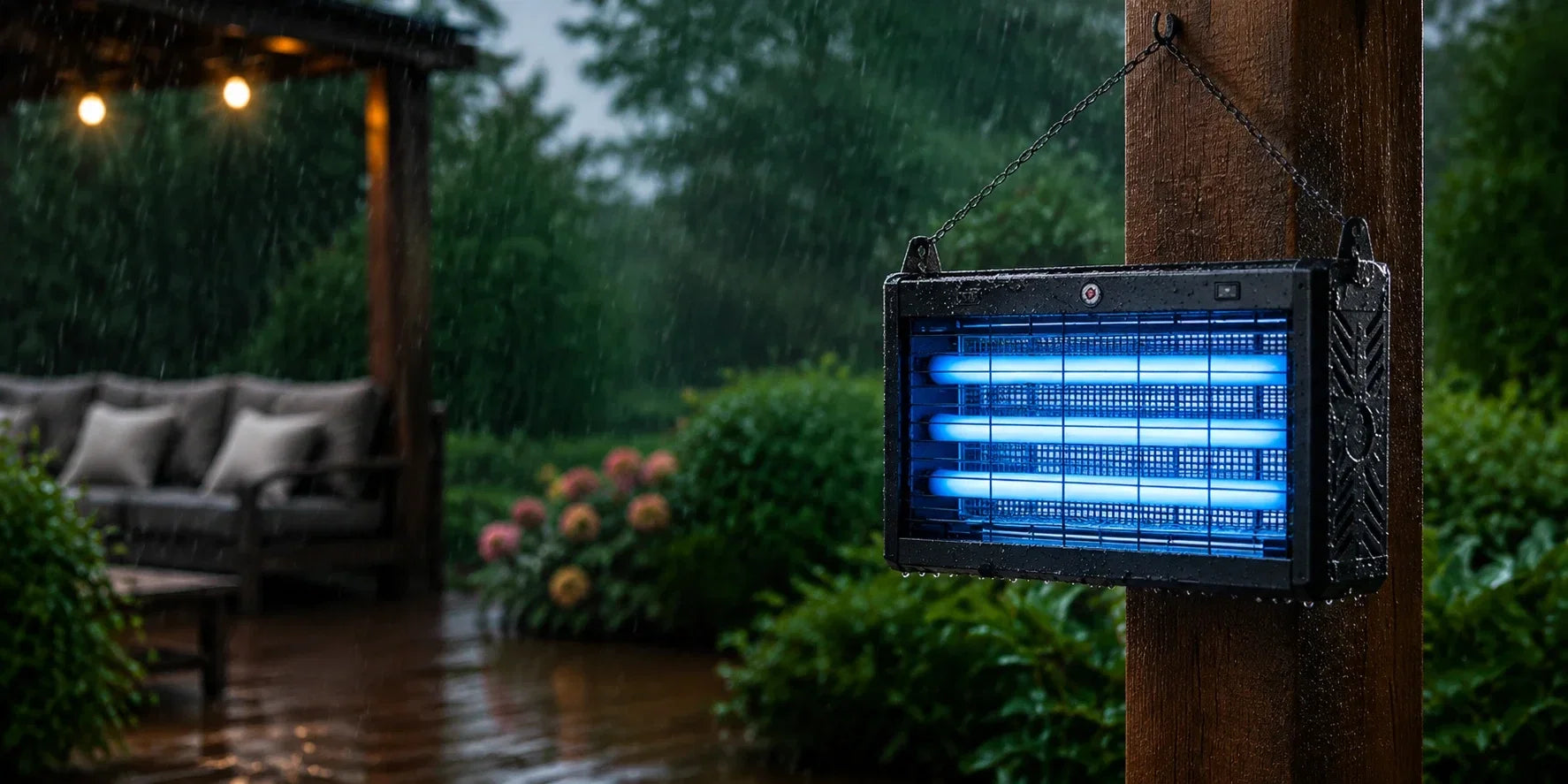
If you've ever rushed outside mid-downpour to unplug or cover your bug zapper, you already know the question this post answers: does an outdoor mosquito zapper actually hold up when the weather turns? Here's what an IPX5 rating and an aluminium housing actually mean for how a solar zapper performs in real rain — not just what the spec sheet says.
What IPX5 Actually Means
IPX5 is part of the IP (Ingress Protection) code system used to rate how well an electronic enclosure resists dust and water. The "X" means the device hasn't been separately tested for dust resistance, while the "5" refers specifically to water: an IPX5-rated enclosure is designed to withstand low-pressure water jets from any direction, which covers the kind of exposure a device sitting outdoors experiences during rainfall and wind-driven spray.
It's worth being precise here, because IP ratings are often misunderstood. IPX5 is not the same as being submersible — that would fall under a higher rating like IPX7 or IPX8. It's a splash-and-jet resistance rating, which matches how a patio or garden-mounted zapper is actually used: exposed to open air, rain, and occasional hose spray, but not intended to be dunked or left standing in a puddle.
How an IPX5 Rating Is Actually Earned
IP ratings aren't a marketing term — they come from a standardized lab test. To earn an IPX5 rating, a device is sprayed with a low-pressure water jet (roughly 6.3mm nozzle, around 12.5 liters per minute) from all directions for several minutes, and it has to keep functioning afterward with no water reaching internal components. That's a meaningfully closer match to real rain-and-wind conditions than a lower rating like IPX2 or IPX3, which only covers light dripping or angled spray.
In everyday terms: an IPX5-rated zapper is built to take direct rain and wind-driven spray from any angle without needing to come inside. What the rating doesn't cover is standing water — so how the unit is placed still matters for getting the full benefit of that rating.
A few placement basics worth keeping in mind:
- Drainage matters more than people expect. Units mounted flat or in a low spot where water can pool around the base are working against their IP rating, not with it. Angling the mount slightly and avoiding low-lying placement makes a real difference.
- The charging port is the vulnerable point. Like most outdoor electronics, the DC charging port (a round-pin connector, not USB-C) is the area most worth keeping protected — either by orienting it downward/sideways during mounting or making sure any port cover is seated properly.
- The UV component is sealed, not user-serviced. The UV LED module inside is a sealed unit rather than a swappable part, which simplifies the waterproofing question considerably — there's no removable bulb housing or gasket for water to work its way past.
Aluminium Frame: Why It Holds Up
Beyond the electronics, the housing material itself plays a role in how a zapper handles repeated wet-dry cycles season after season. An aluminium frame has a natural advantage here over cheaper plastic housings: it's less prone to the warping and brittleness that some plastics develop from UV exposure and temperature swings over time, and it's more resistant to the kind of corrosion that can eventually compromise seals on lower-quality units.
That said, no frame material is a substitute for basic care. Wiping down the unit occasionally, checking that mounting hardware hasn't loosened, and avoiding pressure-washing it directly will help any outdoor electronic device last longer, IPX5 or not.
So — Do Bug Zappers Work in Rain?
Short answer: yes — an IPX5-rated solar zapper is built to keep running through normal rainfall and wind-driven spray without needing to be brought inside every time the sky clouds over. It's not designed to be submerged, and placement (avoiding pooling water, mounting at a reasonable angle) still matters for getting the most out of that rating. If you live somewhere with frequent storms, that combination of a proper IP rating and a corrosion-resistant frame is worth checking before you buy — not every outdoor zapper on the market is built the same way.