Mosquito-Free Living Insights
Solar vs Plug-In Bug Zappers: Which One Should You Buy?
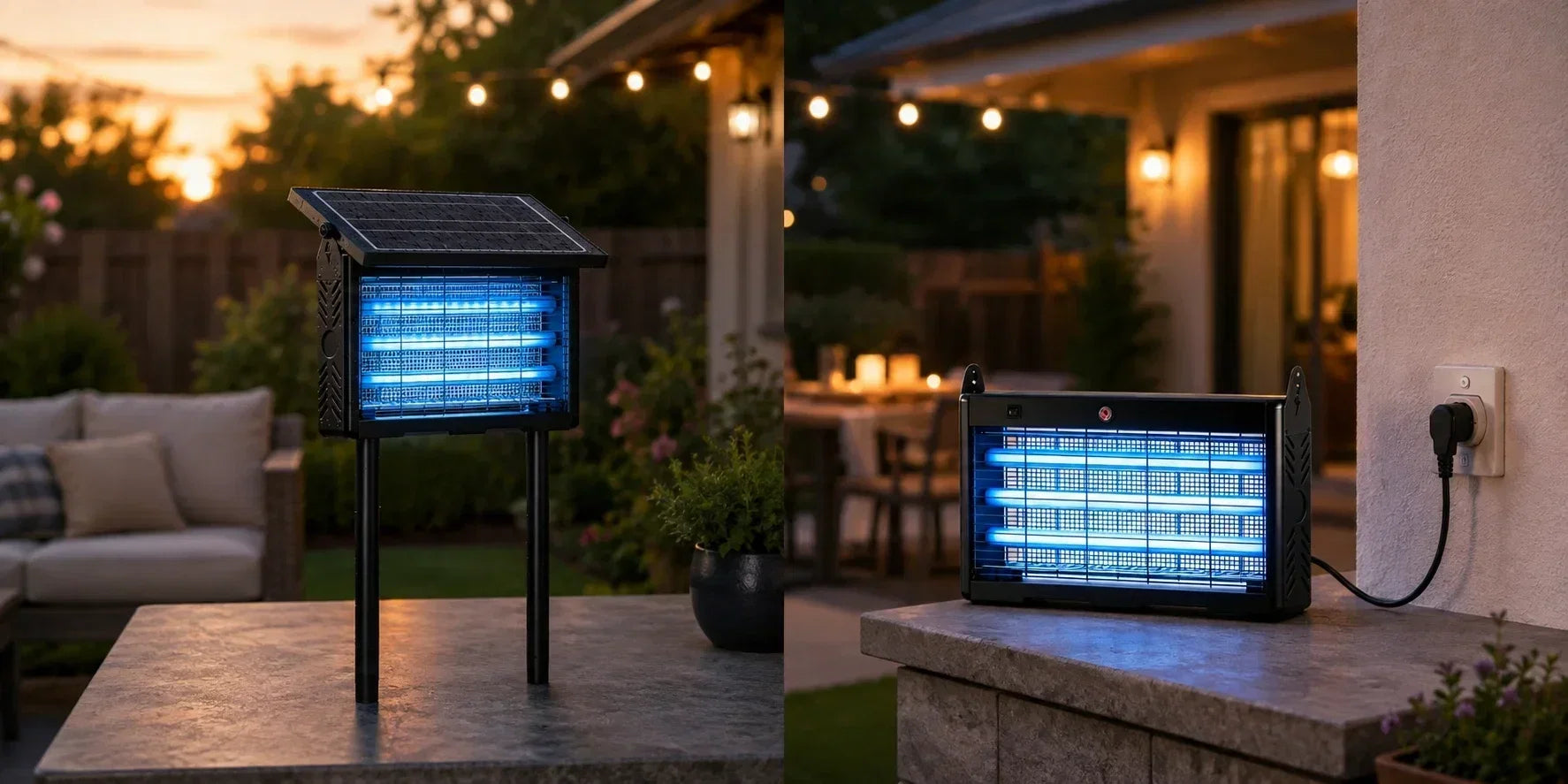
Both solar and plug-in bug zappers do the same basic job, but the way you'll actually use them day to day is quite different. Here's how they compare on the three things that matter most when you're choosing between them.
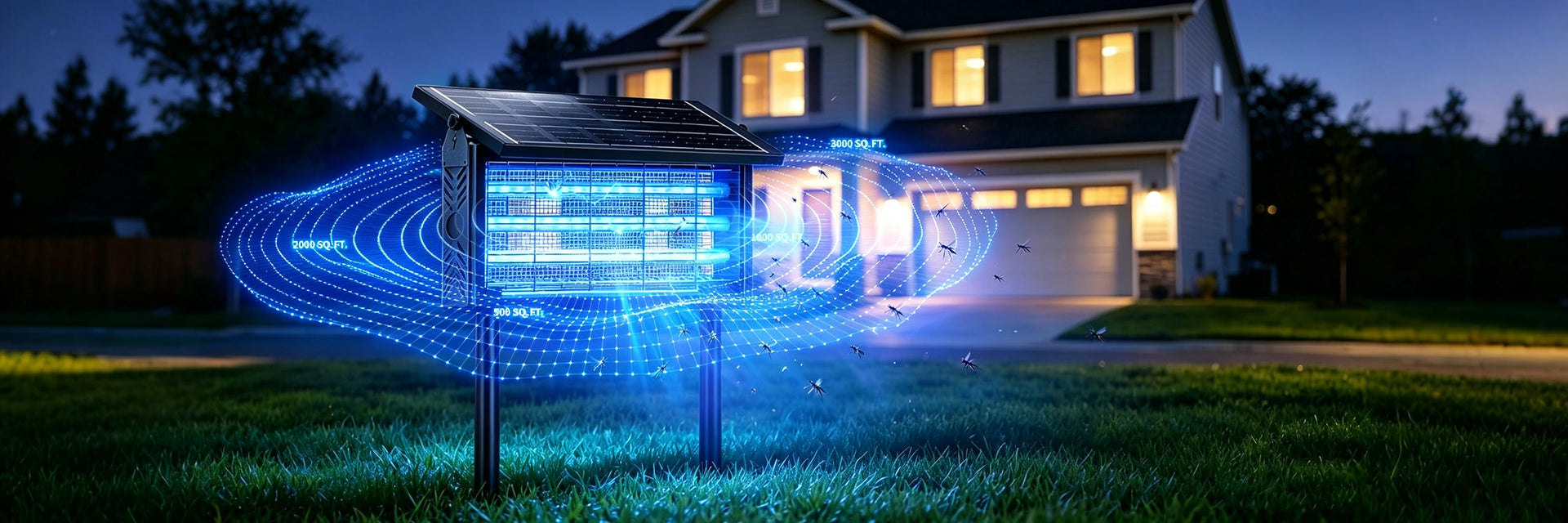
Power source and installation A plug-in zapper needs to sit within reach of an outdoor outlet or extension cord — which immediately limits where you can put it. A solar zapper has no such requirement; it charges from sunlight and runs independently, so setup is just "place it and go."
Placement flexibility Because it's tethered to a power source, a plug-in unit is usually anchored to one spot near your house — a porch, patio, or garage wall. A solar zapper can go wherever mosquitoes actually gather: the far end of a yard, a dock, a campsite, a balcony rail, or anywhere else that gets reasonable daytime sun. This matters because mosquito activity is often heaviest away from the house, not right next to it.
Running cost A plug-in zapper draws electricity every time it runs, which adds a small but recurring amount to your power bill over a full mosquito season. A solar zapper has no ongoing electricity cost — once charged, it runs on stored solar energy. The trade-off is upfront: solar units typically cost more than a basic plug-in model, and their output depends on getting enough sunlight during the day.
Weather and reliability considerations Plug-in zappers work the same regardless of weather, since they draw from a constant power source. Solar zappers need a reasonable amount of daily sun to fully charge; several consecutive overcast days can reduce runtime. If you live somewhere with long stretches of low sunlight, factor that into your decision.
Which one fits you? If you have a covered patio near an outlet and don't mind a cord, a plug-in zapper is simpler and cheaper upfront. If you want to place a zapper anywhere in your yard, take it camping, or avoid running an extension cord across the lawn, a solar model like Murutoi gives you that flexibility — as long as the spot gets decent daytime sun.