Mosquito-Free Living Insights
RV & Van Life: Using a Solar Bug Zapper on the Road
Anyone who's parked an RV or converted van near water, woods, or an open field at dusk knows the drill: within minutes, moths and mosquitoes start showing up around the door, the awning light, and anywhere else there's activity. On the road, dealing with flying insects comes with an extra wrinkle that a fixed house doesn't have — power. Campsite hookups aren't guaranteed, generator time is often limited, and nobody wants to burn battery bank capacity on bug control.
Why Power Is the Real Constraint
In a house, plugging in a bug zapper is a non-issue. In an RV or van, every device competes for the same limited power budget — refrigeration, lighting, water pumps, charging phones and laptops. Adding one more thing that needs a wall outlet or a chunk of your battery bank isn't ideal, especially if you're boondocking or dry camping without shore power for days at a time. It also means your setup changes every few nights — a state park with tree cover one night, an open desert site the next, a spot near a lake with heavier insects after that. Planning around a fixed outlet just doesn't fit that pattern.
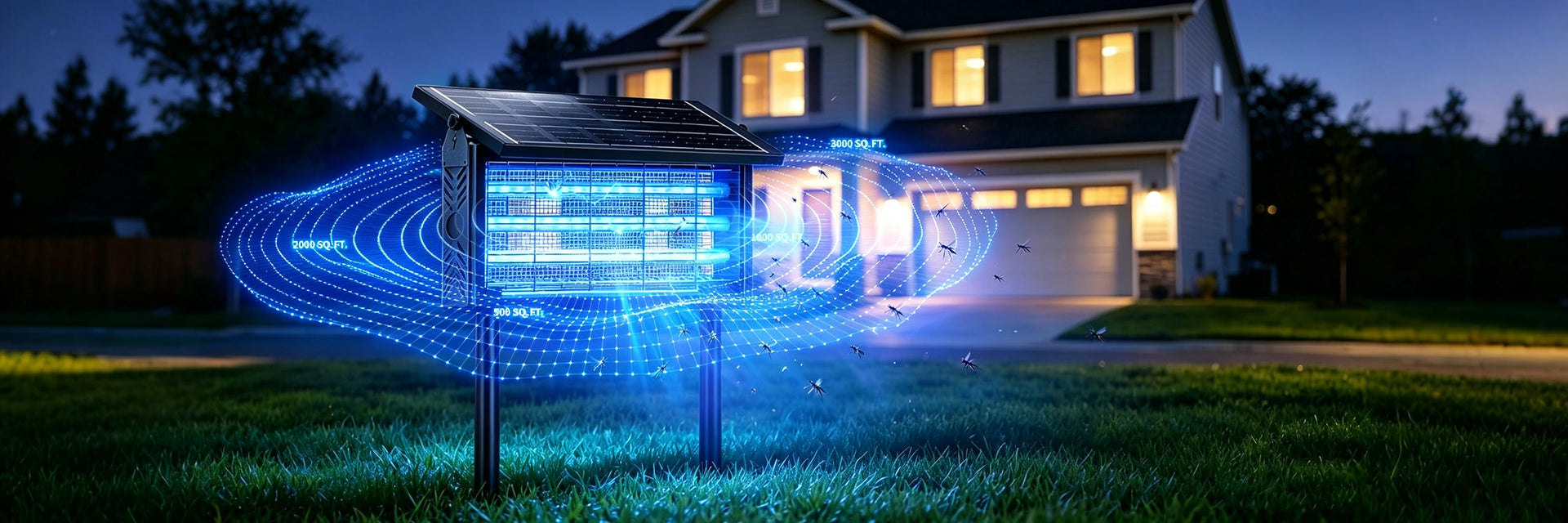
This is exactly the gap a solar-powered design is built for. A solar bug zapper like Murutoi charges on its own during daylight hours and doesn't draw from your RV's electrical system or your van's house battery. There's no cord to run, no inverter to worry about, and nothing extra to plug in when you set up camp — it works with whatever daylight that location gives it.
Hanging and Placement Tips at Camp
A few basics go a long way toward getting good use out of a solar bug zapper at a campsite:
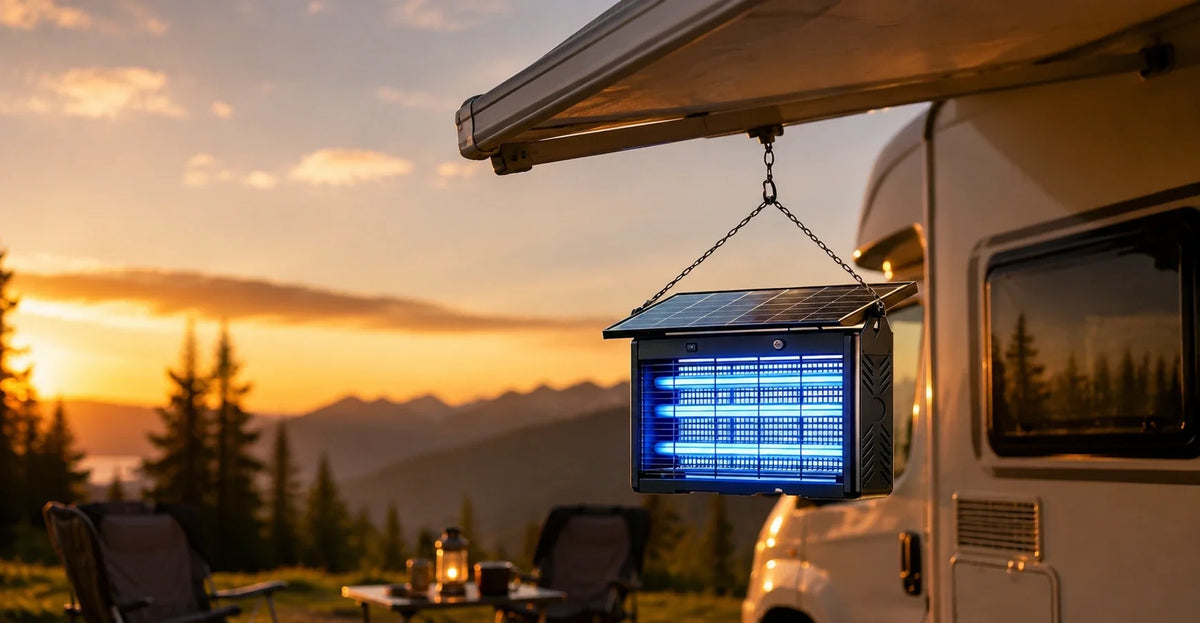
- Pick a stable, secure anchor point. An awning arm, a ladder rail, or a dedicated hook works better than a loose or swaying surface — a secure mount keeps the unit steady, holds up in wind, and reduces wear.
- Give it open exposure. Since it's solar-charged, avoid parking it in constant shade under trees or your awning all day if you can help it — more open sky exposure during daylight generally supports better charging.
- Keep it clear of foot traffic. Hang it away from doorways, steps, and areas where kids, pets, or gear bins pass through often.
These are general placement principles — the right spot will vary by campsite, vehicle layout, and how much tree cover or open sky you're working with, so it's worth adjusting based on where you're actually parked rather than following one fixed setup every time.
The Takeaway
Bugs don't ask whether you're plugged in, but that doesn't mean bug control should compete with your RV or van's limited power supply. A solar design like Murutoi is built around that constraint from the start — no outlet, no battery draw, and a setup that travels as easily as you do.