Mosquito-Free Living Insights
Is UV Light From Bug Zappers Safe for Pets' Eyes?
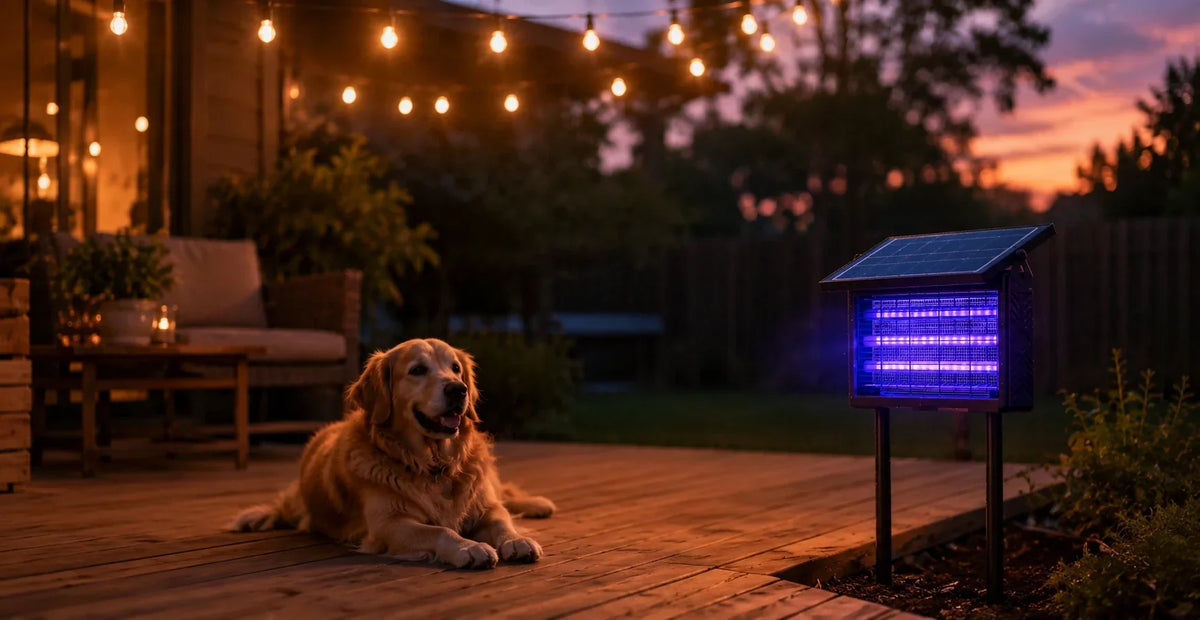
If you share your yard with a dog or cat, it's natural to wonder whether the glowing purple light on your bug zapper could do any harm — especially to curious eyes that get close to investigate. The short answer: for the type of UV light used in most residential bug zappers, everyday exposure is generally not considered a hazard to pets. Here's what's actually going on.
What Kind of UV Light Do Bug Zappers Use?
Bug zappers attract insects using UV-A light, typically in the range of 350 to 370 nanometers (commonly cited as roughly 365 nm). This is the same general category of "black light" used in novelty lighting and some skincare devices. UV-A is the least energetic form of ultraviolet light — meaningfully weaker than the UV-B and UV-C wavelengths associated with sunburn or germicidal sterilization lamps.
Insects are drawn to UV-A because their eyes are sensitive to it in a way mammal eyes simply aren't. A dog or cat's eye doesn't perceive or respond to this wavelength the same way, which is one reason pets rarely show any interest in staring directly at a zapper.
Why Brief Exposure Isn't a Concern
A few factors work in your pet's favor:
- Low intensity. Residential bug zapper bulbs are low-wattage fixtures designed to lure insects from several feet away, not to produce concentrated beams.
- Distance and behavior. Pets don't tend to fixate on the light source the way insects do, so realistic exposure is brief and incidental.
- Different risk category. UV-A is not the wavelength associated with the sunburn-type skin damage or germicidal effects linked to UV-B and UV-C — the type of exposure people are usually worried about when they hear "UV light."
A Separate Consideration: What's Inside the Unit
Beyond the light itself, it's worth thinking about the physical design of the zapper. Many bug zappers use an exposed electrified grid, which can pose a real risk if a curious paw or nose gets too close, along with the popping sound and occasional spark that can startle animals.
This is a separate issue from UV safety, but it's often the bigger practical concern for pet owners. If you're choosing a unit for a home with pets, it's worth checking the manufacturer's specifications for whether the light source and capture mechanism sit behind an enclosed housing rather than an open grid — that detail matters more for physical safety than the UV wavelength does.
Simple Habits for Extra Peace of Mind
- Place the unit at a height or distance slightly out of your pet's usual wandering path.
- Avoid letting pets sniff or paw directly at any outdoor lighting fixture, UV or otherwise.
- If your pet has known light sensitivity or eye conditions, check with your vet — individual sensitivities take priority over general guidelines.
The Takeaway
The UV-A light used in bug zappers is low-intensity and falls in a different category from the ultraviolet wavelengths linked to eye or skin damage. For pet owners, the more practical safety question is usually the unit's physical design — an enclosed housing versus an open electrified grid — rather than the UV light itself.