Mosquito-Free Living Insights
Screened Porch vs Open Patio: Where Zappers Work Best
Not all outdoor spaces are created equal when it comes to mosquito control. Where you place a bug zapper — and what you can reasonably expect from it — looks different depending on whether you're working with a screened porch or a wide-open patio. Here's how to think about each.
Screened Porches: A More Contained Environment
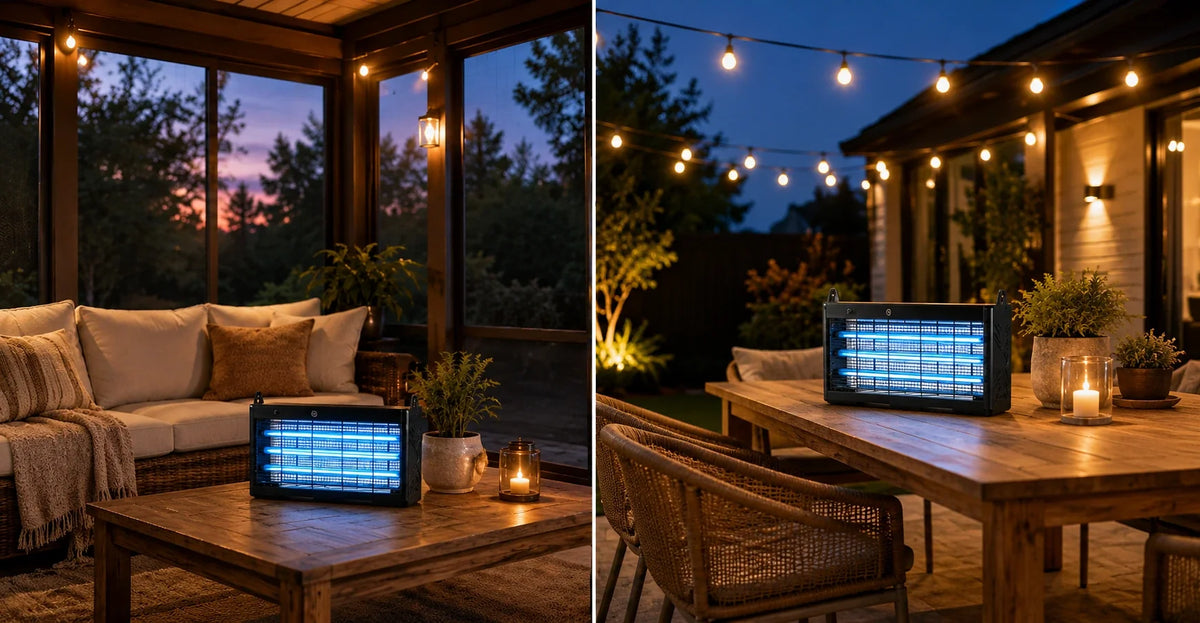
A screened porch is a favorable environment for a bug zapper. The mesh barrier keeps most outdoor insects from entering in the first place, so the zapper's job shifts from "defending an open perimeter" to catching the occasional bug that slips in through a door or gets carried in on clothing.
Placement tips for screened porches:
- Position the unit away from the main seating area, ideally in a corner or near an entry point where bugs are most likely to sneak in.
- Keep it a few feet from screen walls so the UV glow doesn't just attract outdoor insects to hover uselessly against the mesh.
- Because the space is enclosed, even a compact unit tends to perform reasonably well here, since it isn't competing with an entire yard's worth of insects.
Open Patios: Coverage and Placement Matter More
An open patio has no barrier, which means the zapper is competing with the surrounding yard for insect attention. Placement — distance, height, and what's nearby — plays a bigger role in how well it performs.
Placement tips for open patios:
- As a general guideline, positioning the zapper roughly 15–20 feet from your main seating or dining area (adjusting based on your specific yard layout) can help draw insects toward the light and away from people, rather than pulling more bugs directly into your gathering space.
- Avoid placing it right next to bright porch lights or string lights, which can compete with the UV attractant and split insect attention.
- Elevate the unit slightly off the ground — a stake, hook, or side table works well — since many flying insects are more active at lower heights near ground cover and vegetation.
- For larger patios, positioning near the downwind edge of the space (relative to typical evening breeze direction) can help pull insects away from your gathering area rather than through it.
Why a Portable Design Helps With Either Setup
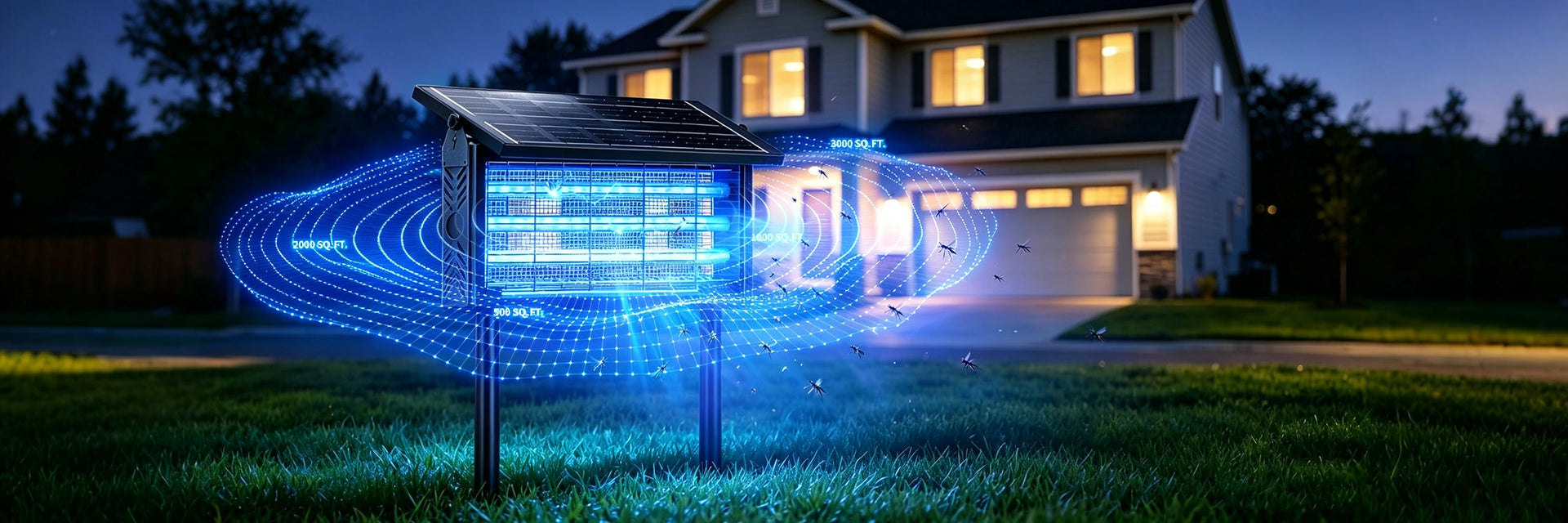
Because open patios and screened porches call for different placement strategies, flexibility matters. A cordless, solar-powered unit makes it easier to test a few spots — corner of the porch one week, edge of the patio the next — without worrying about extension cords or outlet access, so you can adjust based on what you actually observe in your own space.
The Takeaway
Screened porches offer a more controlled environment where a zapper's job is mostly cleanup duty, while open patios need more deliberate placement — distance from seating, height off the ground, and avoiding competing light sources — to pull insects away from where people actually gather. Either way, a portable design gives you room to adjust and find what works for your specific outdoor space.