Mosquito-Free Living Insights
Backyard Garden Bug Control: Where to Place a Solar Zapper
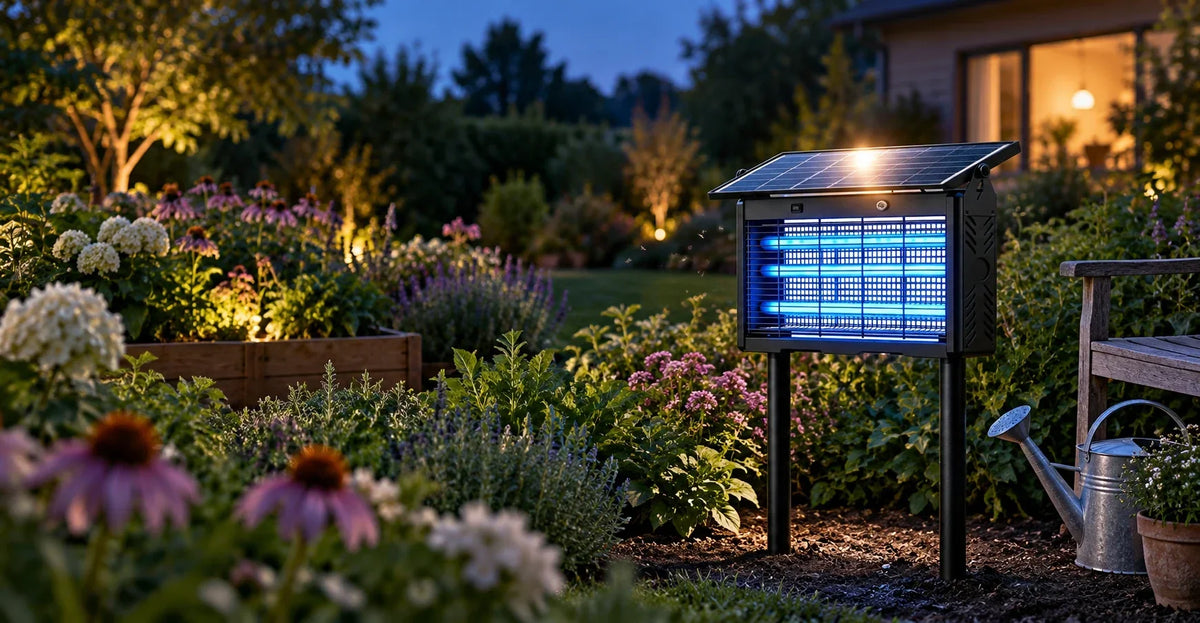
A garden is one of the best places to spend a fall evening, and also one of the buggiest. Standing water in watering cans, damp soil, and dense plant cover all give mosquitoes a place to rest during the day and come out at dusk. Whether your garden is mostly flower beds, a mix of ornamentals and herbs, or a few raised vegetable boxes, a solar bug zapper can help — though a planted area has a few things to consider that a plain patio doesn't.
Why Gardens Attract Insects
Mosquitoes and other flying insects are drawn to moisture and shelter. Flower borders, shrubs, raised beds, and a rain barrel nearby all create the damp, sheltered conditions insects like. The more established and densely planted the space, the more places there are for them to hide during the day.
Where to Place It
- At the edge of the garden, not in the middle of the beds. This draws insects away from where you're working or sitting, rather than through your plants.
- A few feet back from tall, dense foliage. Thick leaves and shrubs can block the UV light from reaching very far, so an open spot works better than a spot tucked behind bushes.
- Away from your brightest garden lighting. String lights or solar path lights nearby can compete with the UV glow. A slightly darker corner of the garden works best.
- Near where you actually spend time, such as a garden bench or a bed you tend to in the evening, rather than the far end of the yard.
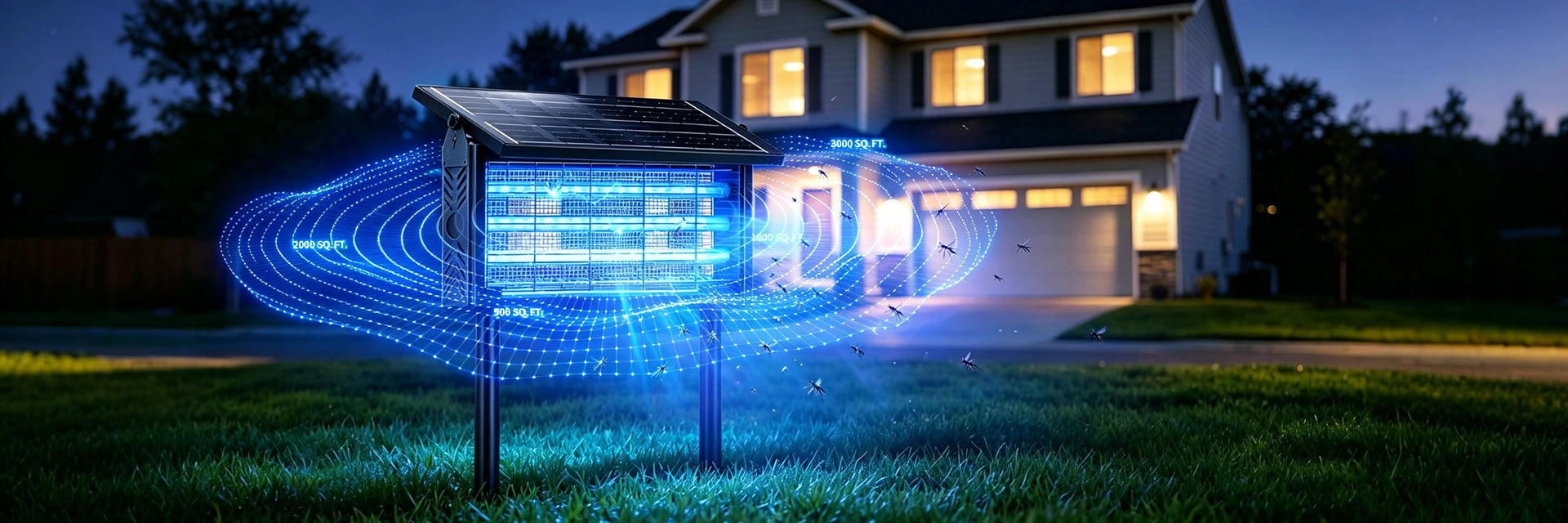
For general placement tips that apply beyond the garden, see our guide to where to place your solar bug zapper.
Will It Affect Pollinators?
Bees, butterflies, and most daytime pollinators are active while the sun is up, and a solar zapper's UV light and auto mode are built around nighttime hours. The dusk-to-dawn sensor means the unit is off during the day, when pollinators are doing their work, and on at night, when most pollinating insects aren't active. If you want extra peace of mind, place the unit away from your most pollinator-heavy blooms and closer to the garden's edge instead.
Dealing with Standing Water
Since standing water is often what draws insects to a garden in the first place, a quick check helps the zapper do less work:
- Empty watering cans and saucers under potted plants after rain.
- Check that rain barrels are covered or screened.
- Clear any low spots where water pools after watering.
- Keep gutters near the garden clear.
Handling Rain and Soil Moisture
Garden zones tend to stay damp longer than a patio, especially after watering. Our zappers carry an IPX5 waterproof rating, which covers rain and splashes; see our test of whether bug zappers work in rain for more on what that rating covers. Keep the unit's support pole on drier, firmer ground rather than directly in a wet bed.
Charging in a Garden Setting
Garden areas are sometimes shaded by trees, fences, or trellises, which can limit how much sun reaches the panel. If your spot is shady for part of the day, angle the solar panel toward the clearest patch of sky you have, or use the extension cord to place the panel in a sunnier spot nearby. Our article on how solar panels charge this zapper covers the basics.
Quick Garden Checklist
- Zapper at the garden's edge, not among the beds
- A few feet clear of dense foliage
- Away from bright garden lighting
- Standing water emptied from cans and saucers
- Solar panel angled toward open sky or moved with the extension cord
Final Thoughts
A garden's damp soil and dense plants make it a natural gathering spot for insects, but placing the zapper at the edge, away from your densest blooms, keeps it working without getting in the way of the plants — or the pollinators — you're trying to grow.