Mosquito-Free Living Insights
Lake House and Dock Mosquito Control: A Solar Zapper Guide
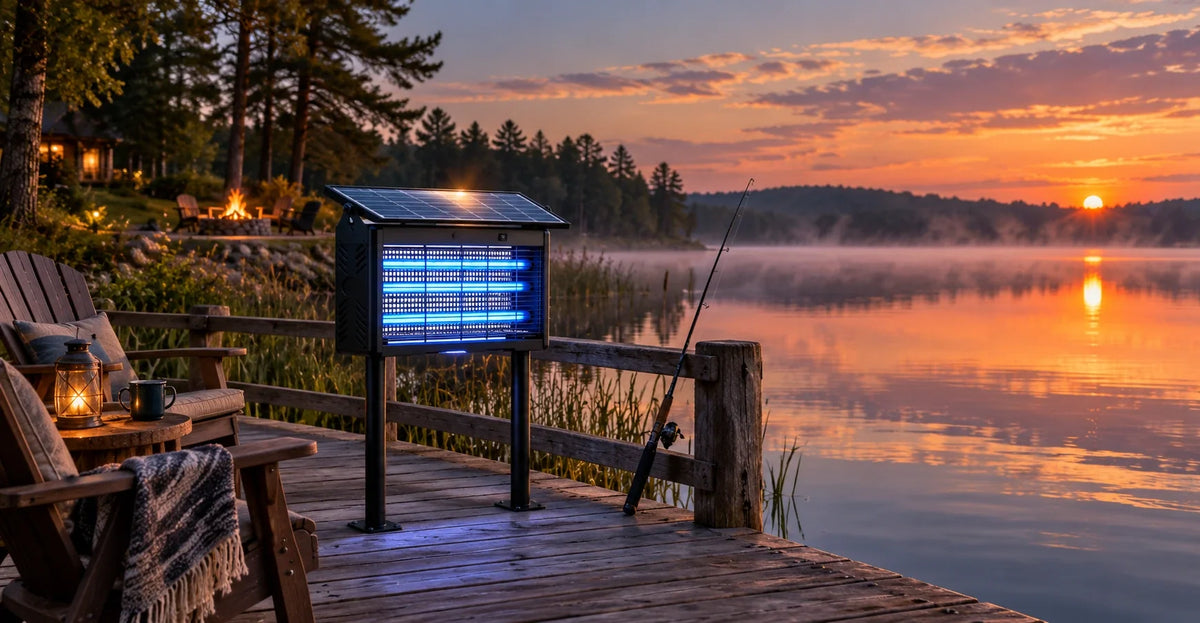
Evenings by the lake are hard to beat: a quiet dock, a fire pit, maybe a line in the water. They're also when flying insects tend to show up. Water, shoreline plants, and still air make waterfront spots a favorite for mosquitoes. A solar bug zapper is a simple, cord-free way to take the edge off, and setting it up well on the water makes a real difference.
Why Waterfronts Are Different
A lake house or dock has a few things a regular backyard doesn't:
- Water and vegetation nearby, which insects like
- Wind off the water, which can affect how a zapper is hung or staked
- Splashes and damp air, so the unit needs to handle moisture
- Limited power, since running an extension cord to a dock is often impractical
Solar power suits this well, because there's no outlet to hunt for near the water.
Choosing the Spot
On the dock: Hang the zapper from a post or hook near the seating area, not over the water. If it could fall, you don't want it landing in the lake. Use a secure hook, and check that it can't swing in the wind.
On the porch or deck: Place it at the edge of the space, away from where people sit and eat. This gives insects something to head toward that isn't your guests.
By the fire pit: Keep it a few feet back from the group and out of the smoke. Put it in a slightly darker spot, since bright firelight and string lights can compete with the UV glow. Keep it away from fuel storage and other flammable items.
Near the shoreline plants: Place it a little back from the water's edge, where insects tend to come from, and away from the busiest walkways.
Handling Water and Wind
Murutoi's zappers have an IPX5 waterproof rating, which covers water jets and everyday splashes. They aren't meant to be submerged, so keep the unit off the ground where water pools and out of the reach of waves. To find out more, read our test of whether bug zappers work in rain.
For wind, use the support pole or a fixed hook rather than a loose hanging spot. Tie down or secure anything that can blow around.
Power for the Cabin Weekend
Place the solar panel where it gets a few hours of good sun during the day. The 20ft extension cord lets you keep the panel in a sunny spot while the unit hangs elsewhere. If you're heading to a lake house that's been closed for a while, charge the unit fully before you go, and bring the DC charging cable in case the weather turns cloudy. For more on how the tech works, see how solar panels charge this zapper.
Fishing and Evening Trips
If you fish from the dock at dusk, set the zapper up before the light fades. The dusk-to-dawn sensor turns it on automatically, so your hands stay free for the rod. Place it beside the fishing spot, not directly at your feet, so insects are drawn to it rather than to you.
Lake Weekend Checklist
- Hang or mount the unit securely, not over the water
- Place it at the edge of the seating area
- Choose a dimmer spot away from bright lights and fire
- Put the solar panel in direct sun
- Charge fully before the trip and pack the DC charging cable
- Turn on auto mode before dusk
Final Thoughts
A little setup goes a long way. Put the zapper where it draws insects toward itself and away from your dock chairs, and you'll spend more of the evening enjoying the water. If you're heading out for the weekend, our camping setup guide has more tips that carry over.